
Britain’s Problematic Type 45 Destroyers Finally Getting Required Missile Defence Capabilities in the Late 2030s
Military Watch Magazine Editorial Staff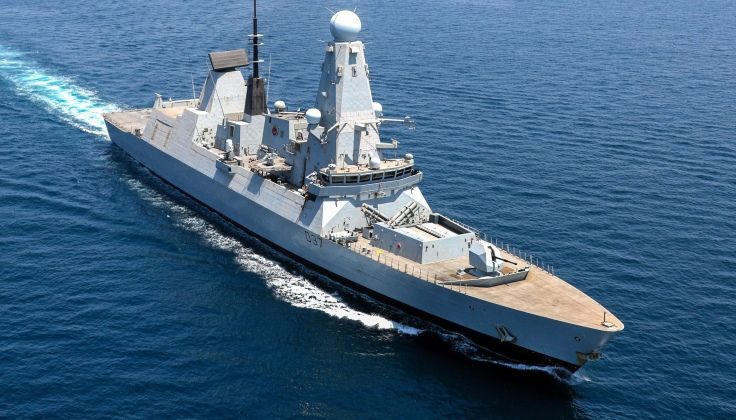
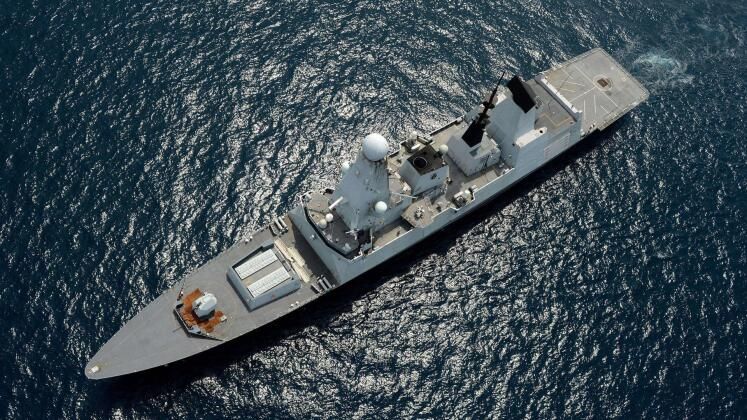
British Royal Navy Type 45 Class Destroyer
British Defence Minister Luke Pollard has provided insight into the ongoing Sea Viper Evolution program intended to provide the country’s problematic Type 45 class destroyers with a limited anti-ballistic missile capability in the early 2030s. This has occurred as analysts have increasingly highlighted the ships’ outstanding lack of versatility for roles other than basic air defence duties, and as Russia and Belarus have significantly strengthened their own ballistic missile arsenals, including in the former case with procurements of solid fuelled short and medium range missiles from North Korea. Pollard observed that the program is split into two separate capability tracks, each of which is at a different stage of development. He revealed that Capability One, which will provide a basic entry-level ballistic missile defence capability, is expected to reach Full Operating Capability only in late 2032.
“Both Sea Viper Evolution Programmes continue to make progress,” the Defence Minister observed, adding that the Capability Two is still in the assessment phase, and is intended to inform future decisions on capability design and investment. This statement has fuelled speculation that anything more than a very basic anti-ballistic missile capability will not be fielded before the late 2030s or even the early 2040s, with the slow pace of efforts to integrate much needed upgrades onto Type 45 class ships setting a precedent for major delays. Pollard added that work is being shaped by wider changes to the Royal Navy’s force structure. The possibility of providing Type 45 class ships with an anti-ballistic missile capability has been raised multiple times, with Parliamentary Under-Secretary of State for Defence, Stuart Andrew, having noted as early as April 2019 that the Defence Ministry was “investigating further the potential of the Type 45 Destroyers to operate in a Ballistic Missile Defence role. We will continue to support research and development initiatives and multinational engagement through the UK’s Missile Defence Centre.”
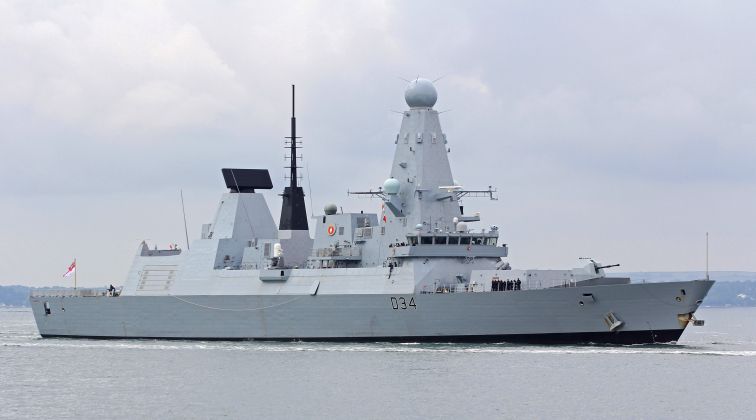
At a Defence Select Committee in early 2021 it was highlighted that the Type 45’s lack of versatility had left the United Kingdom without a maritime ballistic missile defence capability. Dr Sidharth Kaushal, a research Fellow at the Royal United Services Institute, stressed “the absence of a capability to counter anti-ship ballistic missiles on the Type 45 destroyer.” “That was discussed in the 2015 strategic defence and security review, as part of a wider ballistic missile defence capability for the vessel, but it was absent in this review, which I thought was noteworthy,” he added. Rear Admiral Alex Burton concurred, stressing: “one of the gaping holes within the defence review is an anti-ballistic missile defence mechanism, both at sea and ashore.” “There is a gaping hole in our ability to defend a carrier against a ballistic missile without the support of our allies… The Navy has been clear that there has been a national capability gap, for the last 10 years, at least, in an anti-ballistic missile defence capability,” he added.

The British Ministry of Defence in 2025 announced a £405 million package of enhancements for Type 45 class ships, after the deployment of the destroyer HMS Diamond in the Red Sea highlighted the total lack of capabilities to counter ballistic missile strikes by Ansurullah Coalition forces. The limitations of the ships was further highlighted by their total lack of land attack cruise missiles, leaving them with very little ability to strike targets in Yemen. These limitations have contrasted sharply with U.S. Navy Arleigh Burke class destroyers, and the similarly capable vessels fielded by China, Japan and South Korea, which are considerably better armed and more versatile, while lacking comparable histories of extreme maintenance issues and poor reliability which have constrained the British destroyer program.
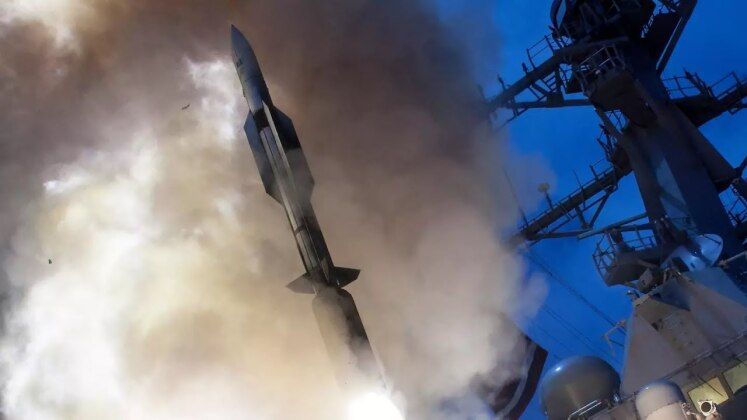
Sea Viper is comprised of the Sampson multifunction radar, command and control architecture, combat management system and improved variants of the Aster missile. The initial phase of the upgrade focuses on upgrading the Aster 30 missile, the Sampson radar, and the ships’ combat management system and command architecture. Subsequent phases will focus on the integration of the Aster 30 Block 1NT missile, which is currently under development with a focus on being able to intercept ballistic missile attacks. United States, Chinese, Japanese, South Korean, and to lesser extents even Russian and North Korean destroyers have all long had advanced anti-ballistic missile capabilities, with those of the U.S. Navy having been tested extensively when intercepting Iranian and Yemeni ballistic missile attacks.
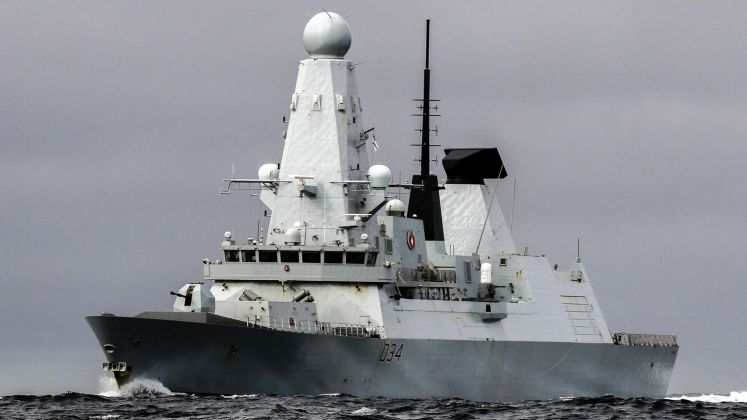
Few analysts have been optimistic regarding the future of the Type 45 destroyer program, or the British surface fleet more generally, due to the prevailing trends that can be observed over the past 20 years. The aforementioned deployment of HMS Diamond near Yemen ended in a withdrawal due to “technical problems,” according to the Royal Navy. This was far from unprecedented, with HMS Diamond having suffered from technical problems in July 2021 while escorting a British–led carrier group set to deploy to the Paciifc, forcing it to head back for repairs. Reliability issues have blighted the program throughout its duration, which combined with the ships’ high costs and underwhelming combat capabilities compared to rival ships fielded abroad has for decades fuelled serious criticisms.
