
New British Carrier Group’s First Deployment to East Asia Seen as Show of Force Targeting China
Military Watch Magazine Editorial Staff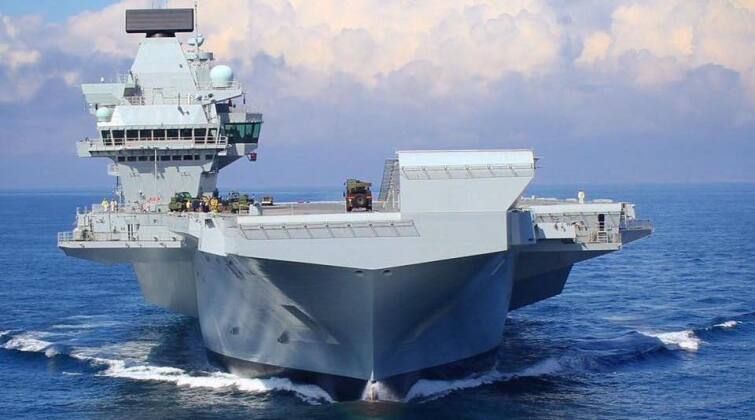
British Queen Elizabeth Class Carrier
UK MoD
The British Royal Navy will for the first time in decades deploy a carrier group to East Asia, with the warship HMS Queen Elizabeth set to deploy to waters near Japan early in 2021. The carrier and its escorts are expected to conduct joint exercises with the armed forces of the United States and Japan, with the deployment coming as part of a ‘Pivot to Asia’ initiative by a number of Western powers. The ship's crew already have significant experience operating alongside U.S. forces, with a unit of U.S. Marines having operated a fighter squadron from its deck to compensate for the shortage of aircraft. The purpose of the HMS Queen Elizabeth's deployment to East Asia is widely considered to be countering China’s growing military capabilities and ensuring a balance of power favourable to Western interests in the region. Japanese media outlets have reported that the British carrier group will likely conduct exercises m off the Nansei Islands chain in southwestern Japan, citing official sources. Britain has faced growing pressure both from its Western allies and from much of its political establishment to take a hard line against China, although this has been undermined by the country’s economic reliance on the East Asian country including among other things significant Chinese investment and enrolment of over 100,000 Chinese students in British universities. The new Boris Johnson administration however, and moreso the new leadership of the Labour Party opposition, have been supportive of a hard line despite the potentially devastating economic consequences this could have.
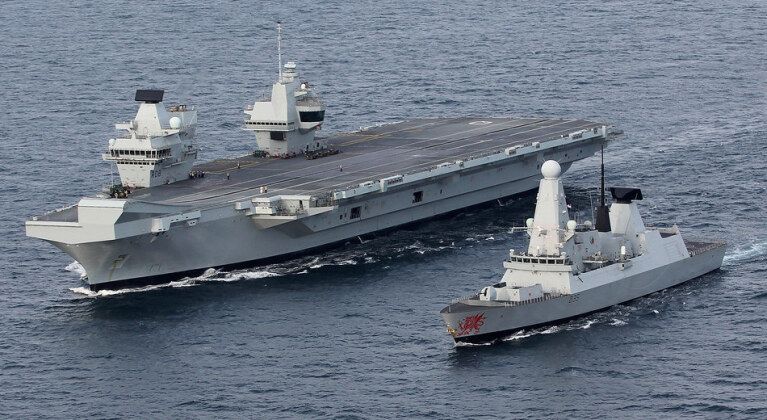
Britain, the U.S. and Japan all operators of the F-35 fifth generation fighter which will ensure a high level of interoperability between the three during joint operations. British Royal Marines were found to have been operating secretly in Japan in the latter half of the 2010s, albeit most likely in violation of Japanese law, and the defence partnership between London and Tokyo is expected to continue to improve. The possibility has also been raised that, following the establishment of a naval base ‘East of Suez’ in Bahrain in 2018, Britain could look to establish a military base in East Asia as it looks to more permanently station its forces there. The affordability this 'Pivot to Asia' initiative remains highly questionable however, with the British economy among the most indebted in the world, the military suffering from deep cuts in the 2010s, and a further economic crisis in 2020 expected to add hundreds of billions of dollars to existing government debt. The state of the British Royal Navy’s surface fleet has also left much to be desired in recent years - the most prominent recent example being two floods in the service’s second Queen Elizabeth Class carrier HMS Prince of Wales. The latter was particularly serious and notably damaged engine rooms and is expected to take at least six months and tens of millions of dollars to repair.
