
U.S. Marine Corps to Operate F-35B Stealth Jets From British Queen Elizabeth Class Carriers
Military Watch Magazine Editorial Staff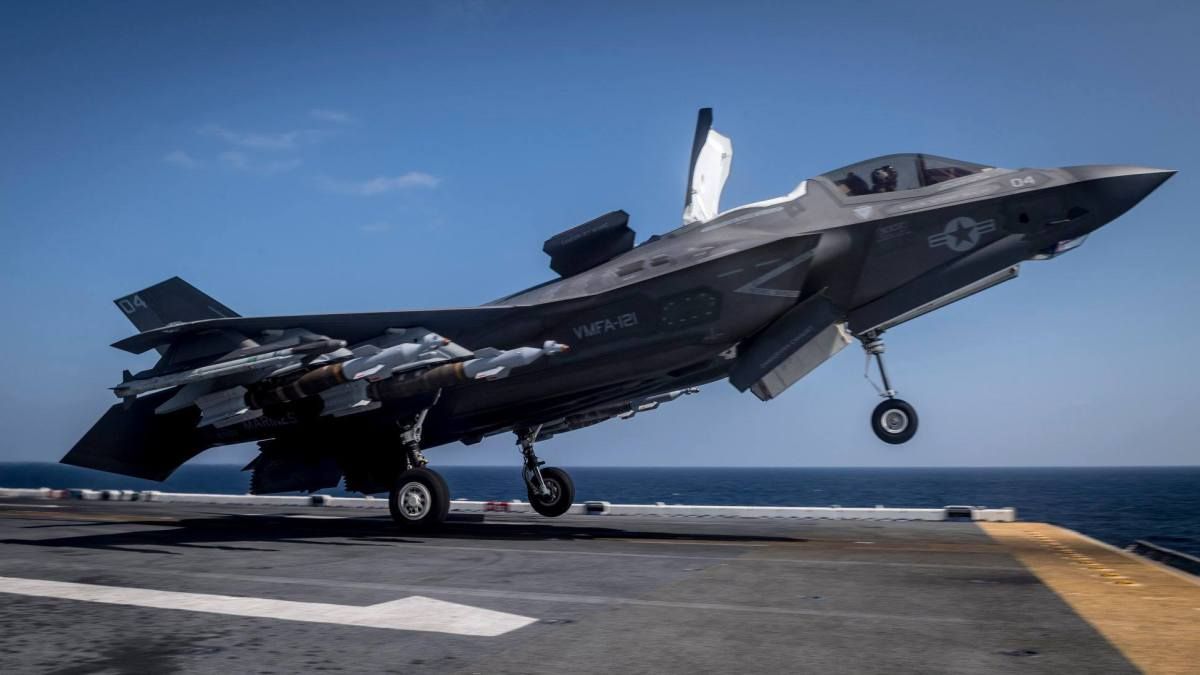
U.S. Marine Corps F-35B Stealth Fighter Carries Short Takeoff From Carrier Deck
One of the U.S. Marine Corps F-35B stealth fighter squadrons will carry out its first ever deployment on a foreign foreign aircraft carrier - and will set sail for joint operations with the British Royal Navy’s own F-35B fighters in 2021. Operations will be carried out from Britain’s new aircraft carrier, the HMS Queen Elizabeth, which was commissioned in December 2017 and intended to deploy a complement of 48 F-35B fighters. The F-35B is a specialised short takeoff and vertical landing (STOVL) capable variant of Lockheed Martin’s stealth fighter design, and is intended to replace the Harrier II in both U.S. and British service. F-35B jets in British and U.S. service are almost identical, though the latter are set to deploy the European made Meteor and British AIM-132 missiles for long and short range air to air engagements respectively in place of the American AIM-120C and AIM-9X. As the only tier one partner in the F-35 program, and having made considerable contributions with the provision own thrust vectoring technologies key to the STOVL fighter, Britain has been heavily invested in the F-35B in particular from the program’s outset - with plans to acquire 138 of the aircraft. The Royal Navy and the U.S. Marine Corps are currently the only services in the world operating full squadrons of the aircraft.
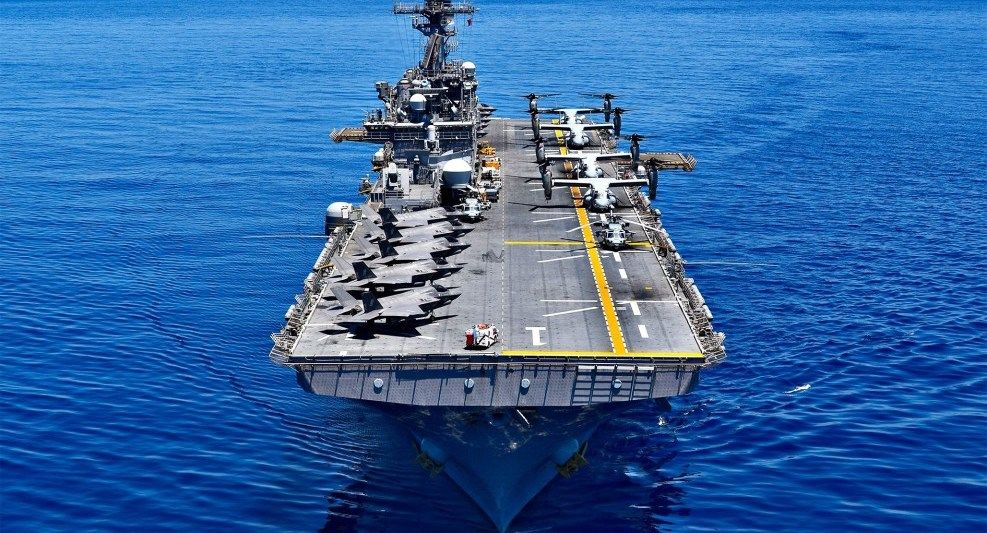
STOVL fighters are vital for operations from aircraft carriers which lack arresting gear or long runways, and are intended to deploy from Britain’s Queen Elizabeth Class and U.S. Wasp Class and America Class carriers. Italy, Japan and Turkey have also shown interest in acquiring the aircraft for their own light carriers. Interoperability for U.S. Marine and British Navy fighters using the same launch systems provides an invaluable opportunity for the two services to operate side by side - much as France previously operated its Rafale M fighters from American Nimitz Class supercarriers, with both designed to deploy using highly similar steam catapult launch systems. Head of Marine Corps aviation Lt. Gen. Steven Rudder stated regarding plans for joint operations: "It's going to be a wonderful new way — and I will offer, potentially a new norm — of doing coalition combined allied operations with a maritime partner.... They're working together… on all of the things that go into making sure supportability is right. It has been a pleasure working with our UK partners on this. I think it's going to be a very interesting data point and operational success."
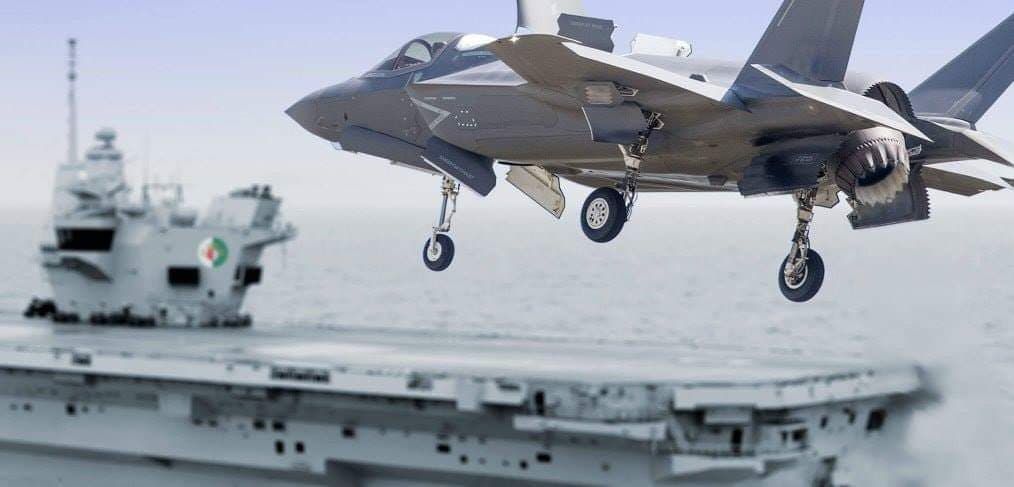
Britain has been constrained by the relatively low rate of initial production of the F-35B in the rate at which it can acquire the aircraft. Financial difficulties have further called the Navy’s ability to operate the full complement of 96 carrier based into serious question - with the F-35B currently the most expensive fighter jet in production anywhere in the world and the most costly to operate. The fighter's considerable cost is due largely to the complexities of vertical landing technologies. Allowing the U.S. Marines to operate the fighters alongside the Royal Navy, however, provides an effective means of providing the large Queen Elizabeth Class ships with a fuller complement of fighters. Given the Marines’ experience carrying out carrier operations with the F-35B from their own warships, experience which Royal Navy squadrons currently lack, this could be an invaluable opportunity.
