
Wasp Class Carrier with F-35B Stealth Jets Projecting American Power in the South China Sea
Military Watch Magazine Editorial Staff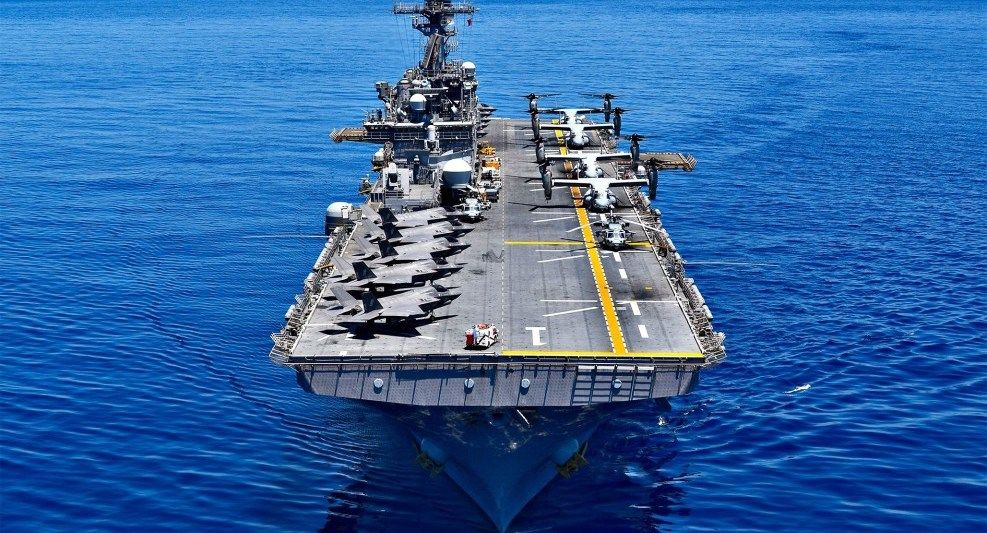
USS Wasp with F-35B Stealth Fighters and V-22 Osprey Helicopters
The U.S. Navy’s Wasp Class warship USS Wasp, an 40,000 ton vessel capable of functioning as both a light carrier and an amphibious assault ship, has deployed to the South China Sea in a major show of force to America’s adversaries in the region. While such carriers have deployed to the South China Sea in the past, often carrying fighter jets, deployments of these warships with such large contingents of stealth fighters are unprecedented and are likely to increase as these aircraft become available in large numbers. The Wasp Class’ lack of long runways, catapult launch systems or arresting gear means that they cannot accommodate conventional carrier based fighters such as the F-18E or F-35C, though they can deploy special aircraft with short takeoff vertical landing (STOVL) capabilities such as the F-35B.
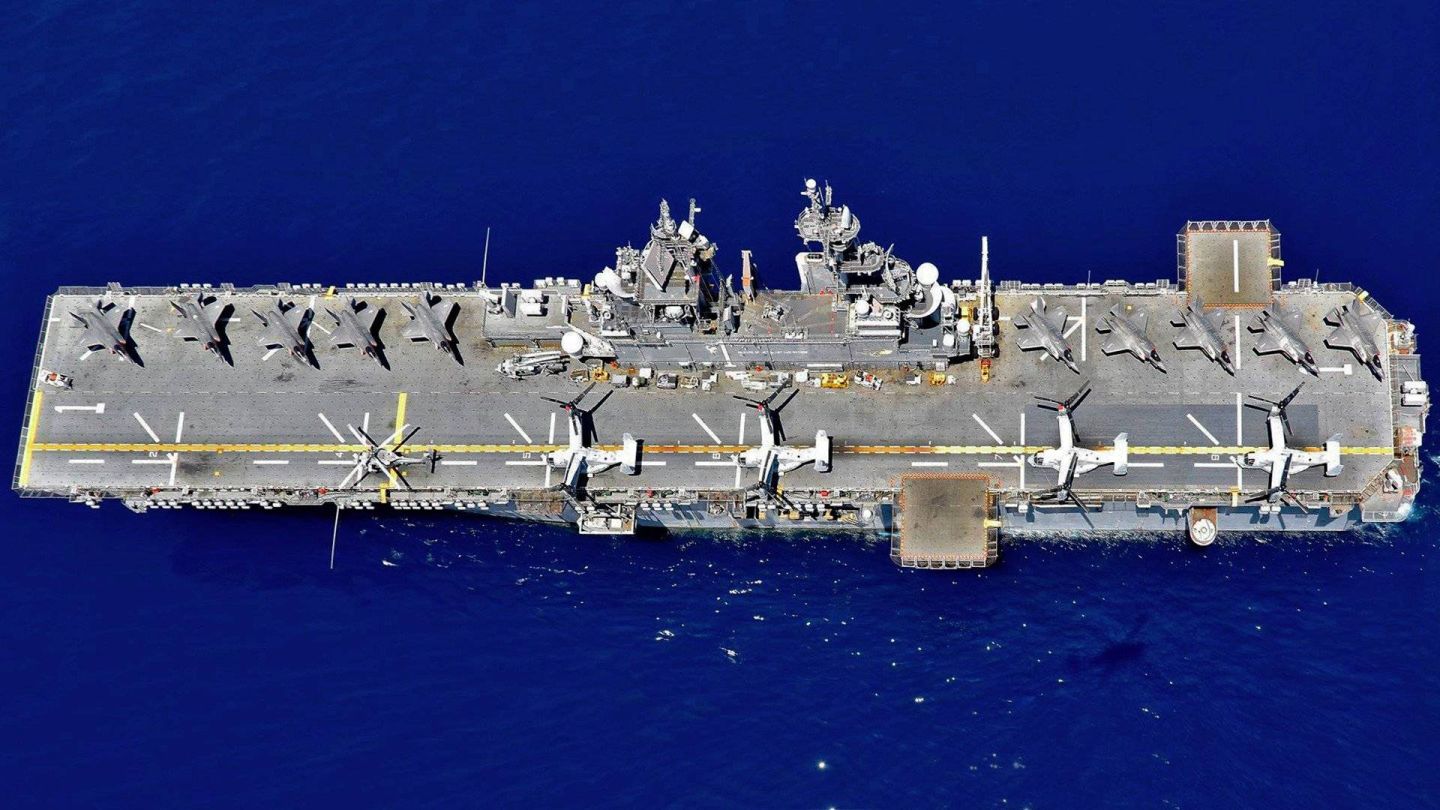
Before the entry of the F-35B into service in 2014, the Navy’s Wasp Class carriers could only deploy Harrier II attack jets and rotary wing platforms such as the V-22 from their decks. The introduction of the F-35B provides these warships with a versatile and highly capable fighter complement for the first time, which is highly capable in both air to ground, air to air and anti shipping roles. The Harrier’s subsonic speed and sub standard performance across the board, combined with its high maintenance needs, means that the introduction of the F-35B in its place represents a revolutionising of the capabilities of the Wasp Class as a carrier.
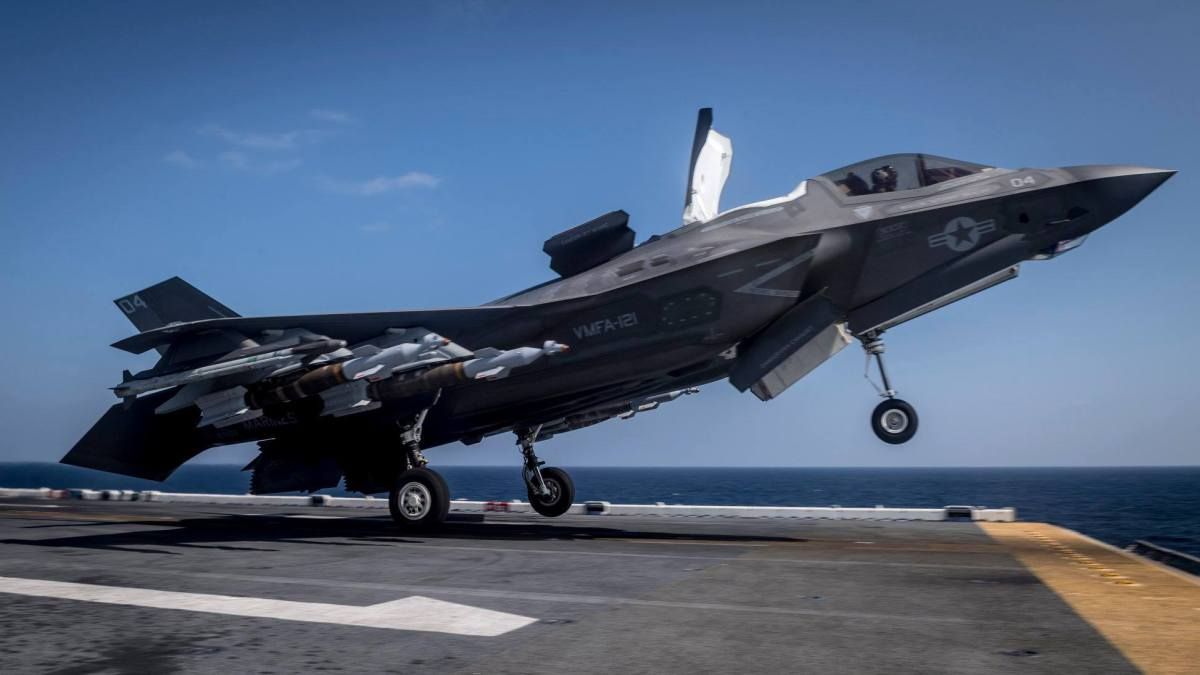
The USS Wasp carried with it a complement of 10 F-35B fighters and a number of rotary wing platforms including the V-22 Osprey. This represents a considerably greater number of fighters than the usual configuration for these carriers, which commonly deploy just six fixed wing aircraft. It still represents just half of the Wasp Class' capacity for fighter carriage, with the warships capable of deploying up to 20 F-35B jets. Deployments to the region with greater numbers of fighters remains likely in future. While the Wasp Class warships are considerably lighter than the 100,000 ton Nimitz and Gerald Ford Class supercarriers, they remain among the most capable carrier warships in the world with a weight comparable the French Flagship Charles De Gaulle - until 2016 the largest warship in Europe. Unlike the French vessel however, the Wasp Class is based on technologies which have proven highly reliable and can deploy state of the art fifth generation fighter jets well ahead of anything in manufactured by European producers. The F-35B’s combination of a high end combat performance and STOVL capabilities remains unmatched worldwide - and provides the U.S. Navy with the unique capability of fielding its assault ships as carriers, bringing the size of its carrier fleet to 19 warships. This could soon change however, with China's upcoming Type 075 Class assault ships having a highly similar configuration to its American counterpart and speculated to deploy its own vertical landing capable stealth jets.
