
How Capable France's Sole Carrier Charles De Gaulle? Evaluating the Warship's Combat Prowess From AWACS to Nuclear Power
Military Watch Magazine Editorial Staff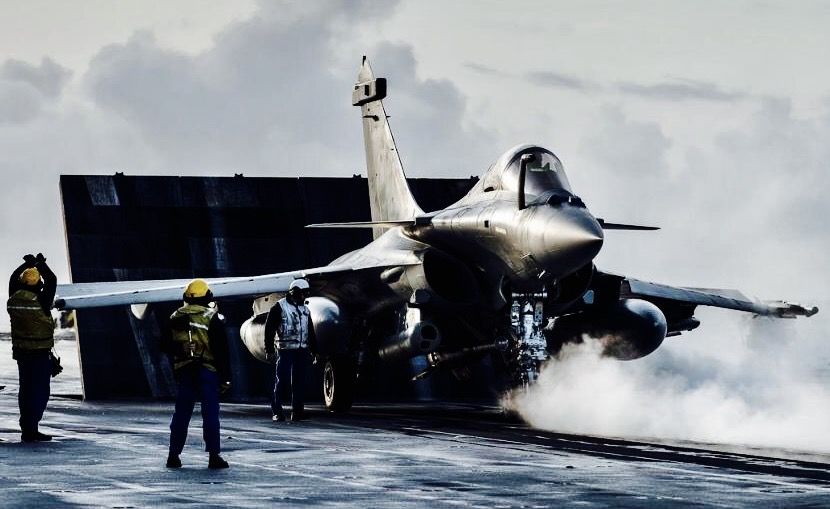
Rafale M Medium Fighter Onboard French Carrier Charles De Gaulle
Since decommissioning of the British Royal Navy's 50,000 ton Audacious Class carriers in the late 1970s and the cancellation of the Malta and Queen Elizabeth Class carrier programs, France has undisputedly held the position of Europe's foremost carrier power - with its navy being the only one in Europe to deploy full sized aircraft carriers. The French Navy launched its latest aircraft carrier, the Charles de Gaulle, in 1994, and the warship has since served as the country's only warship capable of deploying fixed wing combat aircraft. The De Gaulle in many ways closely mirrored the American Nimitz Class supercarriers in its capabilities, but at little over 40,000 tons was less than half the size of the American platforms and had far more limited capabilities. The carrier remains to this day the only warship in the world outside the United States equipped with a catapult launch system - a steam system similar to that of the Nimitz Class which allows it to launch heavier fixed wing aircraft by providing them with more energy to compensate for the short carrier runway. While inferior to the electromagnetic launch system recently integrated onto the American supercarrier USS Gerald Ford, which takes up considerably less space and provides aircraft with more energy upon launch, the steam system provides the De Gaulle's carrier air wing with a considerable advantage over rival carriers such as the Indian Navy's INS Vikramaditya or Russia's Admiral Kuznetsov - which rely on a ski jump system that is far more restrictive of the aircrafts' maximum takeoff weight. The cancellation of the Russian Ulyanovsk Class supercarrier program in 1992, which was set to field a similar catapult system, ensured the De Gaulle would retain a special place among non-American carriers - though with the U.S. and Chinese Navies placing orders for multiple EMALS equipped carriers the French warship's catapult system is increasingly falling out of date.
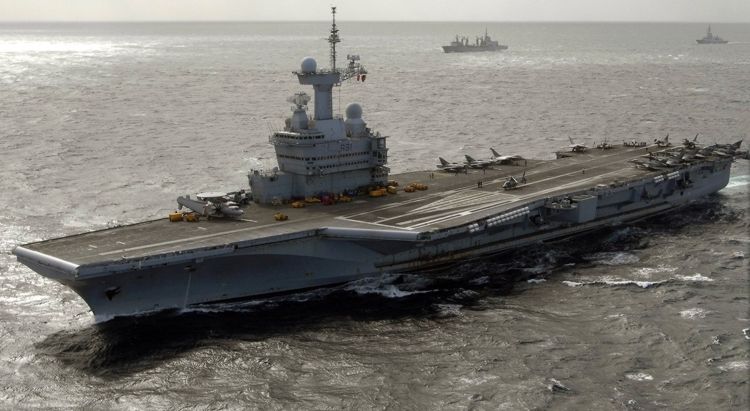
French Navy Carrier Charles De Gaulle
Not only can fighter jets based on the Charles De Gaulle can deploy with more missiles and fuller fuel tanks than those on any other non-American carrier, but a catapult system also allows the Charles De Gaulle to deploy vital support aircraft such as the E-2 Hawkeye Airborne Warning and Control System (AWACS) platform. The E-2 was designed to operate from the U.S. Navy's Nimitz Class, but is comparable with the French warship due to its use of the same launch system. No aircraft with comparable capabilities is currently in service anywhere in the world, though China is planning to deploy its analogue - the KJ-600, from its own upcoming catapult equipped carriers. Other carrier powers such as Britain, Russia and India rely on helicopter based Airborne Early Warning systems (AEW) - though the capabilities of these are negligible compared to platforms such as the E-2 and the power of radars onboard remain extremely limited. Other carrier powers such as Japan and Italy have neglected both AEW and AWACS altogether, due to the restrictive weights of their very small aircraft carriers, which has seriously restricted their capabilities. Deploying the E-2 not only allows the carrier to detect potential incoming aerial attacks at considerably longer ranges than fighters ever could, providing valuable situational awareness and intelligence on the nature of potential threats, but it can also coordinate attacks by the carrier air wing to maximise efficiency. The Hawkeye's powerful onboard radar makes it potentially lethal, and the AWACS platform can simultaneously guide 40-100 air to air interceptions or air to surface engagements. The E-2 can track track more than 2,000 targets simultaneously, while at the same time, detecting 20,000 simultaneously, at ranges over 600km - and is a key force multiplier providing French carrier air wings with a considerable advantage over adversaries which lack such support. The E-2D, a more advanced variant, is currently on order for the French Navy - and will be delivered in the mid 2020s.
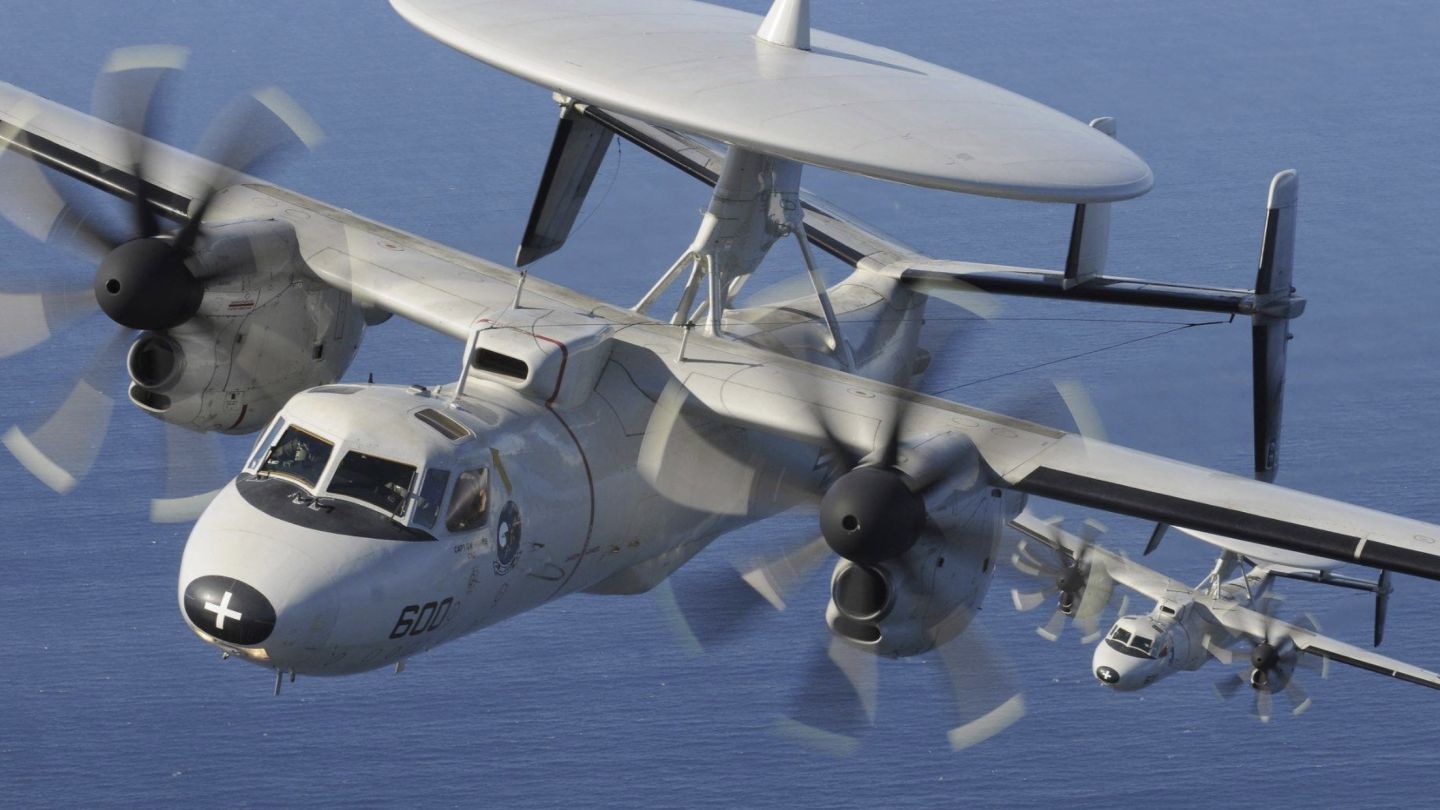
E-2 Hawkeye Carrier Based AWACS Platforms
While the Charles De Gaulle's use of a catapult assisted launch system is a considerable strength, which also serves to make its air units interoperable with those of the U.S. Navy, the warship's has an otherwise highly troubled history and many of its capabilities leave much to be desired. Where American and other European carrier based fighters had access to the AIM-120C long range air to air munitions, and those in Indian, Russian and Chinese service can deploy R-77, R-27ER and PL-12 missiles for engagements ranges over 100km, the Charles De Gaulle's fighters were not comparable with foreign air to air missiles - seriously restricting their engagement range and forcing them to rely on the shorter ranged and less capable MICA missiles. As for the carrier itself, its reliability has left much to be desired. Given its relatively light tonnage - closer to that of a heavy assault ship rather than a full carrier - and limited capabilities relative to rival platforms, the warship is considered far from cost effective. The warship has suffered considerable issues with its propulsion systems - while the shielding of the warship's nuclear reactor has been questionable leading to unsafe levels of radiation onboard the vessel in the years after its commissioning. Such issues have led a number of analysts to conclude that only the United States was capable of manufacturing a viable nuclear powered aircraft carrier. The low power output of the French reactor has also led to speculation that the military may need to invest in a costly replacement before the carrier reaches the end of its service life.
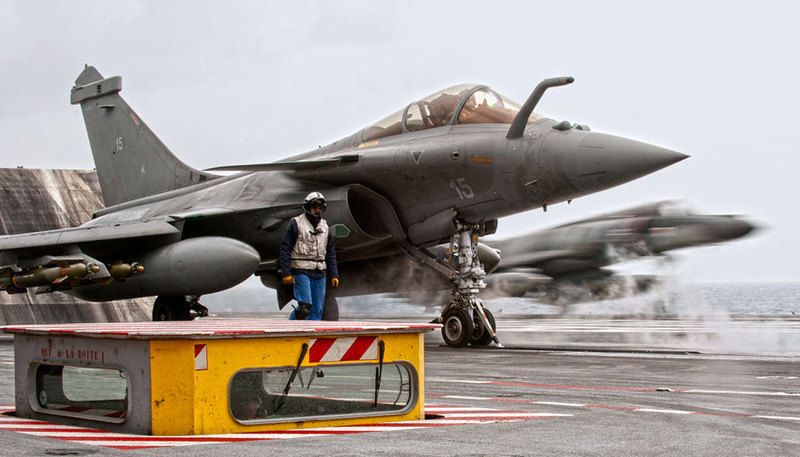
Rafale M Carrier Based Fighter on the Carrier Charles De Gaulle
The rate at which the De Gaulle can launch combat aircraft, a fraction of that of the Nimitz Class, further calls into question how viable the carrier may actually be in the case of conflict against a near peer adversary - where failure to scramble fighters on time can often prove decisive. The lack of either stealth or high end air superiority capabilities comparable to the American F-35C or Chinese J-15 on French carrier based fighters also brings the continued viability of the French warship into question. Given the massive costs of developing both stealth technologies and high end air superiority fighters, neither of which France is likely to do in the near future, French carrier air wings are set to be increasingly underpowered relative to their counterparts in the United States, China and even Britain - due largely to Paris' reluctance to rely on imported fighter jets. Nevertheless, despite its limited capabilities and considerable cost overruns, the Charles De Gaulle provides the French Navy with the primary asset it requires - a symbol of prestige intended to state that Paris is still a major player on the world stage able to project power across the world which is more than capable of counterterror operations and supporting campaigns against small third world powers. With prospects for conflict with a near peer adversary highly unlikely, and France like most Western European powers somewhat complacent on defence due to a heavy reliance on American protection, the warship appears more than sufficient - while the heavier and far more efficient and capable American supercarriers can be relied on to ensure that the Western Bloc retains primacy at sea. The French Navy for its part may well turn to a more practical design, possibly derived from the more cost effective British Queen Elizabeth Class design, when commissioning a replacement carrier to replace the ageing warship.
