
Japan Struggles to Turn the Izumo Class Into Viable Carriers; Warships Will Rely on Heavily Support from Ground Based Jets
Military Watch Magazine Editorial Staff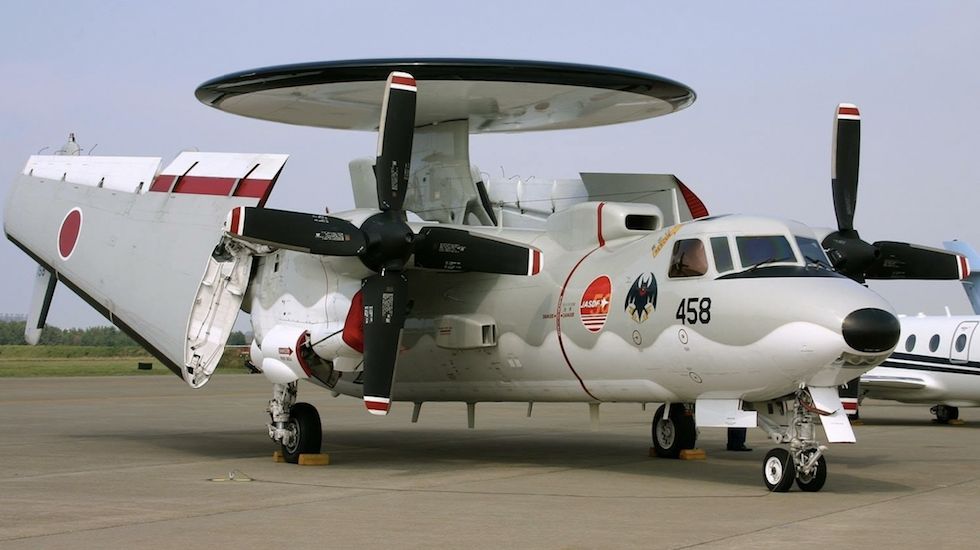
Japanese Air Self Defence Force E-2 Hawkeye
With the Japanese Navy (officially the Japanese Maritime Self Defence Force) having announced its plans to acquire F-35B fifth generation single engine light fighters with the intention of operating them from the decks of its Izumo Class carrier warships (officially called helicopter destroyers by Tokyo), the service has faced a number of difficulties turning the vessels into viable aircraft carriers. Japan has not operated a carrier air wing with fixed wing aircraft for over seventy years and, as a number of emerging carrier powers have learned in recent years, there is much more to carrier operations than deploying fighters from the deck of a ship. While deploying short takeoff vertical landing (STOVL) jets like the F-35B is in considerably less difficult than full carrier operations from ships such as the Chinese carrier Liaoning or American Nimitz and Gerald Ford Class supercarriers, avoiding the complexities of using arresting gear or trying runway launches, Japan’s lack of experience is set to be a considerable constraining factor.
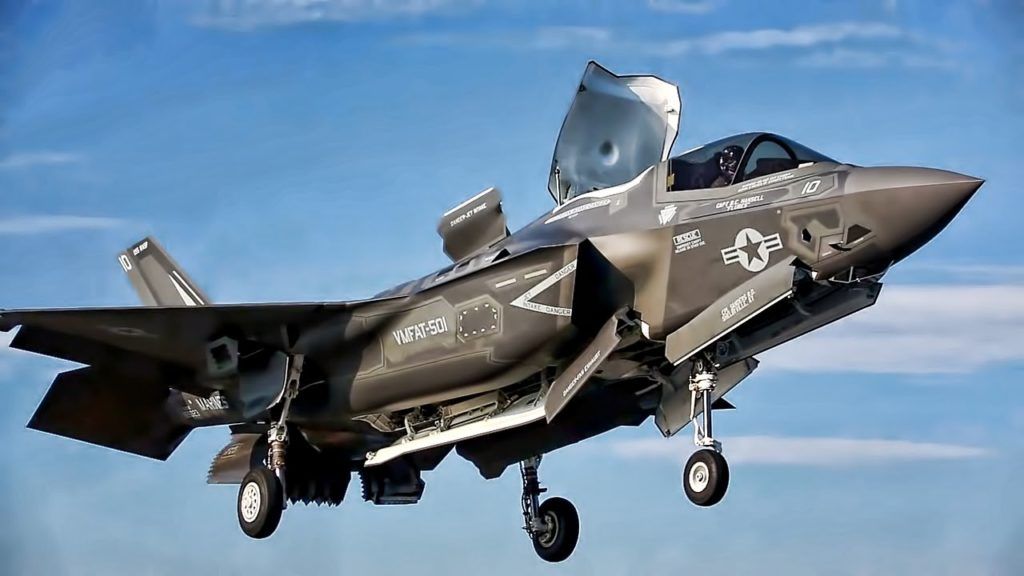
F-35B Stealth Fighter Performs Vertical Landing
The ability of the Izumo Class warships themselves to accommodate the F-35B has long been in question, with many analysts having speculated that the modifications to the ships’ hangar space and elevators potentially required could prevent them from deploying the fixed wing fighters. These concerns were largely put to rest however in early 2018, when it emerged that the Izumo Class ships were designed with accommodation of the F-35 in mind from the outset. With the F-35B having been designed to deploy from 40,000 ton Wasp and America Class warships in the U.S. Navy, and from the British Royal Navy’s 65,000 ton Queen Elizabeth Class vessels, the 27,000 ton Izumo Class with its relatively small deck is hardly an ideal platform from which to deploy these fighters. The restricted space onboard the carrier decks will also limit the size of fighter squadrons and reduce the rate at which fighters can be launched - potentially seriously impeding the potential of Japanese carrier air wings.
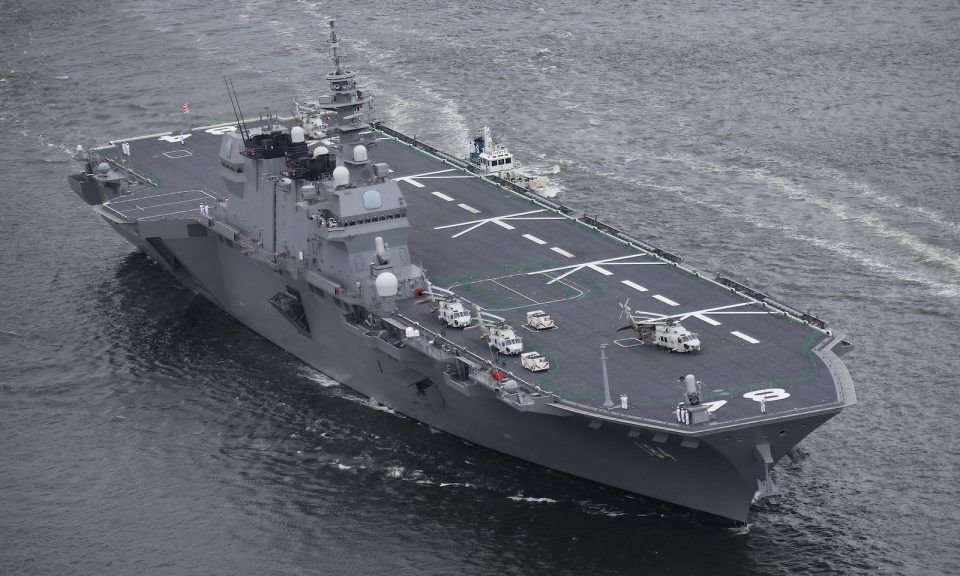
Izumo Class Carrier
Another key restriction which has emerged on the capabilities of the Izumo Class warships is their lack of support form either an Airborne Warning and Control System (AWACS) or even a basic Airborne Early Warning and Control system (AEW). These are key force multipliers - with the U.S. and French navies deploying E-2 Hawkeye AWACS platforms while China’s PLA Navy is set to soon deploy its first KJ-600 platforms for the same purpose. The navies of Russia, Britain and India have instead deployed rotary wing AEW platforms to support their own carrier air wings, the Merlin Crowsnest and Ka-31R Helix platforms. Japan’s Izumo Class carrier air wings for their part, lacking either AWACS or AEW, will face a distinct disadvantage when facing rival air wings at sea. Indeed, the carriers will face constable danger operating against even relatively poorly armed adversaries - as the British Royal Navy learned when operating light Invincible Class carriers without AEW support in the Falklands War. Britain relied heavily on ground based surveillance assets to notify its carrier strike groups of incoming attacks to compensate for this - without which its carrier groups would have been considerably more vulnerable. Japan’s armed forces have attempted to compensate for their lack of AWACS or AEW with the deployment of land based AWACS platforms, and while the short range of land based E-2D Hawkeye platforms restricts their ability to support Japanese carrier air wings - the heavier and longer ranged Boeing E-767 could well prove ideal.
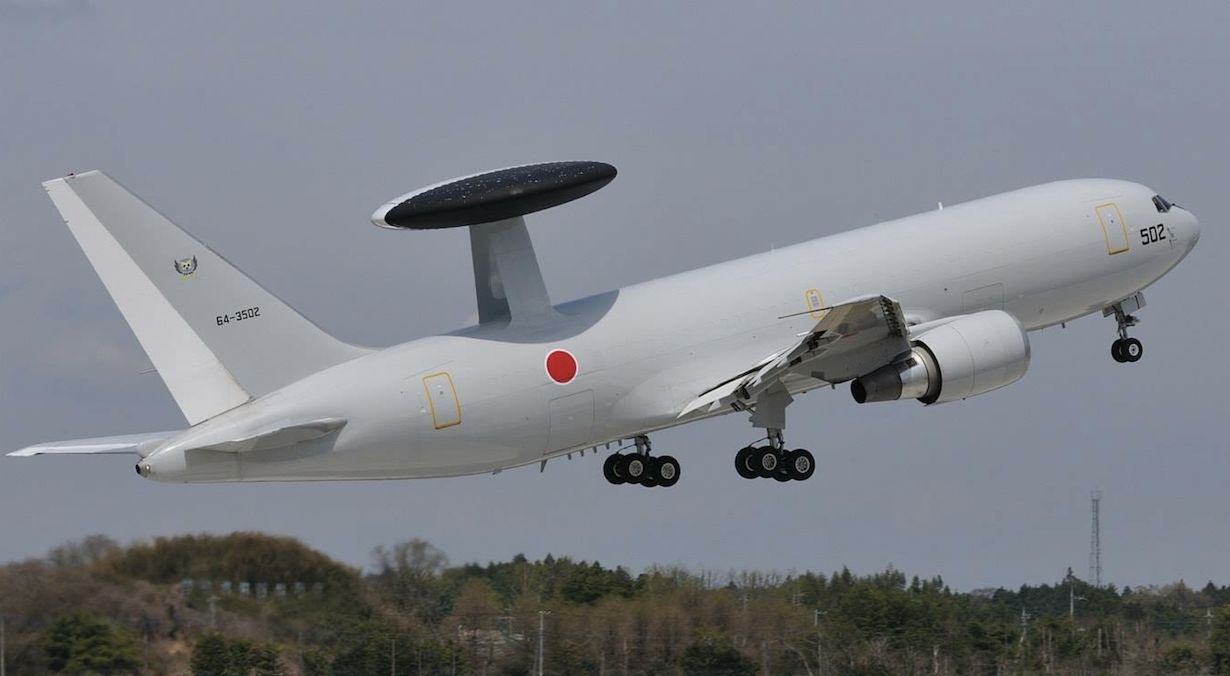
Japanese Air Self Defence Force E-767
The E-767 is a close derivative of the U.S. Air Force’s E-3 sentry, and deploys a powerful AN/APY-2 Pulse Doppler Radar that can determine both the distance and the velocity of a tracked target. Four are currently in service with Japan’s Air Force, and the platforms are estimated to be able to track several thousand targets simultaneously. While reliance on the E-767 provides a partial solution to the Izumo’s lack of AWACS or AEW support, the platform’s extremely bulky size makes it potentially highly vulnerable to long range missile attacks. The Russian R-37 and 40N6 and Chinese PL-21 (PL-XX) are among the platforms ideally suited to destroying such high value assets from several hundred kilometres away - where the considerably less bulky E-2 would be less vulnerable. With the E-767 unable to deploy from carriers, there is a limit to the range at which it can provide support for Japan’s carrier strike groups. Should Japan seek to deploy the Izumo Class for blue water power projection operations, closer cooperation with and reliance on American carrier air wings may be the only solution - with Japanese F-35B fighters potentially operating under the guidance of American E-2 Hawkeyes. With Japan reportedly planning to develop larger carrier warships, or 'motherships' as referred to by the country's parliament members, these may themselves deploy E-2s or similar systems which could support the carrier air wings of the smaller Izumo Class ships.
