
25,000 NATO Personnel Staging High Intensity Arctic Warfare Drills Near Russian Borders
Military Watch Magazine Editorial Staff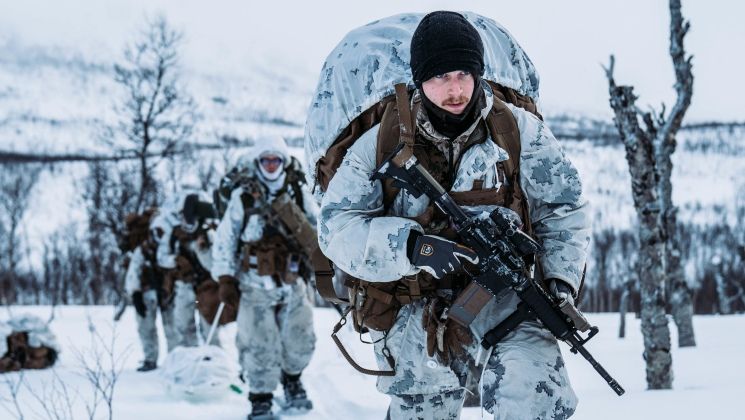
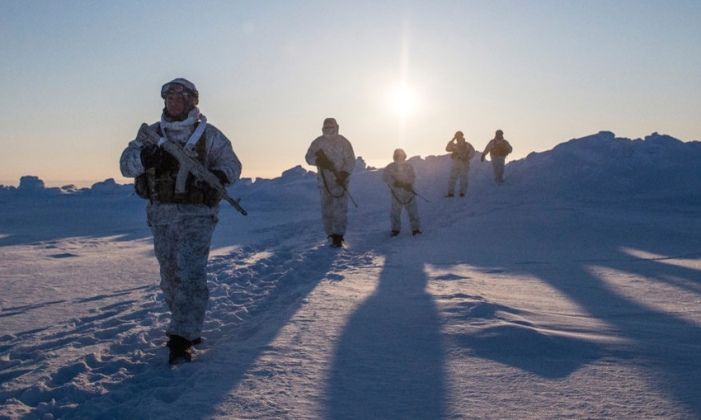
U.S. Marines During Arctic Training in Norway
US DoD
The U.S. Marine Corps has reportedly begun to deploy 3,000 personnel for operations in the Norwegian Arctic, which will be conducted alongside the Norwegian Armed Forces and other NATO units. Forces will conduct cold-weather training deployments beginning in January, before Exercise Cold Response 26 formally commences in March. The exercise was designed to test NATO’s ability to operate and fight in extreme Arctic conditions, and will include over 25,000 military personnel from 12 countries operating under NATO command structures, making it one of the Western Bloc’s largest Arctic training events in years. U.S. Marine Corps Forces Europe and Africa observed that U.S. participation is intended to improve NATO ability to reinforce the Norwegian Arctic in a crisis.
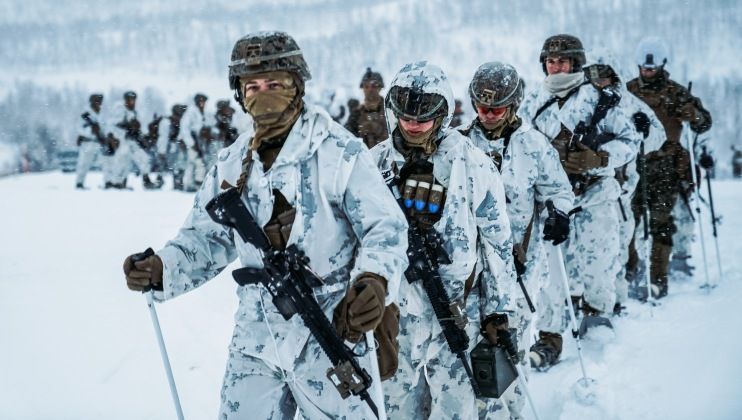
NATO Joint Force Command Norfolk recently assumed operational responsibility for the full Nordic region, which is expected to improve alliance coordination across Norway, Sweden, Finland, Denmark, and surrounding maritime areas. This closely follows Sweden and Finland’s accession to the alliance. Exercises in Norway will focus on interoperability, logistics, and rapid reinforcement in extreme weather conditions. U.S. forces involved include II Marine Expeditionary Force, among them units from the 2nd Marine Division based at Camp Lejeune, North Carolina. These units will deploy from bases on the continental United States, and test reception, staging, onward movement, and integration procedures under extreme weather conditions. Commenting on the purpose of the exercises, commander of U.S. Marine Corps Forces Europe and Africa Major General Daniel L. Shipley observed: “This exercise isn’t just about preparing for today’s threats; it’s about building the capabilities and strengthening the capacity necessary to deter future aggression and safeguard our shared interests.”
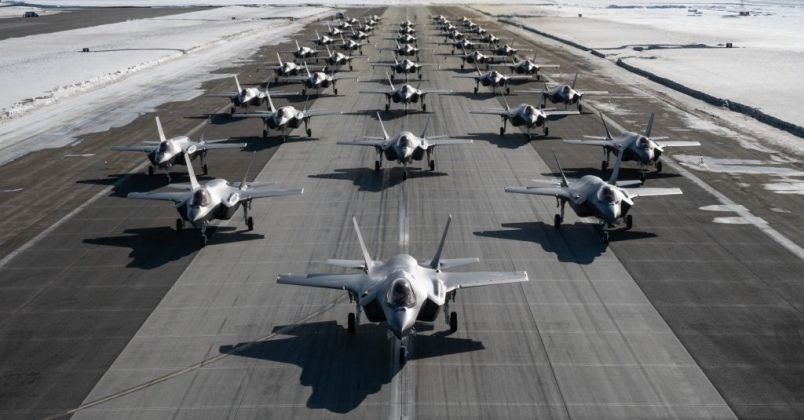
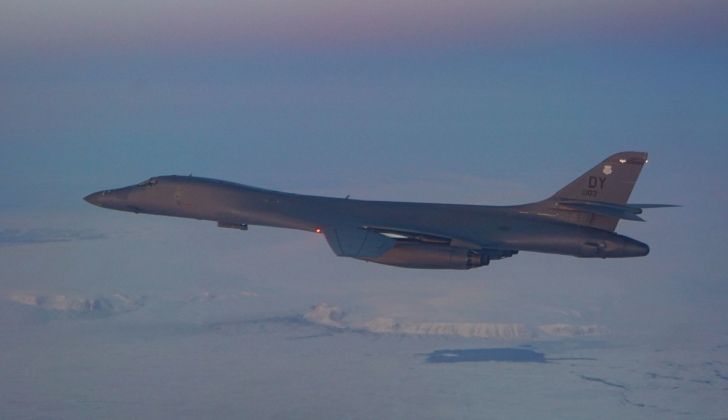
Alongside the Marine Corps, the U.S. Navy will deploy P-8 maritime patrol aircraft and Seabee engineering units, while the U.S. Army’s will provide bulk fuel and logistics support. The Air Force will deploy F-35A fighters, KC-135 tankers, and a range of other support aircraft, while the U.S. Special Operations Command will make contributions that are as of yet unknown. The U.S. Armed Forces have placed a growing emphasis on Arctic warfare capabilities since the beginning of the decade, with Norway having frequently hosted high value assets such as B-1B strategic bombers for exercises and shows of force in the region. The Arctic territory of Alaska has also been prioritised to permanently host the largest concentration of fifth generation fighter aircraft in the United States, including 54 F-35A fighters and two squadrons of F-22 fighters.
Rising temperatures and receding ice levels are expected to expose vast energy and mineral resources in the Arctic, which has been a leading factor stimulating Russia and multiple NATO member states to continue to expand their military buildups in the region. Russian Navy Commander-in-Chief Admiral Alexander Moiseyev in December provided new insight into recent developments in the region, warning: "I must say that the situation in the Arctic region remains difficult. Instead of discussions of cooperation in the Arctic, we are increasingly hearing the opposite thing, including that the Arctic is the region of a potential future conflict.” He observed that NATO members bordering the Arctic have significantly accelerated the construction of icebreakers and ice-class ships, while developing a wide range of drone types intended specifically for combat in the region. “These actions prove that Russia is forming military instruments of deterrence in the Arctic. However, I’d like to note that we are not moving closer to their borders; they are moving closer to ours,” he noted.
Moiseyev further warned that “conflict potential is growing amid intensified competition between the leading countries for access to the Arctic Ocean’s resources and control over crucial sea and air communications. The main factors impacting the situation include a rise in foreign military presence in the region in general, the collective West’s attempts to increase efforts to hinder Russia’s economic activities in the Arctic, and their unwillingness to recognise Russia's sovereignty over the Northern Sea Route.” The Northern Sea Route in October 2025 allowed China to make its first ever container shipment to Europe while avoiding the Western controlled Malacca Strait and other waters where Western navies have a dominant presence. This has gained growing significance as the United States and its strategic partners have escalated their targeting of civilian shipping in international waters, with the ability to similarly target civilian trade in the Arctic being vital to potential distant blockade operations like those increasingly being pursued against Venezuela and Russia.
