
China Tests Z-10 Attack Helicopters’ Low Altitude Penetration Capabilities in Intensive Series of Exercises
Military Watch Magazine Editorial Staff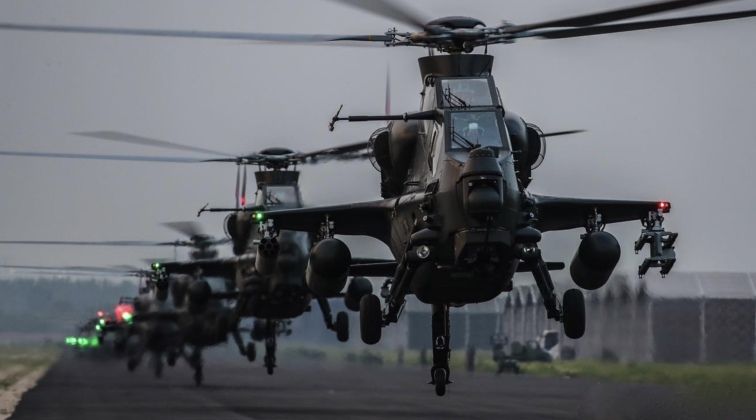
Chinese Z-10 Attack Helicopters
The Chinese People’s Liberation Army Ground Force has deployed Z-10 attack helicopters for low-altitude penetration training exercises, strengthening the fleet’s survivability while striking inside heavily defended battlespaces. The exercise appeared to focus on terrain-masked manoeuvres to reduce exposure to modern air defences. The Z-10 forms the backbone of the Ground Force’s combat aviation fleet, with variants brought into service from 2009 having integrated a new WZ-16 engine which improves its flight performance and its endurance. The aircraft can carry up to 16 HJ-10 anti-tank missiles, with this expanded weapons carrying capacity narrowing the gap in firepower with heavier U.S. and Russian designs such as the AH-64 Apache and Mi-28.
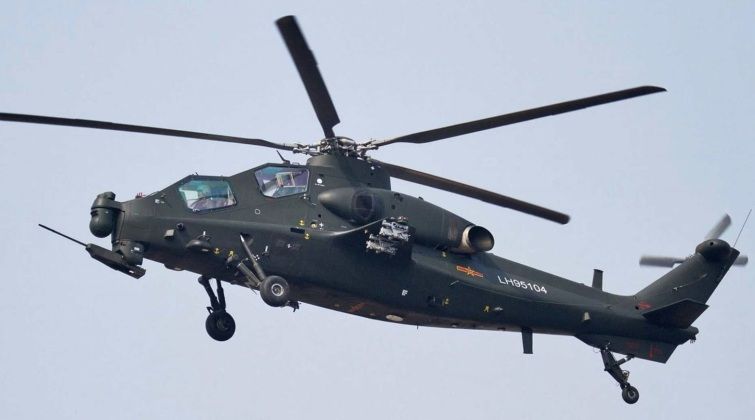
Repeated exercises training for similar low altitude operations using the Z-10 indicate that the Ground Force is placing growing importance on low-altitude penetration missions, possibly with the intention of preparing for Taiwan Strait war scenarios. Terrain-masked flight is closely connected to missions extending beyond conventional close fire support, with low-altitude navigation being essential for armed reconnaissance, anti-armour operations, battlefield interdiction, escort missions and the protection of transport helicopters supporting air-assault forces. Attack helicopters are expected to be relied on to survey approach corridors, identify threats, and suppress hostile fire while personnel are deployed by air.
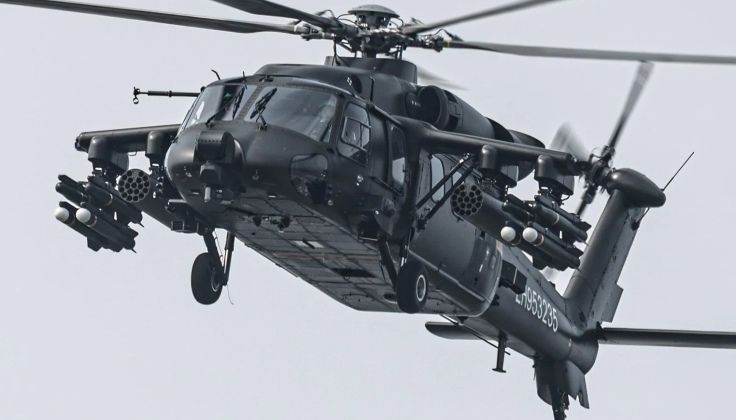
Commenting on the complementary capabilities of the Z-10 and the new Z-20T, Zhu observed: “If the mission solely involves attack tasks, the Z-10 attack helicopter is the optimal choice… If there is a need to conduct airlift operations and troop transport in addition to attack tasks, the Z-20T, which combines transport capacity with air-to-ground capabilities, can be employed.” This new gunship thus complements the Z-10’s exclusive focus on combat operations, with the two expected to operate closely together. The Z-10’s design emphasises low maintenance needs and sustainment costs, high mobility, and optimisation for precision warfare, and provides unique Chinese solutions to meeting operational requirements with a design that is entirely distinct from U.S. and Russian designs.
