
China’s Lethal Anti Tank Missiles: Why the PLA’s Adversaries Fear the HJ-8, HJ-9, HJ-10, HJ-11 and HJ-12
Military Watch Magazine Editorial Staff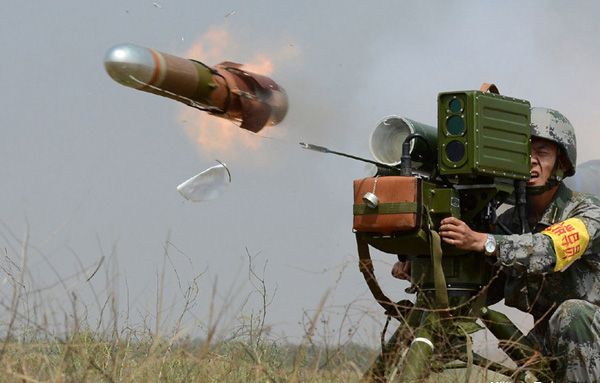
PLA Solider Operates HJ-8 Anti Tank Missile
For the duration of the Cold War China’s People’s Liberation Army (PLA) faced a significant technological disparity relative to both the United States and the Soviet Union, and as such relied primarily on a large defensively oriented ground force for its defence for lack of advanced naval and air arms capable of matching those of potential adversaries. China was the last country in Northeast Asia to deploy fourth generation fighter jets when it acquired its first Su-27 Flankers in 1992, well behind the Koreas and Japan as well as the forward deployed forces of the United States, with 75% of its fighter fleet at the time comprised of early second generation J-6 fighters dating back in their service to 1955. Massed infantry formations combined with a limited nuclear missile deterrent force thus formed the mainstay’ of the PLA’s capabilities, though the equipment of its ground force left much to be desired relying primarily on ageing firearms and near obsolete Type 59 tanks - based on the Soviet T-55 which dated back to 1949. As the PLA begun to invest heavily from the 1990s in the modernisation of its capabilities, one field in which the country's ground forces appeared to particularly prioritise modernisation was anti tank guided missiles (ATGM) - a cost effective means of engaging the vast and more advanced armoured units which it faced in a potential war.
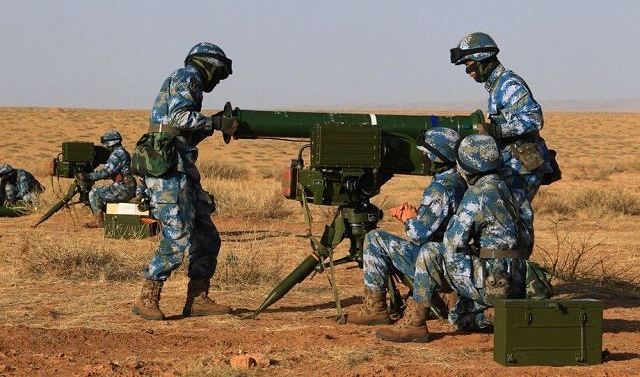
While the PLA Army had formerly relied on the HJ-8 as its most advanced anti tank platform, the missile had entered service from 1985 in limited numbers and its ability to engage advanced enemy battle tanks such as the Soviet T-80 and American M1 was in doubt. The HJ-8 did prove highly effective in the hands of Yugoslav forces in the 1990s, but the performance requirements for missile’s successors were significantly higher as PLA sought more sophisticated ATGMs to counter the most advanced Western armour. The new missile was to have comparable capabilities to the Javelin, Kornet and Spike missiles produced by the United States, Russia and Israel today, with laser guidance, a longer range and countermeasures to the increasingly sophisticated active and passive protection systems being deployed.
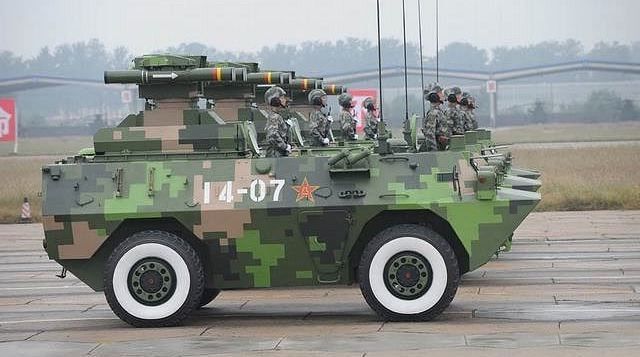
The HJ-9 was the first post Cold War ATGM designed for the PLA, and entered service in 1999. The missile system made use laser guidance to improve its accuracy and impact speed relative to the wire guided HJ-8. The new missile used two rocket motors rather than one, which extended its missile’s range by one and a half kilometres providing a 5.5 kilometre range. The HJ-9 was designed to be light and easily redeployable, which combined with its precision and high impact speed made it a serious threat to enemy battle tanks. Its producers claim that the missile can penetrate 1,200mm of armour, though it can be equipped with high explosive or thermal effect warheads when deployed against non armoured targets such as bunkers. The missile’s weight is approximately 150% that of the HJ-8, and it is significantly larger. An enhanced variant of the design, the HJ-9A, was equipped with a millimetre wave seeker providing 'fire and forget’ capabilities - foregoing the need for guidance from the operator after launch. A further improvement on the design entered service as the HJ-9B, with included an upgraded seeker.
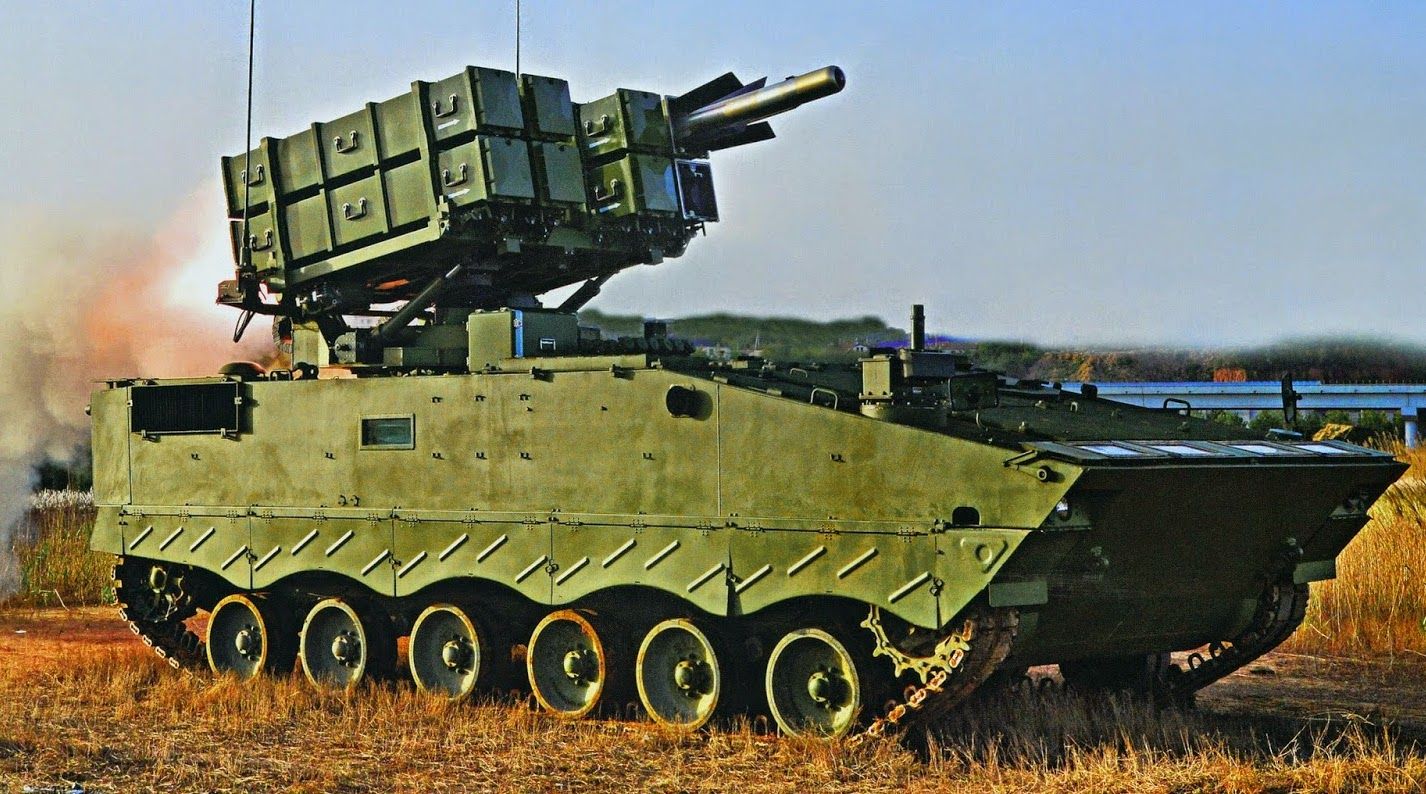
Following on from the HJ-9, the HJ-10 was developed with a similar role and included advanced systems for engaging enemy helicopters. The missile made use of fibre opting wire guided technologies, though later versions were equipped with laser homing and millimeter wave radar seekers similar to those of the HJ-9A. The HJ-10 was not developed as a replacement for the HJ-9 or HJ-8, but rather a heavier variant making use of similar technologies to be launched by combat helicopters and light armoured vehicles. With the missile’s greater weight came a higher payload and longer range, with the HJ-10 estimated to be able to target enemy armour at well over 10km away. The missile can make use of two different warhead types, the tandem charge designed to overcome advanced reactive armour and a top attack variant - designed to exploit a vehicle’s more vulnerable sky-facing armour. Alongside the standard seeker systems used by the HJ-9A, the HJ-10 can also make use of TV and IR guidance. Due to the sensitivity of its technologies, the HJ-10 has never been exported and remains in service in the PLA exclusively. While the highly complex missile platform took over two decades to develop, it today serves as a major asset for the PLA. A separate missile design which was offered for export however was the HJ-11, a missile developed as an evolution of the lightweight HJ-8 design. The platform was marketed as a third generation weapons system where the HJ-8 has been second generation, and was equipped with semi active laser guidance to replace the original platform’s older wire guidance system. This represented a major improvement on the original HJ-8 for a relatively low cost.
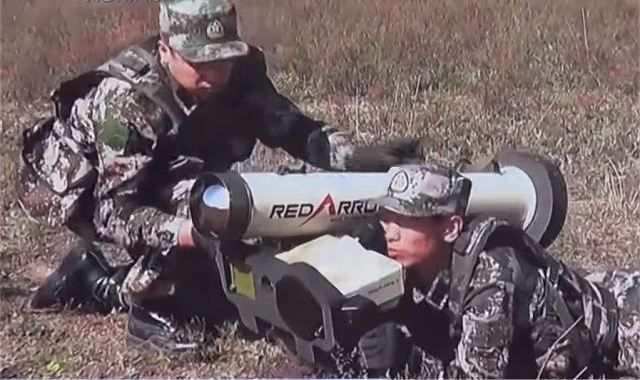
The latest most sophisticated Chinese anti-tank missile is the HJ-12, a platform designed China North Industries Corporation (NORINCO) which entered production in 2014. The missile has yet to be exported, but is speculated to potentially be the most capable platform of its kind in the world. The missile’s advanced soft launch systems allows it to be fired from within buildings, making it an invaluable defensive asset. Fire and forget systems and the ability to lock on to targets before launching allows operators to immediately take cover after firing the missile, giving them time to reload to engage a second target. The HJ-12 is capable of and optimised for penetrating explosive reactive armour, and retains an optimal firing range of 4km. Engagement at longer ranges is possible at the expense of precision and penetrative power. The platform combines highly sophisticated capabilities with a very light weight, just 22kg, allowing ground forces to remain mobile while deploying formidable firepower. The missile is highly manoeuvrable and designed to impact enemy vehicles from the top, taking advantage of weaker armour. The HJ-12 represents to culmination of decades of development of advanced anti tank missiles, and provides PLA ground forces with the ability to engage even the most capable armour even without armour or air support of their own. Whether the missile will proliferate to Chinese export clients, as the Russian Kornet and North Korean Bulsae-3 have with both being widely used in Middle Eastern wars today, remains to be seen.
