
Western World’s Most Powerful Attack Helicopter Shot Down By Iranian Forces at Range
Military Watch Magazine Editorial Staff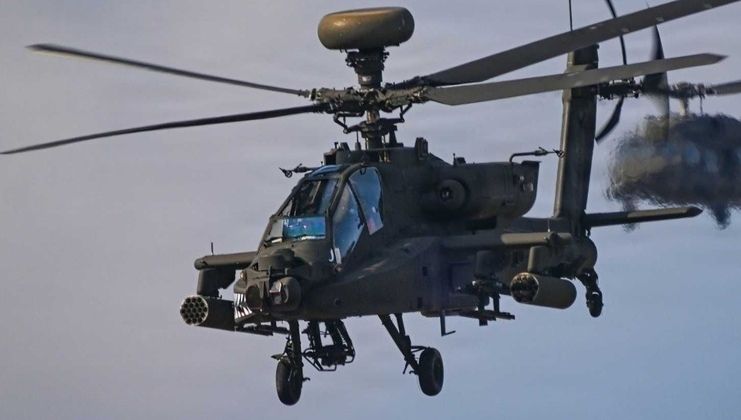
AH-64 Apache Attack Helicopter
United States government sources on June 9 confirmed that an AH-64 Apache attack helicopter was shot down by Iranian forces over the Strait of Hormuz, after the U.S. Central Command earlier in the day reported that the the aircraft “went down” off the coast of Oman without specifying the cause of the loss. “There were two pilots involved, both are safe and uninjured. Nevertheless, the United States must, of necessity, respond to this attack,” President Donald Trump reported regarding the incident. This follows the initiation of U.S. and Israeli attacks on the country on June 8, and severe losses of aircraft by U.S. forces during a prior 39 day assault on Iran from February 28. The engagement has significant implications, highlighting Iranian forces’ continued ability to threaten hostile aircraft far outside their territory despite weeks of sustained air defence suppression efforts by U.S. and Israeli forces. The aircraft’s location at the time of the shootdown indicates that Iran has established a sophisticated long range anti-aircraft capability against helicopters.
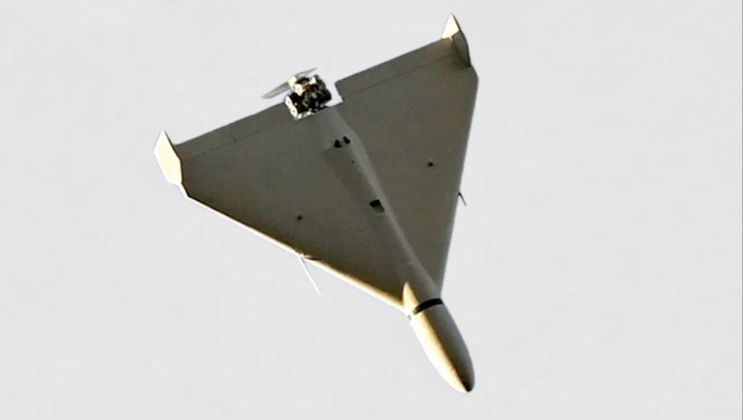
The Apache has become a cornerstone of U.S. Army aviation and is heavily relied on by 18 American strategic partner countries as their premier attack helicopter, with its capabilities far surpassing those of any other NATO standard helicopter type in its combat performance. It combines advanced sensors and battlefield resilience, with its twin engines, duplicated flight systems, crashworthy landing gear, and self-sealing fuel tanks designed to provide a significant capability to survive battle damage. The Apache has been actively being used for counter-drone operations over Israel and the United Arab Emirates. The destruction of the helicopter across the strait from Iranian territory has serious implications extending beyond the loss of a single aircraft, and raises broader questions about the survivability of attack helicopters in contested environments and the evolving threat posed by modern drones and air defence systems.
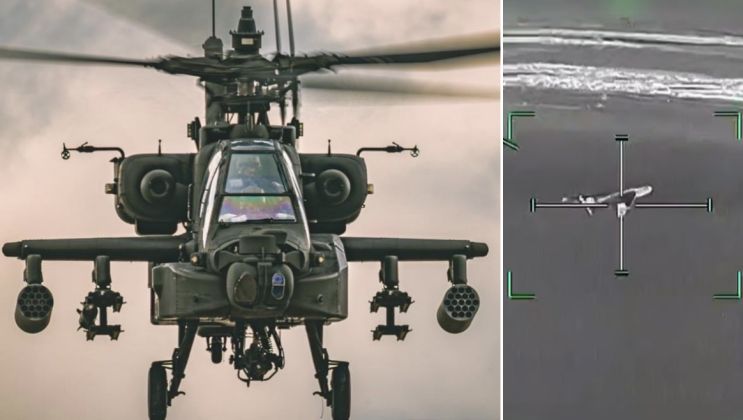
The Iranian shootdown provides a strong indication that traditional attack helicopter operating concepts are facing growing risks. The Apache was designed during the Cold War to hunt tanks while flying low behind terrain and exposing itself only briefly to engage targets. However, modern battlefields are saturated with long-range radars, electro-optical sensors, drones, and loitering munitions that make concealment far more difficult. A successful engagement over open water or outside enemy airspace would suggest that helicopters can be targeted before they reach weapon release range. Unconfirmed reports indicate that the Apache was shot down by an Iranian single use attack drone, such as the Shahed 136, which is notable because attack helicopters have traditionally been considered relatively agile targets. A drone successfully intercepting a helicopter would highlight the growing capability of inexpensive unmanned systems to threaten platforms costing tens of millions of dollars, which has previously been demonstrated by both sides in the Ukrainian theatre.
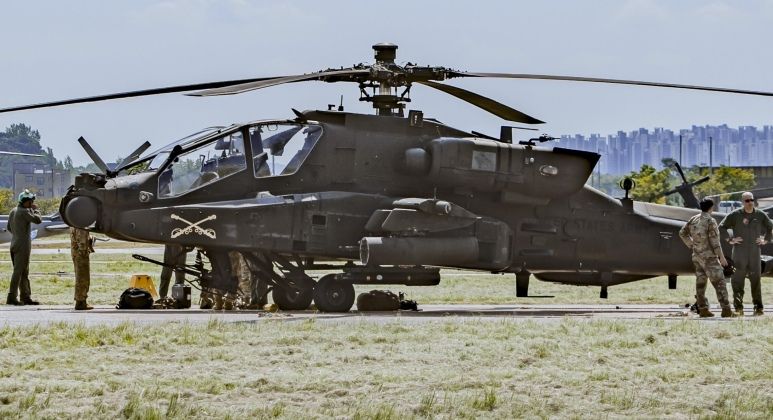
The United States Army in January deactivated its 5th Air Cavalry Squadron, 17th Cavalry Regiment, which had been equipped with Apaches and stationed in South Korea for more than three years, with this widely interpreted by analysts as a response to the demonstrated vulnerability of such aircraft to drone attacks in particular in the Ukrainian theatre. The South Korean Defence Ministry’s decision to cancel planned orders for Apaches the previous year was interpreted as a likely response to the same trends. While experts widely projected that Apache helicopters would not be survivable in a high intensity combat against world leading militaries such as China or North Korea, the aircraft were still expected to remain viable against lower tech adversaries such as Iran. It remains uncertain to what extent planned Apache operations will change in the theatre. It is notable that the U.S., China and Russia have all continued to invest advanced heavyweight attack helicopter programs, indicating that these assets are still considered to have some viability.
