
U.S. Deactivates Key Apache Attack Helicopter Unit Forward Deployed Next to North Korea: Drone Warfare Advances Leave Viability in Question
Military Watch Magazine Editorial Staff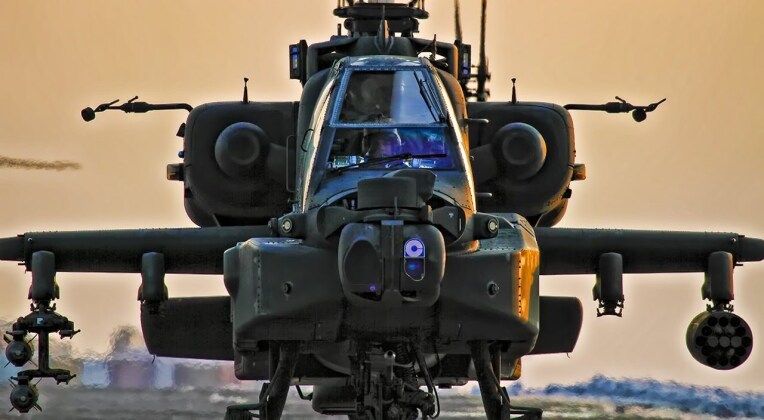
AH-64 Apache Attack Helicopter
The United States Army has deactivated its 5th Air Cavalry Squadron, 17th Cavalry Regiment, a reconnaissance and attack helicopter squadron which has been stationed in South Korea for more than three years. Operating AH-64 Apache attack helicopters and a wide range of reconnaissance assets, the unit was based at Camp Humphreys in Pyeongtaek, approximately 60 kilometres south of Seoul, and within minutes’ flight of targets in North Korea. A Congressional Research Service report concluded the deactivation was conducted under an Army transformation initiative, fuelling speculation that it could be intended as part of permanent force reductions on the Korean Peninsula. The United States currently remains in a state of war with North Korea, refuses to recognise its existence despite its status as a UN member state, and has prioritised many of its most capable land warfare assets for deployment near the country’s territory.
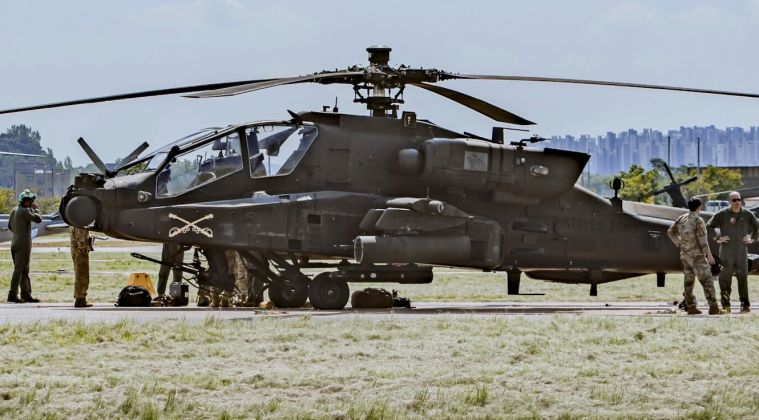
Commenting on the decision to withdraw the attack helicopter unit, South Korean Defence Minister Ahn Gyu-back observed: “There seem to be a number of changes underway within the U.S. Army related to Apache helicopters… This does not appear to be an issue limited to U.S. Forces in Korea, but rather part of reforms taking place across the U.S. Army as a whole.” He added that he plans to visit Camp Humphreys to seek clarification directly from U.S. Armed Forces officials, noting: “I intend to hear firsthand about the circumstances surrounding this decision,” he said. “It would not be appropriate to draw conclusions based on speculation alone.” The Apache is the only heavyweight attack helicopter type in service anywhere in the Western world, and is broadly equivalent its role and capabilities to the Russian Mi-24, although newer variants have comparably advanced avionics and weaponry to the Russian Mi-28 and Ka-52.
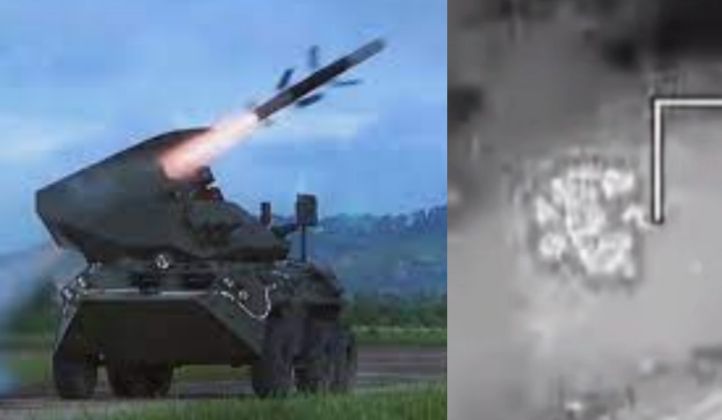
The decision to withdraw the Apache fleet follows a decision by the South Korean Defence Ministry to reduce its own orders for the same helicopter type, which as widely interpreted by analysts as a response to the demonstrated vulnerability of helicopters, including advanced attack helicopters, to drone attacks in particular. Signs of significant modernisation of the North Korean drone fleet, including the dispatch of 25,000 North Korean workers to man Russian production lines for many of the newest and most capable drone types, has raised the possibility of combat helicopters across South Korea being left highly vulnerable. North Korea has continued to rapidly modernise its frontline units, including deploying one of the world’s most capable anti-tank missile types the Bulsae-4, which has demonstrated its capabilities in Ukraine. The missile has a 10 kilometre range, over double that of its American counterpart the Javelin, and has advanced top attack and fire and forget capabilities, with its performance making it a potential leading threat to helicopter assets.
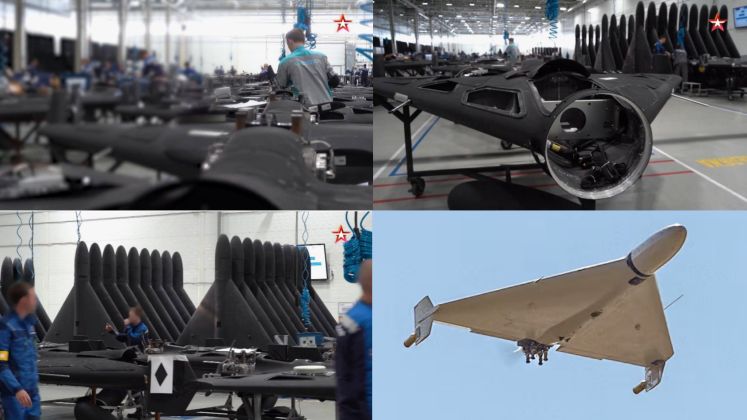
The Apache is by far the oldest type of heavy attack helicopter in production anywhere in the world, with its development having been prioritised during the Cold War in large part in response to the Soviet Union’s development of the Mi-24, which had for the preceding 15 years been in a league of its own in terms of its capabilities. Concerns grew regarding the aircraft’s reliability after four Apaches crashed in just 44 days in early 2024, including two within just three days in March. North Korea notably deploys no heavyweight attack helicopters of its own, although there has been speculation that it could procure a small fleet from Russia as part of payments for its tens of billions of dollars’ worth of arms supplies to the country. The much more limited role of helicopters within the Korean People’s Army compared to Russia, the United States, or South Korea, however, means funds are more likely to be prioritised for other procurements.
