
U.S. Funds Major Upgrade to Give Patriot Air Defence System ‘Backwards Shot’ Capability Like Russia’s S-300
Military Watch Magazine Editorial Staff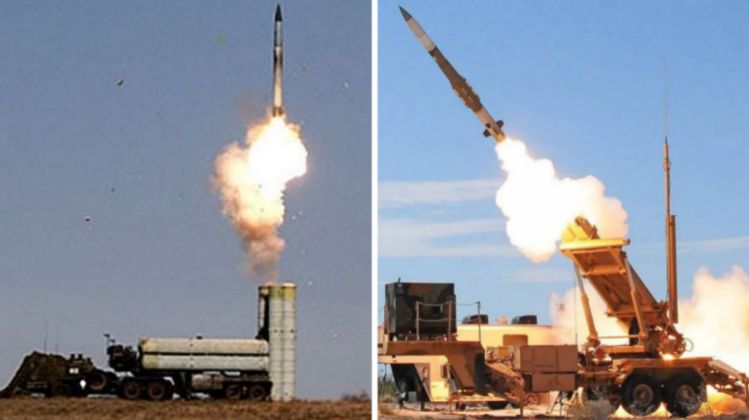
Surface-to-Air Missile Launches From S-300 and Patriot Systems
The U.S. Army has provided a $61 million contract for Lockheed Martin to develop two major upgrades for the MIM-104 Patriot air defence system, namely to develop a containerised missile launcher and a hemispherical guidance device which will allow the system to engage targets 360 degrees around it. The Army in December 2025 announced that a new variant of the Patriot would be able to engage targets that are not directly in front of its launchers, with the lack of such a capability having previously been a leading shortcoming of the system. Rival air defence systems developed in the USSR, Russia, China, and North Korea, have had 360 degree targeting capabilities for decades, while the Patriot is currently capable of engaging targets across only a limited 120 degrees arc.
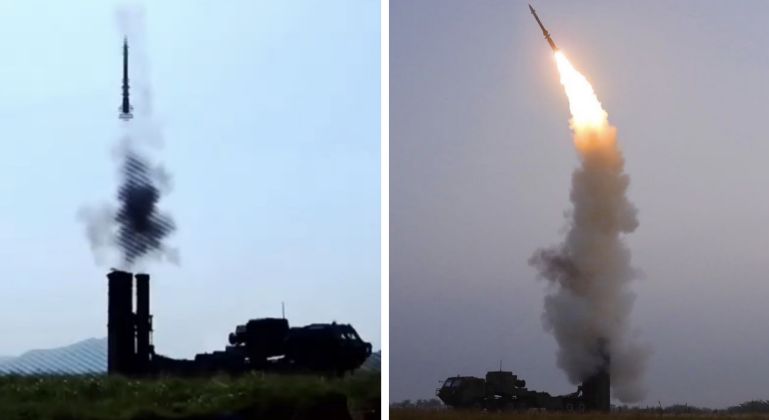
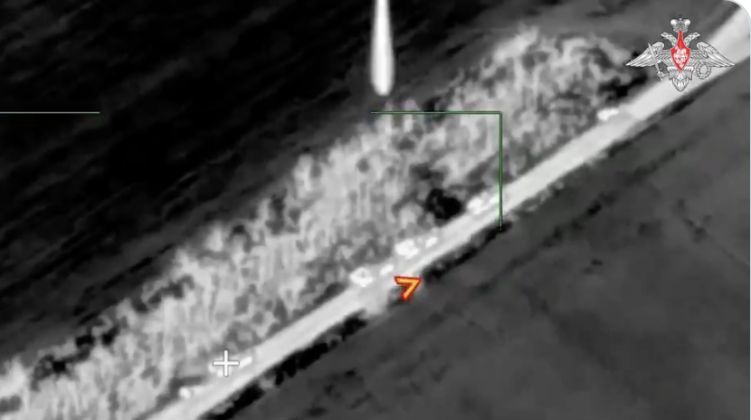
The new contract covers the costs of development and demonstration of the Missile Segment Enhancement Containerised Launcher and the Remote Interceptor Guidance 360 Degrees (RIG-360) Containerised System, along with support for flight test execution, hardware-in-the-loop activities, and production of three RIG-360 Integrated Assemblies. The RIG-360 is at the core of the upgrade, and functions as a software-defined hemispherical missile communications device allows missiles to be guided outside the detection arc of the system’s AN/MPQ-65 radar. Patriot systems will nevertheless face a number of greater constraints compared to rival systems such as the Russian S-400. The system’s reliance on just a single radar, where the S-400 uses more than half a dozen complementary radar types, limits situational awareness particularly outside a 120 degree arc, while also leaving the system highly vulnerable to attacks on its radar.
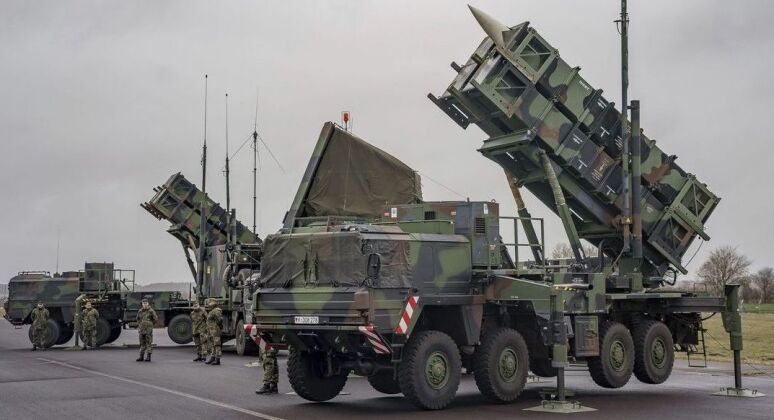
Alongside the development of a new launcher for the Patriot system, U.S. Army Product Manager for Lower Tier Interceptors Lieutenant Colonel Steven Moebes in December also announced the development of new generations of missiles for the system. “So, the current [M903] launcher will slew… I will put in a plug that this year we’re starting a new interceptor program that will have longer range [and] higher altitudes.” Elaborating on the ability to engage targets behind the system, Moebes observed: “All of our digital simulations are showing that with that new interceptor, we will have the ability for what we call [an] over-the-shoulder shot. So, it will have the kinematic power to be able to launch and actually engage behind us.” Further significant questions regarding the Patriot systems’ capabilities have been raised after footage from the U.S.-Iranian War that began on February 28 have shown the systems repeatedly failing to intercept even relatively simple short range missile attacks, with failed launches at times resulting in civilian casualties.
