
Russia’s S-400 Air Defence System Achieves Outstanding Situational Awareness Using Multiple Complementary Radars
Military Watch Magazine Editorial Staff
Antenna Arrays From Nebo-M System
The Russian S-400 long range air defence system is currently relied on to form the backbone of the country’s air defence network, with more than twice the quantities of funds having been spent on procuring the systems over the last two decades than on all types of fighter aircraft combined. While the system has been widely praised by analysts and operators for its very high mobility, its extreme engagement range, and its ability to shoot down very fast targets using missiles with speeds of over Mach 14, its high situational awareness has also gained considerable attention. The system was developed from the late 1990s specifically to respond to emerging challenges from aircraft and missiles with advanced stealth capabilities and reduced radar cross sections, with the use of multiple types of complementary radars providing a particularly clear picture of the battlefield.
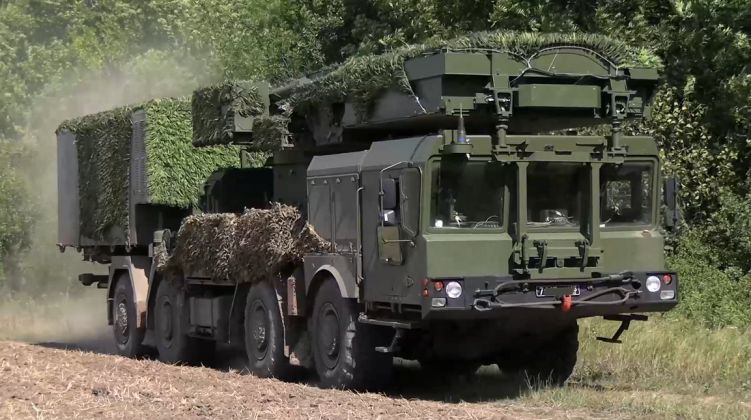
The 91N6 ‘Big Bird’ panoramic surveillance radar is the primary radar integrated into the S-400 system, and is relied on for long-range surveillance & target acquisition radar to provide wide-area airspace scanning and target tracking. It has a detection range of up to 600 kilometres for large aircraft with high radar cross sections, such as E-7 airborne warning and control systems. The radar can track hundreds of targets simultaneously, and feeds data to the command post. It operates in multiple bands, and has electronic protection/jamming resistance.
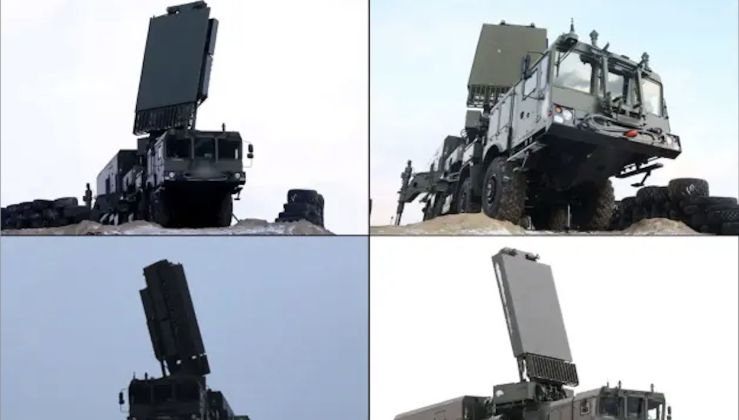
The 92N6 ‘Grave Stone’ X-band fire-control and engagement radar is relied on to track targets and guide interceptor missiles towards them. The radar can both provide real time data to command centres and guide missiles to their targets. It is prized for its very long tracking range of up to 600 kilometres against ballistic missiles and large aircraft. Its multi-channel engagements capabilities allow it to guide multiple missiles against multiple targets at once, while providing mid-course updates and terminal engagement support. Complementing the 91N6 and 92N6, the 96L6 serves as an additional 3D acquisition radar covering a wide altitude range, and is relied on to detect low-flying aircraft, cruise missiles, and fill gaps in coverage from the two main radars. It can track dozens of targets simultaneously, and prioritises threats for engagement radars. The radar has a detection range of approximately 300 kilometres against high radar cross section targets, and plays a key role in feeding targets into the fire control system.

The S-400 system can also integrate the Protivnik-GE L-band early warning radar, which has a long range and lower frequency, and is optimal for detecting stealth aircraft and radar evading cruise missiles. The system was designed for early warning and airspace control, and is deployed at higher-echelon air defence units. S-400s have also more recently increasingly integrated the Nebo-M multi-band 3D radar systems, which combined multiple types of array into one networked system. These include a VHF array optimised for stealth detection, an L-band array optimised for tracking, and an X-band array optimised for precision targeting. The integration of the Nebo-M is considered to have provided a particularly significant improvement to the S-400’s ability to engage stealth aircraft, with its ability to operate across multiple frequencies significantly reducing the effectiveness of low-observable technologies.
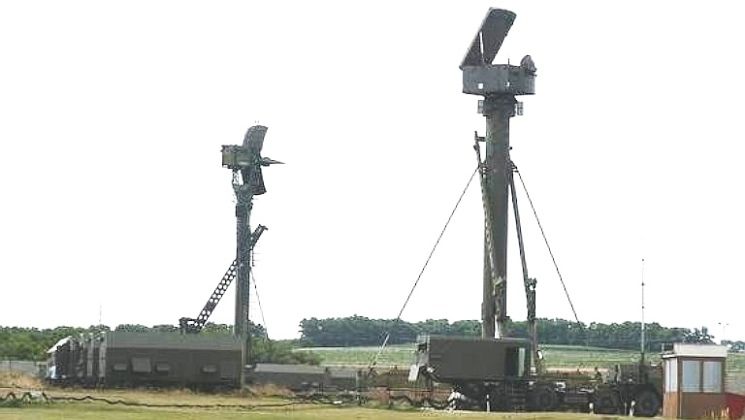
S-400 systems can integrate the 40V6M and 40B6M mobile telescopic mast systems, which were designed to raise radar antennas above ground level, and are mounted on transport vehicles for field deployment. These systems can significant enhance the performance of radars like the 96L6, as they partly circumvent the biggest limitation of ground-based radars, namely the radar horizon, by increasing line-of-sight to significantly extend detection ranges. This is particularly important against terrain-hugging targets such as cruise missiles, especially as the Russian Aerospace Forces do not deploy large numbers of fighters or AEW&C systems to serve as elevated sensor platforms. The S-400’s radars feed data back to the 55K6 command post/system, which fuses all sensor inputs, prioritises threats, and assigns engagements to the appropriate launcher units.
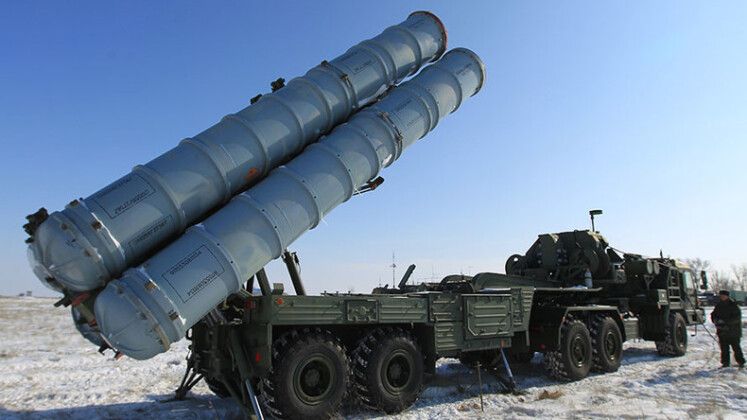
Although the S-400 entered service in 2007, it has continued to be incrementally modernised, with two of the most significant examples being the integration of the Nebo-M radar, and the 40N6 long range surface-to-air missile, the latter which is estimated to have occurred around 2018. The missile can engage targets up to 400 kilometres away, striking targets over the earth’s curvature, although this cannot be achieved by the S-400’s own sensors, and instead relies on targeting data either from forward deployed ground based radars, or from airborne radars, such as those carried by A-50U AEW&C systems. The missile has been successfully combat tested against both Ukrainian and Pakistani targets. Despite a significant increase in fighter production since 2022, the S-400 is expected to continue to be relied on as the backbone of Russia’s air defences for decades into the future, with new radars, and new variants of existing radar types, expected to continue to be developed.
