
Failing U.S. Army Patriot Air Defences in Bahrain Cause Dozens of Civilian Casualties After Missing Targets
Military Watch Magazine Editorial Staff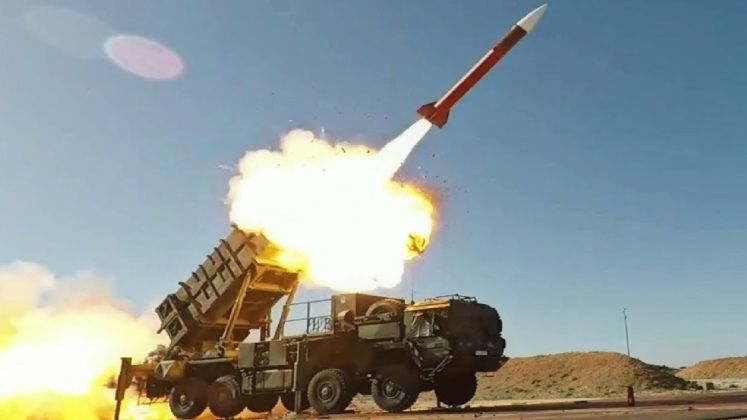
Missile Launch From Patriot Air Defence System
The launch of a U.S. Army MIM-104 Patriot long range air defence system in Bahrain has been identified as the cause of dozens of civilian casualties on March 9, with researchers at the Middlebury Institute of International Studies confirming prior assessments that the missile which caused the casualties was launched from a U.S. Army battery located approximately seven kilometres southwest of the Mahazza neighbourhood on Sitra island. U.S. and Bahraini government sources had initially attributed the casualties to an Iranian drone strike. The report contributes to the growing controversies surrounding the use of Patriot systems in the U.S.-led war effort against Iran, which began on February 28 when U.S. and Israeli forces launched full scale assault on the country with the aim of forcefully toppling its government.
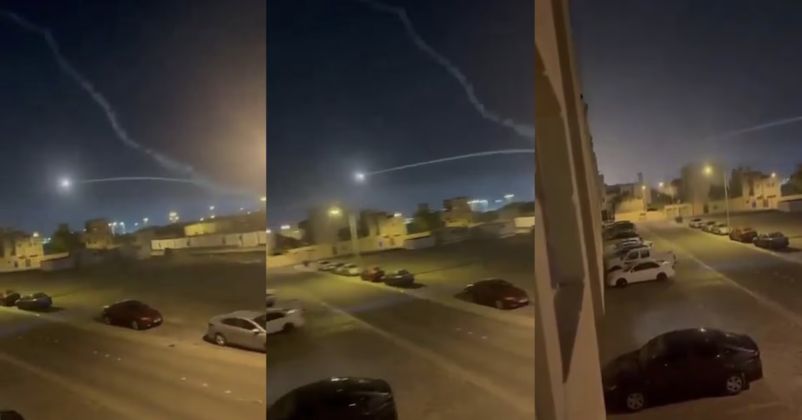
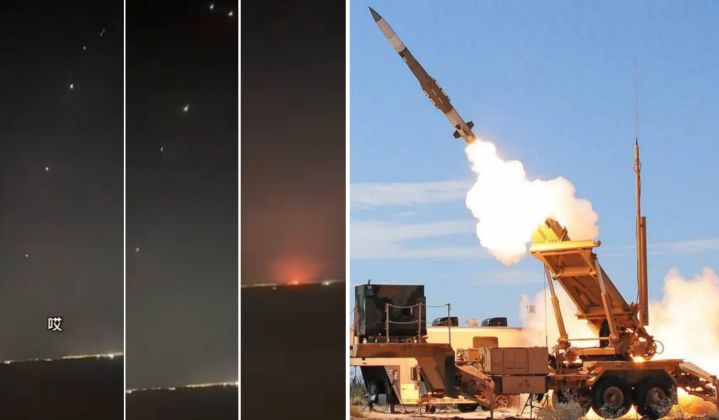
In the initial hours of hostilities footage showed Patriot systems in Qatar consistently failing to intercept Iranian ballistic missiles, with footage showing three interceptors launched, rather than the standard two, indicating an awareness of the lower than advertised probability of kill. In mid-March a crew member from a civilian ship sailing through the Gulf of Oman filmed two Iranian ballistic missiles striking oil facilities at the United Arab Emirates port of Fujairah, and failed efforts by local forces to use a Patriot system to intercept them also using three interceptors against each target. PAC-3 interceptors cost approximately $4-6 million dollars, with export clients in Arab world typically paying closer to $6 million, bringing the cost of each interception attempt against Iranian short range missiles costing under $400,000 to around $18 million.
The capabilities of the U.S. and its strategic partners’ regional air defence network has been severely diminished since the outbreak of hostilities, with Iranian precision strikes having destroyed the sole AN/FPS-132 radar based outside the U.S., which was located in Qatar, and two AN/TPY-2 radars from THAAD systems in Jordan and the United Arab Emirates, as well as multiple lower value radar systems. The U.S. Army’s stockpiles of interceptors for the Patriot system were already severely depleted when the country initiated attacks on Iran, and were confirmed in mid-2025 to have fallen to just 25 percent of the volume deemed necessary by the Pentagon. To reinforce its positions in the Middle East, the U.S. has withdrawn both interceptors and complete air defence systems from bases across much of the world, most notably from South Korea, with this occurring both in the months preceding attacks on Iran, and in the following weeks.
