
Footage Shows U.S.-Supplied Patriot Air Defences Repeatedly Fail to Shoot Down Iranian Missiles Over Key Emirati Oil Facilities
Military Watch Magazine Editorial Staff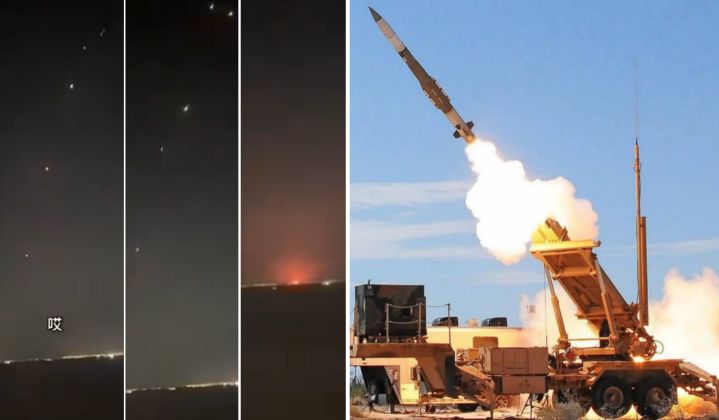
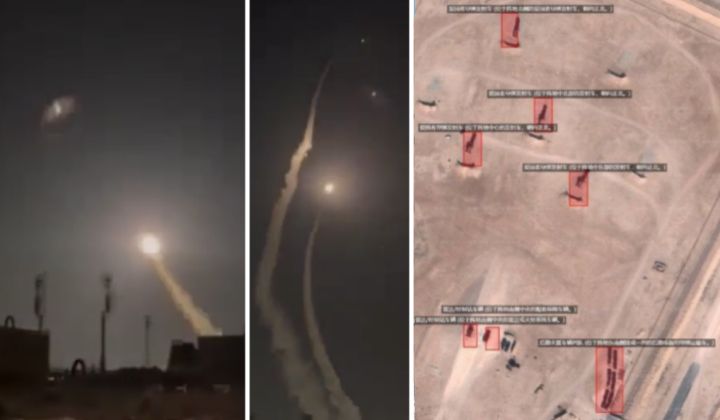
Failed Patriot Interception Attempts Over Fujairah, Explosion from Iranian Missile Impact, and Patriot Launcher
A crew member from a civilian ship sailing through the Gulf of Oman filmed two Iranian ballistic missiles striking oil facilities at the United Arab Emirates port of Fujairah, and efforts by the United Arab Emirates Armed Forces to use a U.S.-supplied MIM-104 Patriot air defence system to intercept them. Iran has launched retaliatory strikes targeting key infrastructure across multiple U.S.-aligned Middle Eastern countries, after the U.S. and Israeli initiated a large scale air assault on Iran on February 28 with support of multiple regional strategic partners. The targeting of Gulf oil facilities, particularly in the United Arab Emirates, has represented been a direct response to the massive damage caused to Iran’s own oil infrastructure. Six surface-to-air missiles launched from a UAE Armed Forces Patriot system were confirmed in the footage to have failed to intercept two Iranian ballistic missiles, despite the latter showing no signs of integrating manoeuvring reentry vehicles or similarly complex countermeasures.
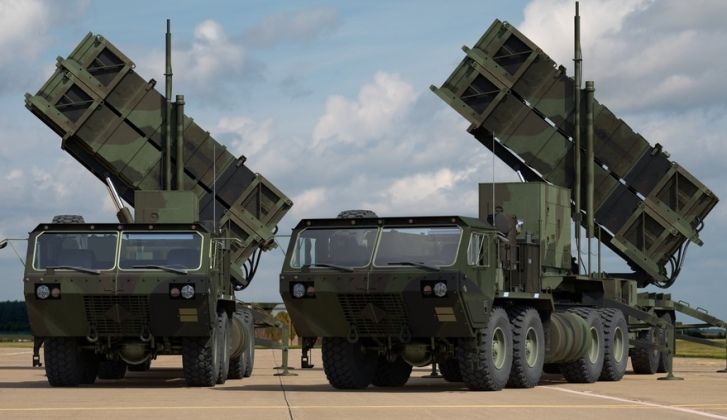
The United Arab Emirates has imposed strict censorship on the filming, posting, or sharing of footage of Iranian strikes, and has conducted mass arrests of over 50 people for violations. As the footage of the strike on Fujairah was filmed by a sailor on a ship outside the country’s territory, however, it has provided rare insight into the ongoing hostilities from outside Abu Dhabi’s jurisdiction. Although the Patriot was designed to achieve a high probability of kill against ballistic missile attacks by launching just two interceptors, the launch of three interceptors against each incoming Iranian missile despite a major strain on supplies likely indicates an awareness of system’s limited reliability even against relatively basic attacks. The publication of the footage follows the release of less clear footage from Qatar in the initial hours hostilities showing Patriot systems there similarly consistently failing to intercept targets. These attempts similarly saw three interceptors launched against incoming targets.
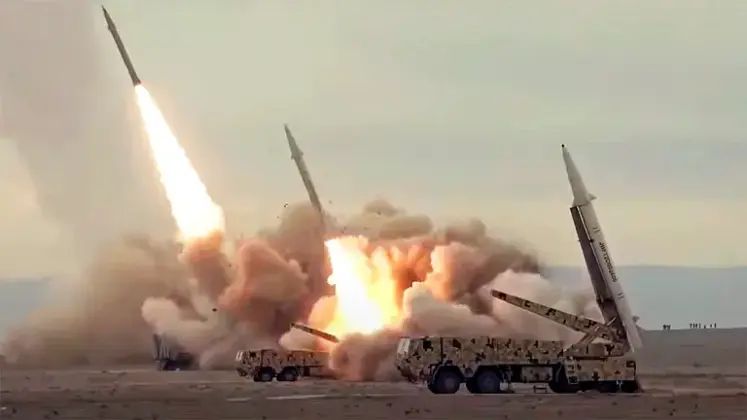
While the viability of relying on the Patriot system for defence against Iranian short range ballistic missile attacks has long been in question, the trend towards launching three interceptors against each target, even if successful, would further diminish the system’s ability to function for anything more than a very brief conflict. PAC-3 interceptors cost approximately $4-6 million dollars, with export clients in Arab world typically paying closer to $6 million, bringing the cost of each interception attempt against Iranian missiles costing under $400,000 to around $18 million. Iran’s ballistic missile arsenals are also considered orders of magnitude larger than the U.S. and its regional strategic partners’ collective inventories of Patriot interceptors. The U.S. Armed Forces’ own stocks were themselves already severely depleted when the country initiated attacks on Iran on February 28, and were confirmed to have fallen to just 25 percent of the volume deemed necessary by the Pentagon.
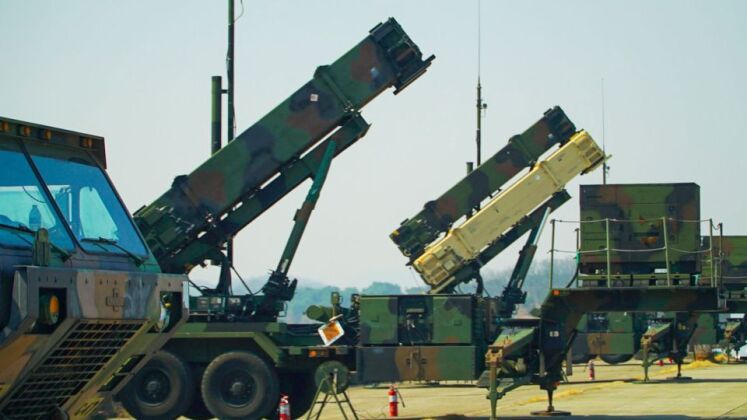
The capabilities of the U.S. and its strategic partners’ region-wide air defence network has been severely diminished, with the Iranian Islamic Revolutionary Guard Corps having destroyed the sole AN/FPS-132 radar based outside the U.S., which was located in Qatar, and two AN/TPY-2 radars from THAAD systems in Jordan and the United Arab Emirates, as well as multiple lower value radar systems. While defences in Israel can depend on a further AN/TPY-2 system in Turkey to track incoming missiles, and have reportedly been bolstered by new U.S. Army THAAD systems redeployed from South Korea, Gulf states located much closer to Iran have had no such protection. The short range ballistic missiles which Iran can use to strike targets in Gulf states are meanwhile significantly more abundant and less costly than those which can be used to strike Israel and U.S. bases in Jordan.
Aside from the depletion of both the radar network and the inventories of interceptors, the capabilities of the Patriot system remain a considerable issue, and have long been cause for controversy. During its sole engagement with Iranian missiles in 2025 to blunt a limited attack on Al Udeid Air Base in Qatar, the Patriot failed to fully protect the facility despite Iranian forces using only lower end Fateh-313 missiles, and in spite of prior warning of the attacks having been provided to the United States to prevent escalation. U.S. officials at first praised the success of U.S. Army and Qatari Air Force Patriot systems, before the release of satellite footage showing the destruction of a radome housing the terminal communications suite forced Pentagon sources to concede that they were not fully successful. Patriot systems were similarly proven to have failed to intercept even relatively basic Yemeni ballistic missile attacks on Saudi Arabia in 2017, and subsequent drone attacks on Saudi oil fields in 2019, among other incidents in a long history of the system’s failures dating back to the early 1990s.
