
Israeli Pilot Films Submunitions From Iranian Ballistic Missile Descend Over Israel: Why Multi-Warhead Strikes Pose Major Challenges
Military Watch Magazine Editorial Staff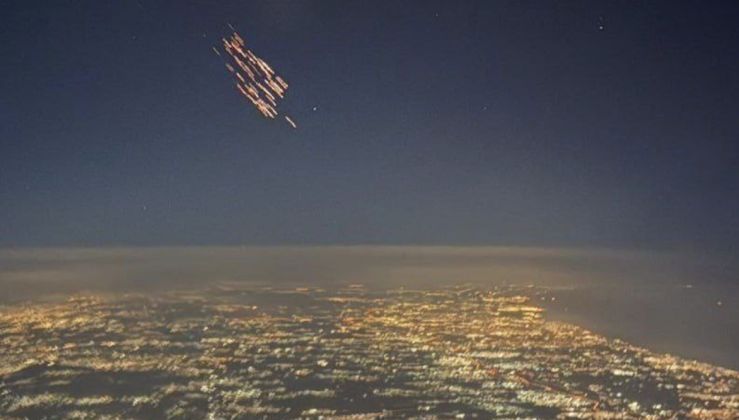
Israel Pilot Films Submunitions From Iranian Multi-Warhead Missile Descend on Israel
Footage released by an Israeli fighter pilot overflying his country’s territory during the ongoing air campaign against Iran has clearly shown an Iranian ballistic missile releasing submunitions during a strike on Israel. Although multiple images of missiles releasing submunitions have been released in the past, this particularly clear footage has highlighted how advances in Iranian missile technologies have posed new challenges to Israeli and U.S. missile defence efforts. While older Iranian ballistic missile types such as the Shahab 3 operationalised in the 1990s following technology transfers from North Korea carry just a single warhead, the integration of multiple reentry vehicles has become increasingly common on newer missile types, with heavier missile types such as the Khorramshahr 4 being able to carry particularly large numbers of warheads.
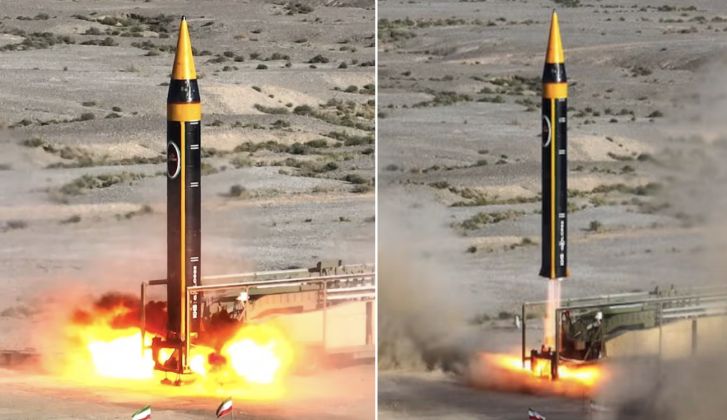
The carriage of submunitions has multiple benefits, allowing Iranian missiles to overwhelm Israel and the Untied States’ already highly strained missile defences, and engage targets over wider areas. Such missiles were used in only limited numbers when Iran conducted more limited strikes on Israeli targets in June 2025, but have been filmed being used far more frequently during current hostilities which began on February 28. Nevertheless, Iranian missiles carrying hypersonic glide vehicles, namely the Fattah 2, can only carry a single vehicle, with Iran having yet to develop a missile type like the new Russian Oreshnik capable of carrying multiple glide vehicles for launch against multiple separate targets using independently re-targetable warheads. This is likely to be a next step for the country’s defence sector, possibly in cooperation wit North Korea, should current hostilities end in anything other than a total Iranian defeat.
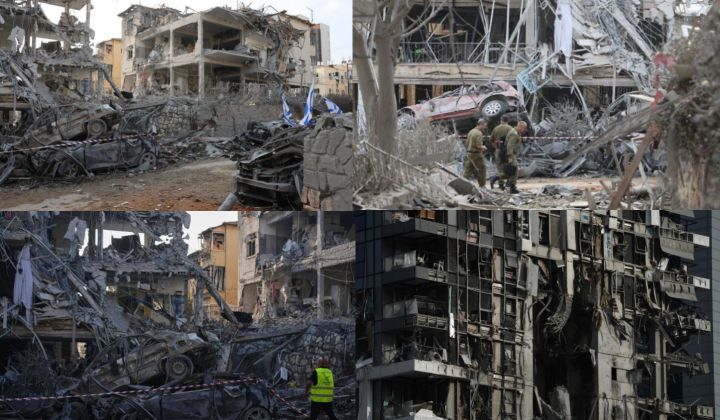
Israel has imposed an extreme censorship regime against filming damage from ballistic missile attacks on the country, with Israeli forces having in the past resorted to jamming commercial satellites from observing its airfields following claims of large scale damage from Iranian strikes. Nevertheless, journalists on the ground have reported that Iranian missile strikes have caused mass damage across major cities, and that missiles with penetrative capabilities, including those with hypersonic glide vehicles, have been able to destroy fortified underground bunkers and shelters which are relied on very heavily both by the armed forces and by the civilian population. Shortages of anti-ballistic missile interceptors, and an inability to cause sufficient damage to the Iranian ballistic missile arsenal on the ground, have been primary challenges for U.S. and Israeli war effort, with the U.S. having withdrawn anti-missile systems from across the world, including strategically located THAAD systems from South Korea, to strengthen defences in Israel.
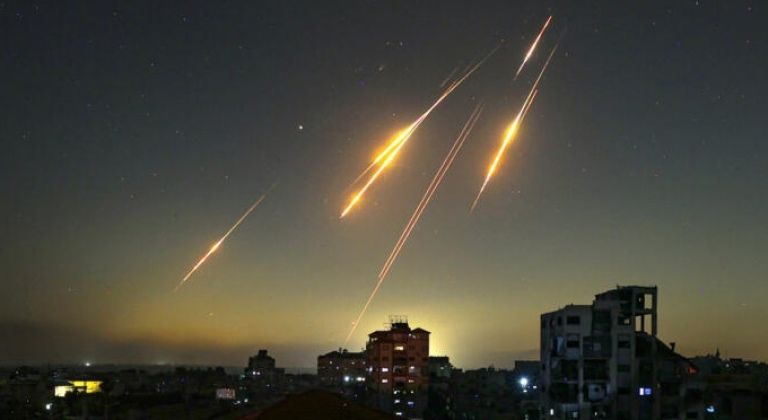
Beyond Israel, Iranian ballistic missile strikes have reportedly struck at least 17 U.S. military facilities across the Middle East, with an inability to stop damage from missile strikes having reportedly been a primary factor leading the U.S. to attempt to push for a ceasefire. Shortly after the U.S. and Israel initiated hostilities, the Iranian Islamic Revolutionary Guard Corps destroyed the sole AN/FPS-132 radar based outside the U.S., which was located in Qatar, and two AN/TPY-2 radars from THAAD systems in Jordan and the United Arab Emirates, as well as multiple lower value radar systems. This has left Israel and U.S. Army and Navy units protecting Israeli territory heavily reliant on more limited early warning data from radars in Turkey, and from U.S. Air Force E-3 AWACS overflying the region. The destruction of the ground-based radar network outside Turkey and Israel itself was reportedly a force multiplier or Iranian attacks, minimising the time for Israeli personnel and civilians to seek shelter.
