
Iranian Strikes Have Destroyed $2.7 Billion Worth of High Value U.S. Anti-Missile Radars
Military Watch Magazine Editorial Staff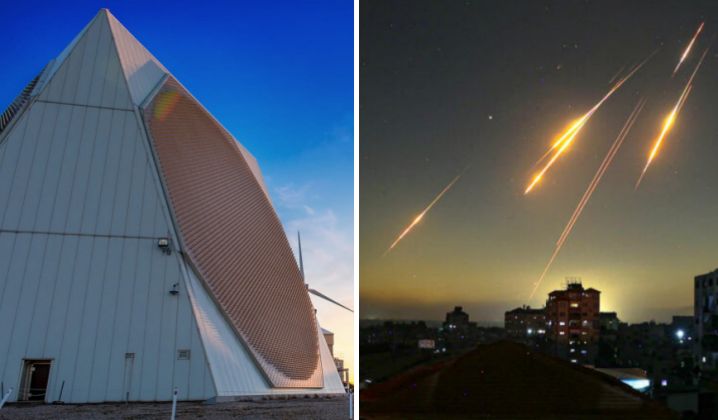
AN/FPS-132 Radar and Iranian Missile Strike
The Iranian Islamic Revolutionary Guard Corps has destroyed $2.7 billion worth of high value radar systems during the first week of engagements with U.S. forces, after the Corps responded to U.S. and Israeli attacks on Iran from February 28 by launching large scale missile and drone strikes on key military and strategic targets across the Middle East. Although strikes on multiple radar systems of varying value have been reported, including lower value radars such as the AN/TPS-59 valued at around $70 million, three of the U.S. Armed Forces’ most high value radar systems are confirmed to have been destroyed. The most significant loss was the AN/FPS-132 radar, a long-range ballistic missile early-warning radar intended to form part of the outermost layer of U.S. missile defences, detecting launches up to 5,000 kilometres away, and able to track hundreds of targets simultaneously and provide precision trajectory prediction for ballistic missiles.
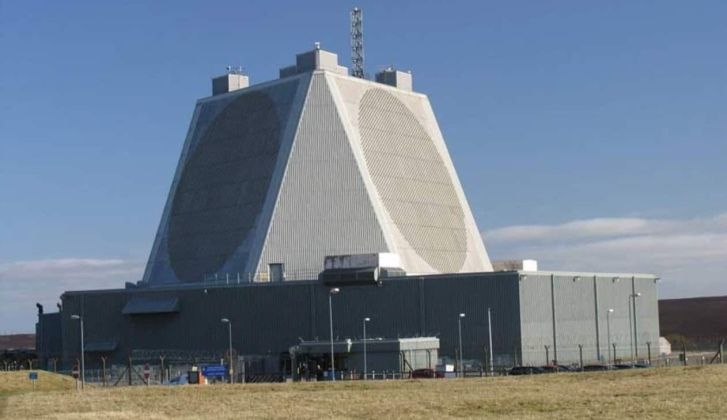
The AN/FPS-132 is relied on heavily to provide cueing data to missile defence systems, as well as early warning to allow personnel and civilians to find shelter. Each radar costs an estimated $1.1 billion, with U.S. sources estimating that it will take five to eight years to replace the one destroyed. The sole radar of its kind in outside the United States first became operational in Qatar in 2013, with the specific purpose of countering the Iranian and Syrian ballistic missile arsenals, the latter which was neutralised after the government in Damascus was toppled in December 2024. Despite general efforts to downplay the successes of Iranian strikes, reporting by U.S. sources has indicated the the destruction of the AN/FPS-132 on February 28 degraded missile-warning capabilities in the region because such radars are rare and hard to replace. The fact that the system was singled out and prioritised for targeting in the opening hours of hostilities indicated that doing so may well have been seen as a force multiplier for subsequent ballistic missile attacks.
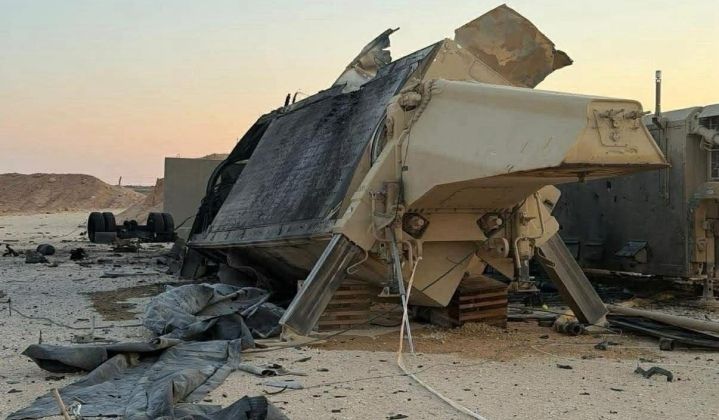
Beyond the AN/FPS-132, Iranian forces have also destroyed two AN/TPY-2 X-band mobile radar system from the THAAD anti-ballistic missile system, including one fielded by the U.S. Army at Muwafak Salti Air Base in Jordan, and another fielded by the United Arab Emirates Armed Forces. Only 15 of these radars are estimated to exist worldwide, the large majority of which are part of THAAD systems. Cost estimates for the AN/TPY-2 have ranged from $550 million to $1 billion, possibly depending on its configuration and support packages, making it the most most valuable air defence radar operated by the U.S. Army. Assuming a cost $800 million per radar, this would place the cost of losing the two, when added to the cost o losing the even more scarce AN/FPS-132, at approximately $2.7 billion.
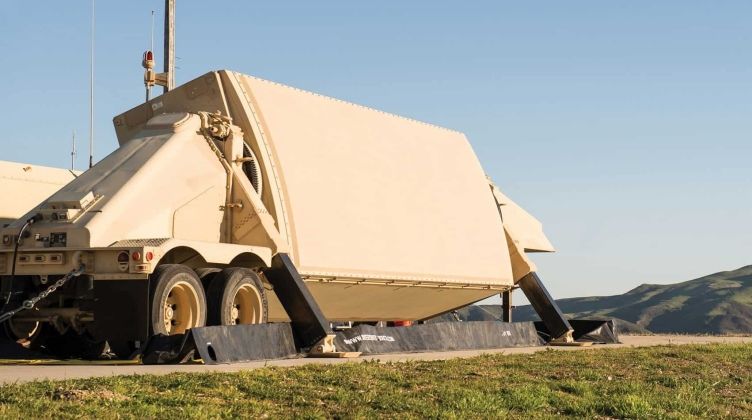
Western air defence systems including THAAD rely on just a single radar, and thus without the AN/TPY-2 a THAAD battery cannot independently search for or track targets. Although the systems can still fire interceptors using data from external sensors, they do so with significantly lower external coverage, under certain specific conditions, and with much reduced effectiveness. This contrasts to Russian air defence systems such as the S-400, which deploy multiple complementary radar types often reaching half a dozen, allowing them to remain operational and maintain high degrees of situational awareness even if a single long range radar is destroyed, as seen in the Ukrainian theatre.
Ballistic missile defence has been a leading cost for the U.S. Armed Forces in its campaigns against Iran, with the use of THAAD from June 13-25, 2025, alone having seen over 150 anti-ballistic missile interceptors from the system expended to intercept Iranian ballistic missile attacks, which is estimated to have cost over $2.35 billion, with missile costing approximately $15.5 million each. This depleted over 25 percent of its the Army’s global arsenal of THAAD interceptors. Due to the much higher intensity of Iranian missile strikes from February 28, and the pre-positioning of a greater number of interceptors in the Middle East, it is estimated that the expenditure of interceptors was significantly greater in the first week of hostilities from February 28 than it was in the preceding 12 days of hostilities in June 2025. Assuming the same missile expenditures as the previous period of hostilities, although it is likely far higher, this would bring costs inflicted by Iran for operations of THAAD and the AN/FPS-132 alone to over $5 billion at a conservative estimate in less than a week of hostilities.
