
Belarus Places New Russian 96L6 Long Range Air Defence Radar on Combat Duty Support S-400 Missile Operations
Military Watch Magazine Editorial Staff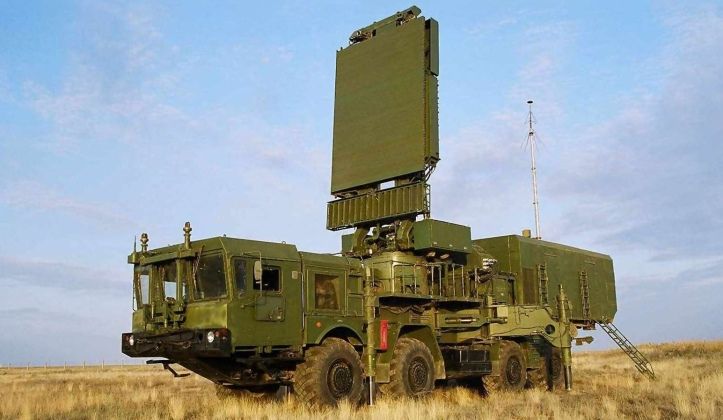
96L6 C-band Radar
The Belarusian Armed Forces have placed a Russian-made 96L6 all-altitude long range air defence C-band radar system on combat duty, marking a major milestone in the modernisation of its ground-based air defence network at a time of high tensions with neighbouring NATO members. Belarusian defence officials have described the new system force multiplier that significantly enhances the early-warning and fire-control architecture of the country’s surface-to-air missile network, which is build around the S-400 long range missile system. The new high-performance surveillance and targeting radar can detect and track objects across the full altitude spectrum, from low-flying cruise missiles and loitering munitions, to bombers flying high into the stratosphere. It was designed to feed target information directly into air defence battle management networks.
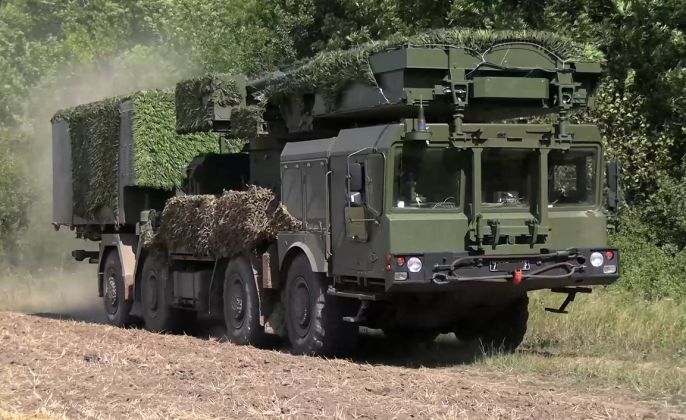
Commenting on the capabilities of the 96L6 system, Belarusian Air Force Colonel Kirill Novopoltsev, who commands an air defence missile regiment involved in the deployment, stressed it provides the dramatic leap in operational capabilities. “Reconnaissance capabilities of our air defence missile regiment have been multiplied by several times,” he said in an official briefing. “This system is almost fully automated compared with its predecessors. Our operators have completed intensive training and can operate the radar in both manual and fully automatic modes,” he added. The development appears to be part of the Belarusian Air Force’s response to increased reconnaissance flights and drone operations by multiple NATO member states along its western borders, as well as its the expected rise in deployments of F-35 fifth generation fighters near its territory.
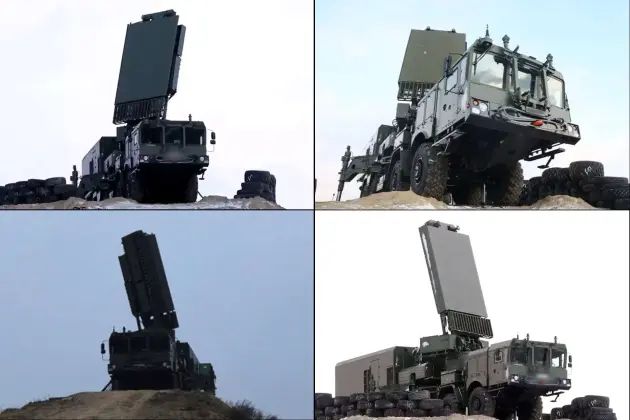
The 96L6 was deployed as part of the S-400 long range surface-to-air missile system, which uses multiple complementary radar systems to maximise situation awareness. These include the 30K6E panoramic radar detection system with a 600km range and the ability to track up to 300 targets, the 96N6E radar with a 400km range capable of tracking up to 96 targets, and optional additional sensors such as the 96L6E with a 300km detection range and the Protivnik-GE with a 400km range and a specialisation in detecting stealth targets. S-400 systems are also capable of relaying targeting data from supporting aircraft to provide guidance to their missiles during flight, including to achieve more accurate ‘over the horizon’ strikes against airborne targets. The ability to guide missiles against targets 300-400 kilometres away has been demonstrated both by Russian systems in the Ukrainian theatre, and by Indian systems in May 2025 during engagements with the Pakistan Air Force.
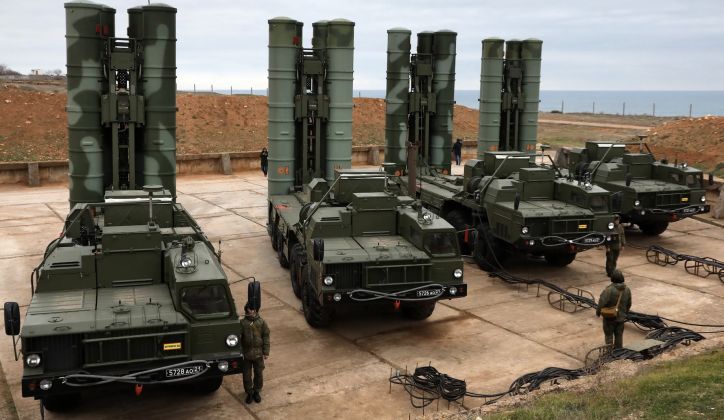
Belarusian S-400 systems have been deployed for joint exercises with Russian forces on multiple occasions, including in May 2022, and more recently in September 2025 as part of the Zapad 2025 joint strategic drills, with a major agreement on jointly sustaining the systems having been signed in late December. The systems provide a tremendous improvement in capabilities over the S-300PT systems previously acquired from Russia. Belarus has complemented its growing S-400 inventory by procuring Su-30SM2 fighter aircraft, which carry some of the largest and most powerful sensors of any fighter type in the world, approximately triple the size of the F-35’s own AN/APG-81 radars. The Su-30SM is considered an optimal elevated sensor platform to support S-400 operations, and can employ R-37M air-to-air missiles with 350 kilometre engagement ranges. The deployment of more advanced target acquisition radars like the 96L6 has the potential to serve as a key force multiplier for this broader network.
