
U.S. Air Force Surges E-3 ‘Flying Radar’ Operations to Protect Israel After Iran Destroys Key Ground Radars
Military Watch Magazine Editorial Staff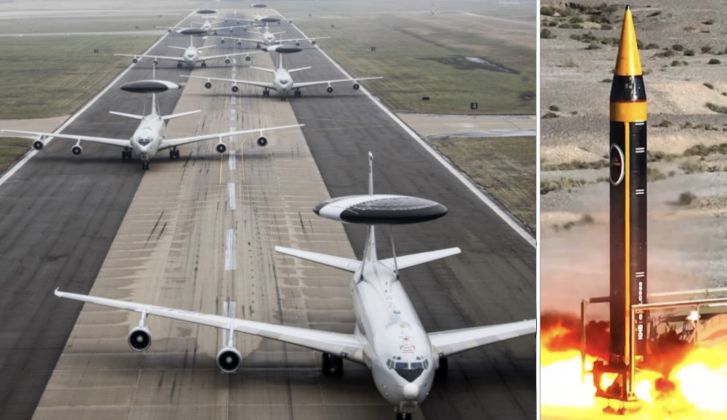
U.S. E-3 AWACS and Iranian Khorromshahr 4 Missile
The U.S. Air Force has surged the operational tempo of E-3 Sentry airborne early warning and control systems (AWACS) over the Middle East, with the aircraft reported to have been flying in unprecedented density over Jordan, northern Saudi Arabia, southern Iraq, and the eastern Mediterranean. The AWACS are reportedly being relied on to provide a persistent detection capability against Iranian drones and missiles being fired at targets in Jordan and Israel, to compensate for the destruction of much of the network of high value ground-based radars. These operations rely on continuous aerial refuelling operations every 4 to 6 hours, with the age of the E-3’s sensors and their lack of optimisation for ballistic missile defence meaning they are far from an optimal replacement for the ground-based network.
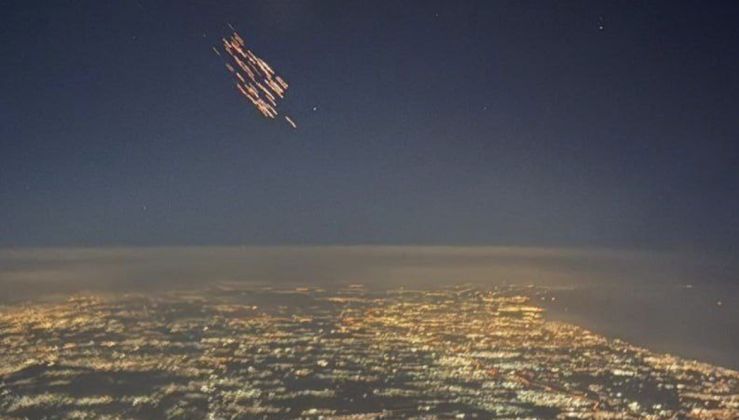
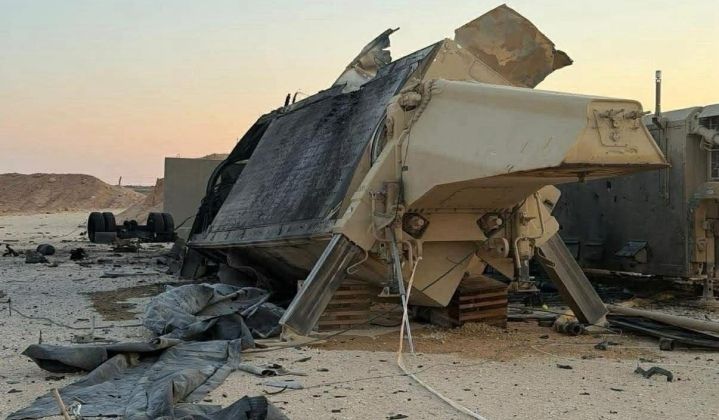
Seventeen U.S. military facilities are confirmed to have been attacked by Iran since the United States and Israel initiated a military assault against the country on February 28, with the Iranian Islamic Revolutionary Guard Corps having quickly achieved the destruction of $2.7 billion worth of high value radar systems. These include the sole AN/FPS-132 radar based outside the U.S., which was located in Qatar, and two AN/TPY-2 radars from THAAD systems in Jordan and the United Arab Emirates. The U.S. Air Force deployed the bulk of its global operational E-3 fleet to the Middle East and Europe preceding the initiation of attacks against Iran, with the AWACS carrying the largest airborne radars in the world, and being relied on to control the tactical battlespace using data links to increase the situational awareness of U.S. and allied air defence networks.
The viability of the E-3 fleet has increasingly been called to question, as not only have availability rates fallen sharply after decades of operations, but their radars and other avionics have also increasingly been considered obsolete. This limits situational awareness, particularly against stealth targets such as Iran’s Shahed 191 drones, while also increasing vulnerability to electronic warfare. The Department of War has nevertheless from 2025 sought to cancel plans to procure E-7 systems to replace them, which has been highly controversial as these are considered urgently needed, reflecting extreme strains on the Air Force’s budget. While E-3s were able to maintain a continuous presence around Iraq during Operation Desert Storm in 1991, these same aircraft are now much older and fewer in number, with significantly greater efforts required to keep them flyable.
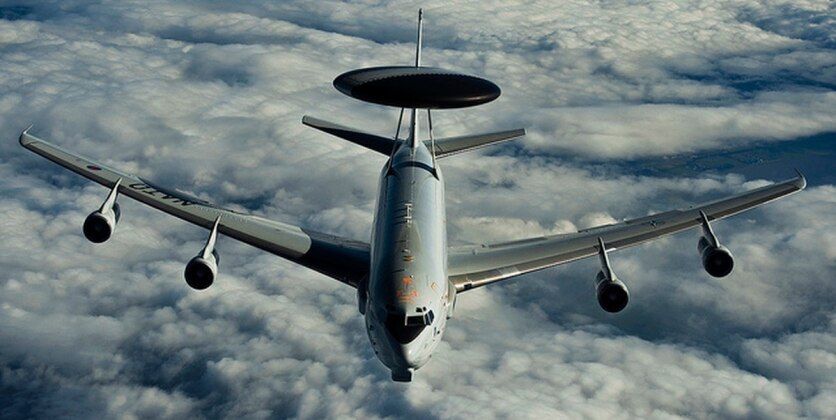
The Royal Australian Air Force was reported on March 11 to have deployed a single E-7 system to the gulf region to help support air defence operations, as a growing number of countries across the Western world have contributed to the war effort against Iran. The U.S. Army has meanwhile withdrawn ground-based air defence systems, including high value radars, from across the world including from strategically critical forward positions in South Korea for redeployment to the Middle East to support air defence operations. U.S. and Israeli forces have also benefitted from considerable early warning data provided by Turkey, which operates a AN/TPY-2 anti-ballistic missile radar at Kurecik Radar Station that was operationalised in 2012 specifically to support NATO and Israeli air defence efforts against Iran and Syria. It is also likely that Turkish S-400 long range air defence systems, which have advanced missile tracking capabilities, have also been used to provide support to U.S. and Israeli air defence efforts.
