
NATO Deploys E-3 ‘Flying Radar’ Systems For First Ever Operations Near the Russian Arctic Over Finland
Military Watch Magazine Editorial Staff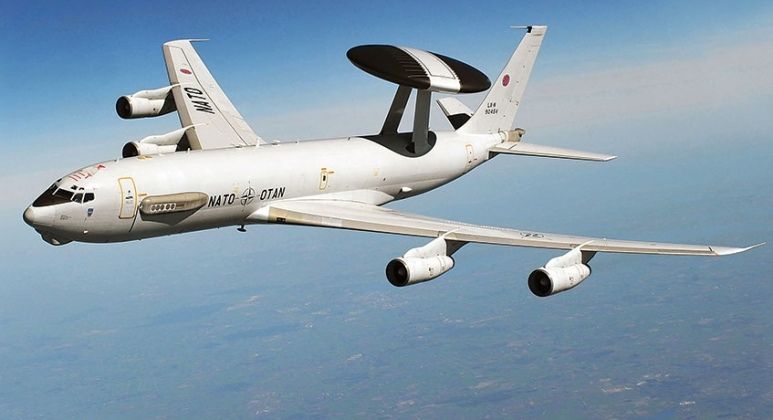
NATO E-3 Sentry AWACS
A NATO E-3A Sentry airborne warning and control systems (AWACS) have conducted their first ever operational mission over Finnish airspace, positioning them in close proximity to the Russian Arctic and well within range to monitor deep into Russian territory. Escorted by three Finnish Air Force F-18 Hornet fighters, which are scheduled to soon begin being replaced by F-35A fifth generation fighters, the operation demonstrated Finland’s growing integration into NATO’s airborne command and air battle management network, and was widely hailed by Western sources as strengthening surveillance and interception coverage along the Alliance’s northern flank. Finland acceded to NATO in April 2023, which more than doubled the land border between the alliance and Russia.
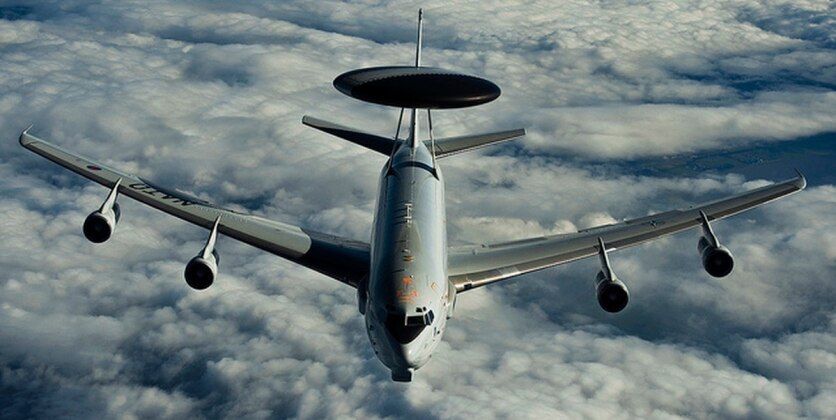
Developed to revolutionise the situational awareness of the U.S. Air Force and its command and control capabilities during the Cold War, and entering service from 1977, 17 E-3s were procured by NATO and are staffed by rotational crews from multiple member states. The growing obsolescence of both the U.S. and NATO E-3 fleets has spurred increasingly urgent calls to retire them and finance the procurement of the more modern E-7 to replace them, although the U.S. Department of Defence early June 2025 announced to cancel the planned procurement of the E-7 due to budgetary constraints and concerns regarding the vulnerability. NATO subsequently formally abandoned plans to procure E-7 in November, after the U.S. ceased to contribute funding to the program.
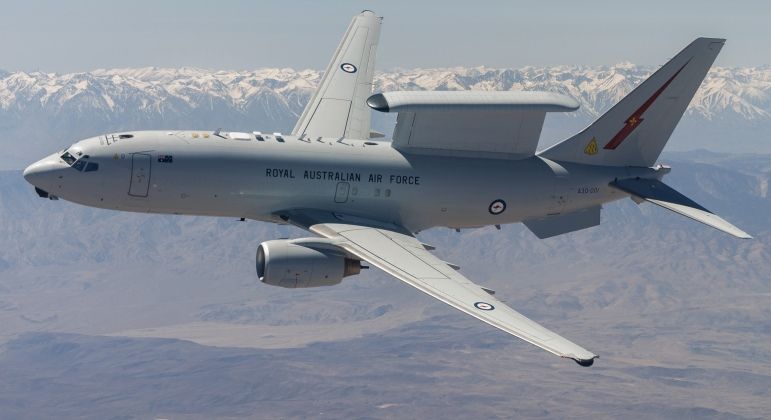
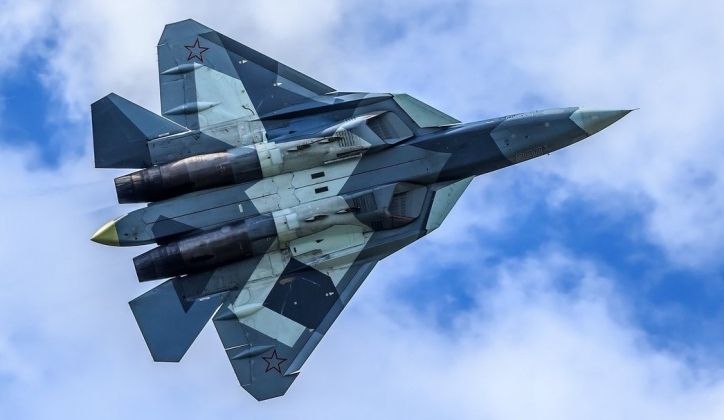
The importance of replacing the E-3 was previously highlighted by commander of the U.S. Pacific Air Forces General Kenneth Wilsbach, who noted in March 2022 shortly after the first encounter with Chinese J-20 stealth fighters was confirmed: “our early warning aircraft could not see the J-20… Those sensors that we rely on on the E-3 aren’t really capable in the twenty-first century especially against a [stealth] platform like the J-20 or something similar to that. It just can’t see those platforms far enough out to be able to provide an advantage to the shooters.” “That’s why I would like to have the E-7,” he added. Although Russia lacks an aircraft with comparable stealth capabilities to the J-20, its Su-57 fifth generation fighter has seen its scale of production rapidly increase, while its stealth capabilities have also significantly improved. Russia also operates a wide and growing range of cruise missile types with advanced radar evading capabilities.
E-3 operations over Finland tested the linking the Finnish national radar network with NATO’s alliance-wide airborne command system, and enhanced the alliance’s ability to coordinate air operations and monitor activity across. It further validated new procedures for synchronising Finnish air assets with NATO’s real-time air battle management network, allowing both Finnish and alliance assets to maintain greater collective situational awareness along the Russian border. While the future of the NATO airborne early warning and control fleet remains highly uncertain, with a significant possibility remaining that it will be retired without replacement, Finland’s integration into the alliance is nevertheless expected to provide significant benefits to alliance-wide situational awareness. new David’s Sling ground based air defence systems, F-35A fighters, and the possible hosting of U.S. Air Force F-35As, are all expected to provide a much expanded ability to detect, track, and if necessary lock onto and engage targets deep inside Russian territory.
