
South Korean President Warns Against Overreliance on U.S. For Security As Key Military Equipment is Withdrawn to Fight Iran
Military Watch Magazine Editorial Staff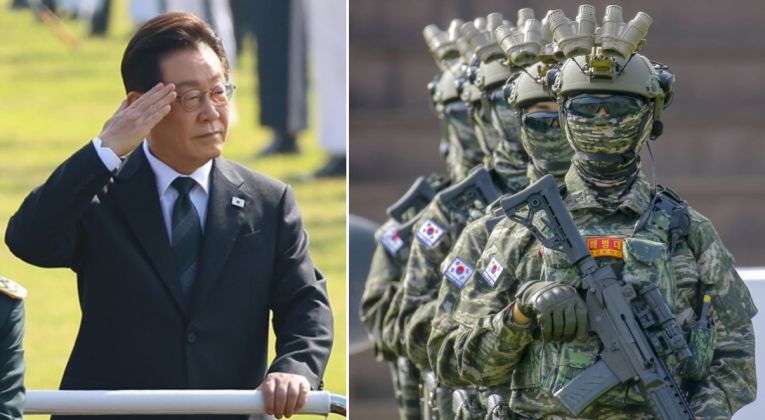
South Korean President Lee Jae-myung and Army Personnel
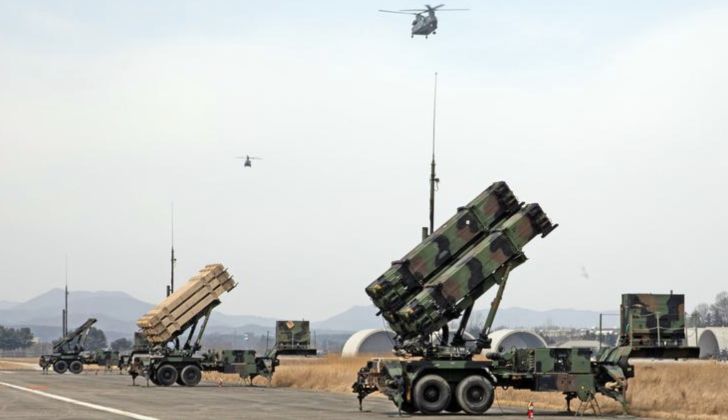
South Korean President Lee Jae-myung has warned against overreliance on the United States to support the country’s security , after the U.S. Army was confirmed to have withdrawn MIM-104 Patriot missile systems, and a range of unspecified other weaponry, for use in the country’s military campaign against Iran. At a cabinet meeting held at the Blue House, the president observed on March 9: “While we oppose the transfer of some air defence systems by U..S forces stationed in South Korea, the harsh reality is that we cannot fully assert our position.” He emphasised that military deterrence against North Korea has not diminished, primarily due to the advanced capabilities of the Republic of Korea Armed Forces “Objectively speaking, South Korea's military spending is very high compared to other countries. Although North Korea's nuclear weapons are a special factor, it is clear that our conventional combat capabilities and military strength are overwhelming.” “National defence is actually the responsibility of every country. If we rely on other countries, that dependence will collapse,” the president added.
President Lee has made the transfer of wartime operational control (OPCON) from the United States Armed Forces a flagship policy of his administration, aiming to complete the transition before his term ends in 2030. This represents a significant shift toward a more self-reliant South Korean defence posture, although it is a complex, conditions-based process that requires substantial military investment, and one which Washington has indicated reluctance to allow to proceed. Currently, the U.S. Armed Forces retain operational command over the Republic of Korea Armed Forces in the event of war on the Korean Peninsula. The president has stated that a transfer of wartime OPCON is vital to achieve “self-reliant national defence” and overcome a “dependent mindset” on the United States. At a February 2026 military ceremony, Lee stated that true self-reliance in national defence begins only when South Korea recovers wartime OPCON and leads the combined defence posture with the U.S.
President Lee has also linked an OPCON transfer to avoiding entanglement in international disputes, such as the U.S.-China rivalry, arguing that a stronger, autonomous defence capability is essential for South Korea's security. In late 2025, South Korea and the U.S. agreed to accelerate the transfer, aligning with President Lee's pledge. South Korea is widely considered to field by far the most capable military among U.S.-aligned states, which has made command over its forces an invaluable asset for the United States’ strategic position in East Asia. The withdrawals of high value U.S. equipment from the country, and the significant strengthening of local capabilities over the preceding two decades, have strengthened calls for the Republic of Korea Armed Forces to gain independent wartime operational command. The geopolitical implications of such a shift are significant, and could allow South Korea to take a more neutral position in the Sino-U.S. conflict, with China’s position as by far South Korea’s most critical trading partner making alignment against it highly unfavourable for the country’s future economic prospects.
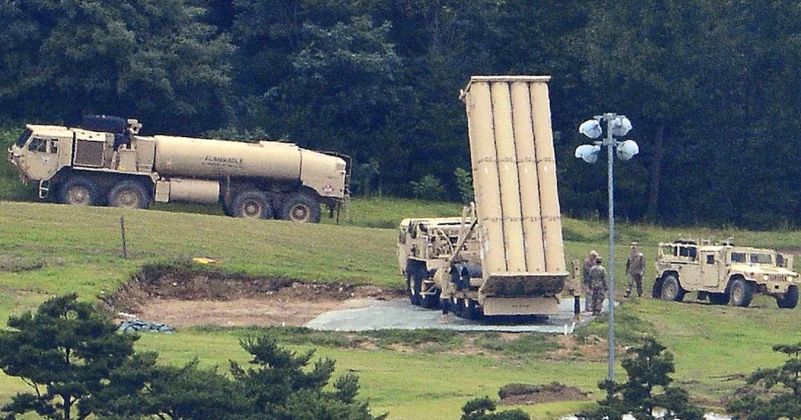
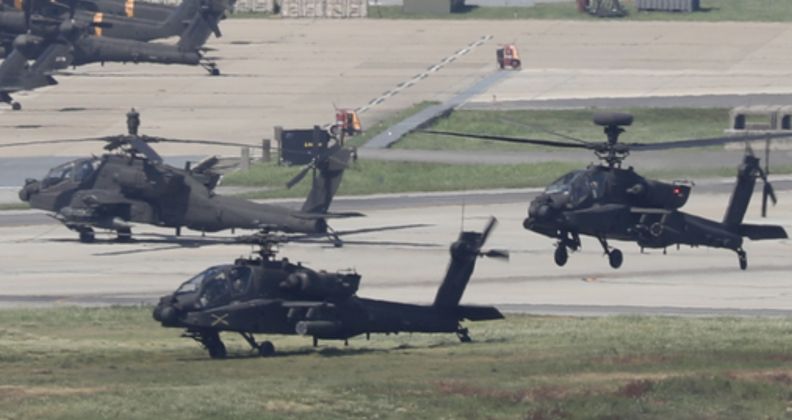
Preceding the latest withdrawals of Patriot long range air defence systems, the U.S. Army between March and October 2025 redeployed two MIM-104 Patriot systems and approximately 500 personnel from South Korea to the Middle East, which reinforced defences at Al Udeid Air Base in Qatar. South Korean sources revealed on March 5 that over 1,000 guided bomb kits were withdrawn from U.S. military facilities in Korea in mid-December 2025, as part of what analysts have widely interpreted as large scale preparations for the initiation of a military assault against Iran. AH-64 Apache attack helicopters were subsequently withdrawn in January, causing considerable concern domestically. South Korean sources have widely reported that the United States Armed Forces are exploring contingencies for the withdrawal of more high value long range air defence systems, most notably THAAD systems. Such a withdrawal could entail the launch of their interceptor missiles, which are in extremely short supply worldwide, and possibly the withdrawal of launchers and AN/TPY-2 radar systems, after it was confirmed that two of these systems had been destroyed in Iranian strikes.
