
U.S. B-2 Bombers Strike High Priority Missile Bases in Iran: Bomb Shortage and Poor Availability Limit Usefulness
Military Watch Magazine Editorial Staff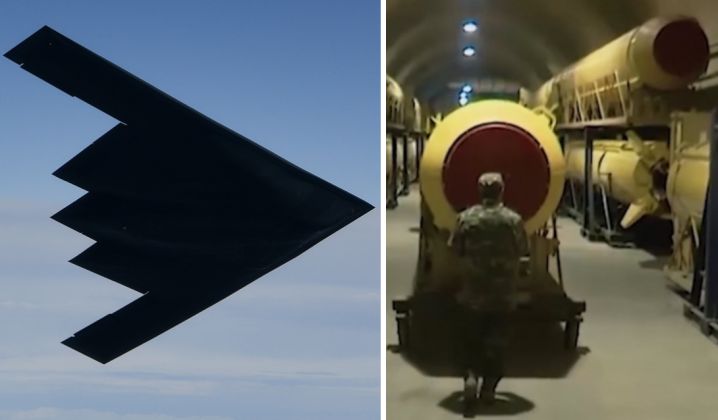
B-2 Bomber and Iranian Underground Missile Base
The U.S. Air Force has deployed B-2 intercontinental range strategic bombers for a penetration strike into Iranian airspace to target heavily fortified underground targets, which are reported to be ballistic missile storage facilities. Following the U.S. and Israel’s initiation of a large scale assault against Iran on February 28, the destruction of the Iranian ballistic missile arsenal has been prioritised, with the limited capabilities of the U.S. and its strategic partners’ ballistic missile defences making this by far the most effective means of blunting Iranian retaliatory strikes. The B-2 was previously used to strike Iranian nuclear facilities on June 22, when 14 GBU-57 bombs were dropped during Operation Midnight Hammer to target nuclear facilities at Fordow and Natanz. The aircraft had in preceding years been used to attack targets in Yemen, Libya, and Yugoslavia.
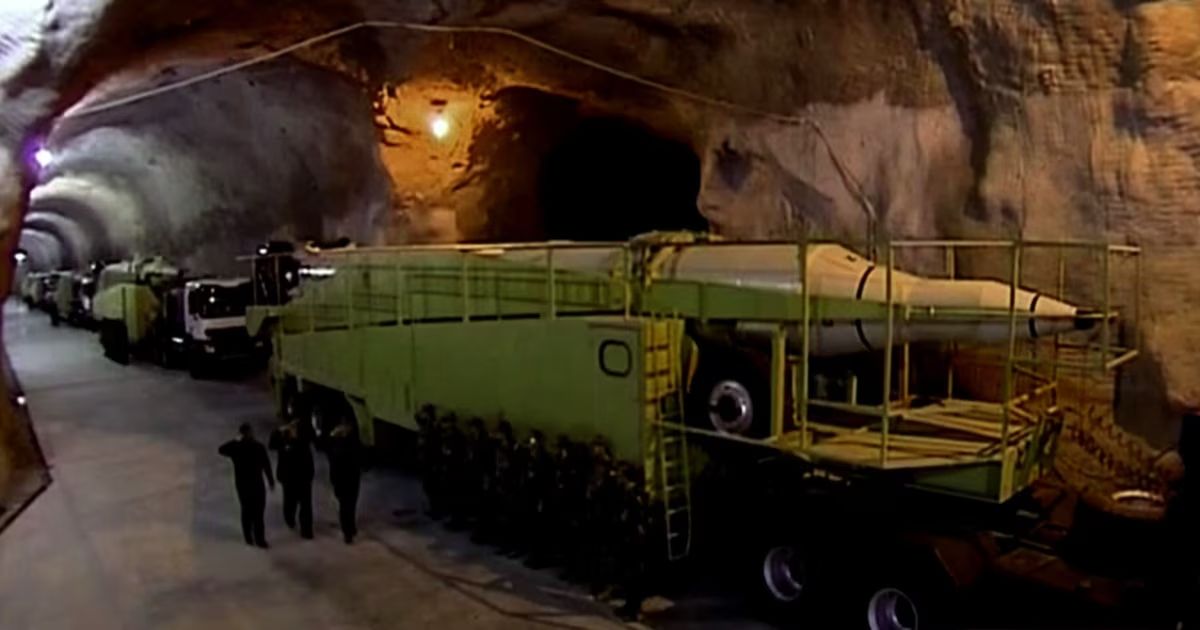
The Iranian Islamic Revolutionary Guard Corps has hardened key missile bases deep underground, often constructing them under mountains, which has been achieved with North Korean assistance. Similar hardening has been applied to a number of air bases, and to the Fordow nuclear facility. The B-2 stands in a league of its own in terms of its ability to penetrate fortifications without using nuclear force due to its combination of stealth capabilities and a high weapons carrying capacity, that allow it to drop GBU-57 bombs. The U.S. Air Force is nevertheless highly constrained in its ability to launch strikes against hardened facilities, with the GBU-57 inventory having been severely depleted following strikes in June 2025, and possibly in prior strikes on heavily fortified Yemeni targets in October 2024. B-2s did not use the GBU-57 in the latest strikes on March, which weigh approximately 14,000 kilograms each, instead dropping much lighter 900 kilogram bombs with significantly reduced penetrative capabilities.
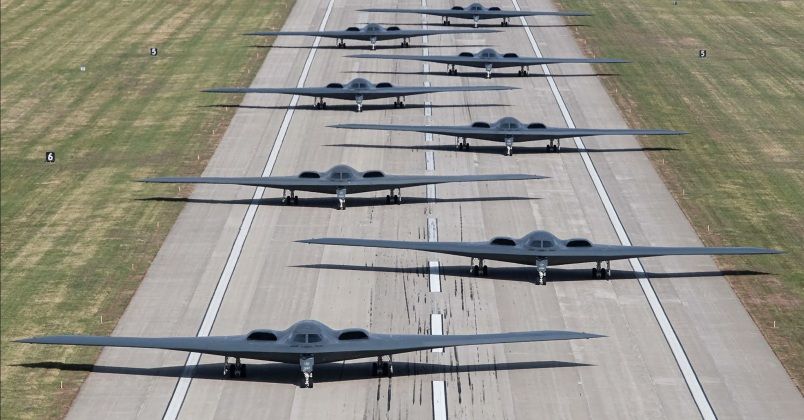
The limited number of GBU-57s constrains the U.S. Armed Forces’ ability to sustain attacks against high value fortified targets without escalating to the use of nuclear weapons. Without the GBU-57, the B-2 has advantages over other types of aircraft due to its unique combination of a long range and advanced penetration capability, with runways and hangars at Whiteman Air Base in Missouri being well out of range of Iranian retaliation. Nevertheless, the very small number of bombers in service at an estimated 18 aircraft, and their outstandingly high maintenance needs and poor availability rates, means that even against less well defended targets the bombers will still be limited in their ability to contribute to the war effort. 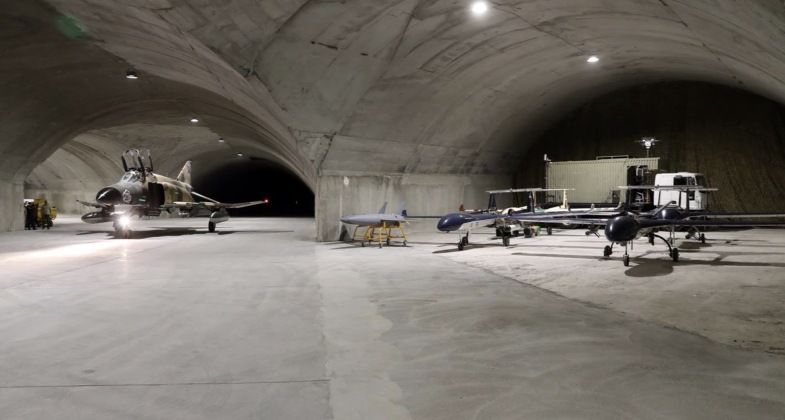
Developed in the 1980s, and entering service in the U.S. Air Force from 1997, the B-2 was deigned to be able to deliver strategic nuclear strikes against the Soviet Union and its Warsaw Pact allies. The aircraft’s large flying wing design is far more difficult to detect for long waveband radars than stealth fighters like the F-117, F-22 and F-35, while its size allows it to carry carry several times the payload of any other stealth aircraft. Despite its unrivalled stealth capabilities for its time, the Soviet defence sector’s demonstrated capability to produce world leading radar systems led to concerns that the new bomber would quickly see its stealth capabilities compromised, leading the Air Force to instruct the B-2’s developer Northrop Grumman to add a low level flying capability at the expense of stealth performance. The B-2’s stealth features today are considered decades behind the cutting edge, raising questions regarding its survivability in high intensity conflicts, and raising the possibility that it could be vulnerable to shootdowns by Iranian air defences if entering Iranian airspace without a significant escort to provide electronic warfare support.
