
Footage Shows U.S. Army ATACMS Ballistic Missile Strikes Taking Out Iran’s Air Defences and Missile Arsenal
Military Watch Magazine Editorial Staff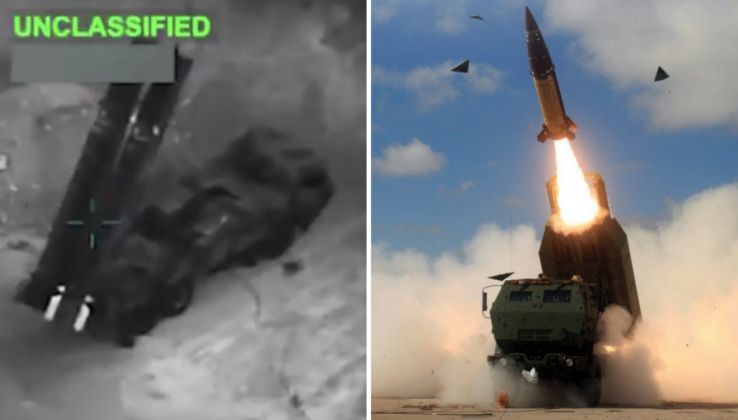
ATACMS Launch and Iranian SAM Launcher Moments Before Impact
Footage released by U.S. Armed Forces Central Command has shown U.S. Army MGM-140 ATACMS ballistic missiles being launched to strike Iranian air defence assets and ballistic missile launchers. Footage showed missiles being deployed from a High Mobility Artillery Rocket System (HIMARS), and raised speculation that attacks are being launched from one of multiple Gulf States within range of Iranian targets, or possibly from within Iraq or Turkey. The United States and Israel on February 28 initiated a coordinated large-scale military assault against Iran, leading the Iranian Armed Forces to activate its ground-based air defence network, and the Iranian Islamic Revolutionary Guard Corps to launch ballistic missile and drone strikes on a wide range of U.S. and Israeli targets including U.S. military facilities across the Gulf region. The high mobility of HIMARS, and their ability to rapidly redeploy after launch, makes them challenging for Iranian forces to target.
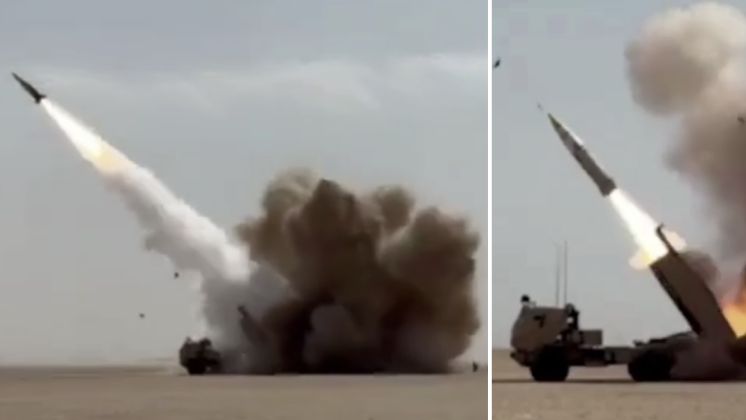
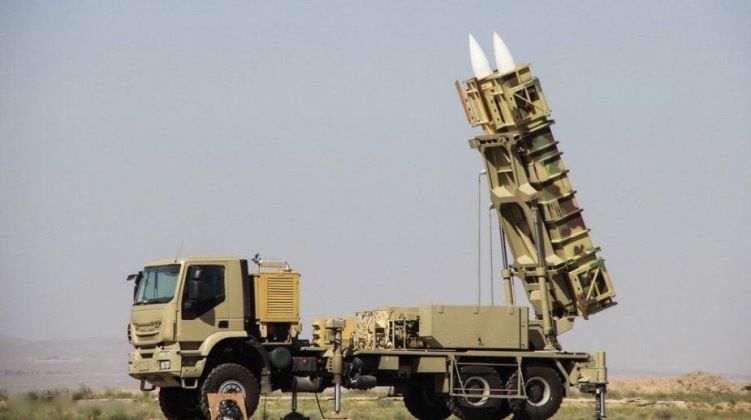
ATACMS first saw combat during the Gulf War in 1991 and the U.S. invasion of Iraq in 2003, but gained significantly greater prominence from the mid-2020s both for its very extensive use in the Ukrainian theatre, and for its increasingly central role in NATO members’ exercises in Europe. In Ukrainian service ATACMS have provided an asymmetric means of countering larger and more capable Russian frontline units, and have been used to neutralise multiple Russian targets, including the destruction of launchers and radars from S-400 long range air defence systems, the destruction of other radar systems, the neutralisation of Russian Iskander-M ballistic missile launchers. This makes their use for similarly high impact operations in the U.S. war effort against Iran, and the singling out of ballistic missile and air defence systems for targeting, far from unprecedented.
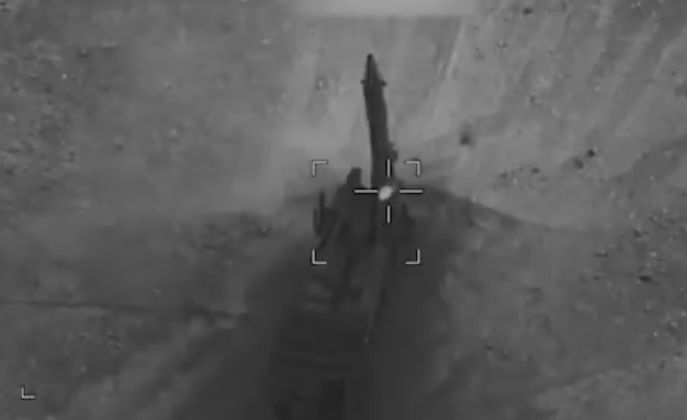
The destruction of the Iranian ballistic missile arsenal on the ground is particularly critical for the United States and its strategic partners due to the limited capabilities of their ballistic missile defence capabilities, with the MIM-104 Patriot system having proven to be far from reliable in multiple conflicts, while stocks of interceptors missiles for both the Patriot and THAAD systems are very limited, and far from sufficient to endure sustained bombardment. Iran also operates a number of higher value ballistic missiles, such as the Fattah and Fattah-2 which have hypersonic strike capabilities, both of which are reportedly capable of evading existing missile defences. After the Fattah was used against Israel in June 2025, Israeli officials responded with considerable concern, concluding that a revolutionary and entirely new approach to missile defence operations would be needed to be able to engage them. With no such approach having been developed, the destruction of missiles before launch remains the only effective defence against them.
