
MiG-29s Fly Over Tehran as Israel and U.S. Launch Large Scale Attack
Military Watch Magazine Editorial Staff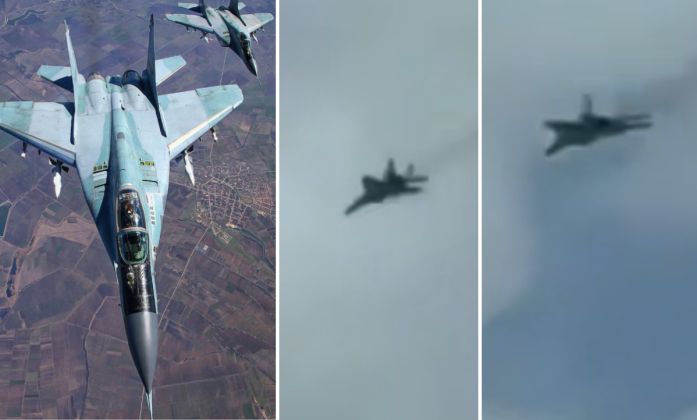
MiG-29 (left) and MiG-29 Over Tehran on Feb 28
Footage from the Iranian capital Tehran has confirmed the scrambling of MiG-29A fighter aircraft guarding the city, after Israel and the United States initiated a coordinated large-scale military assault against the country targeting key leadership and military facilities. Unconfirmed reports indicate that attacks on Iran launched so far have centred around the use of U.S. Navy BGM-109 Tomahawk land attack cruise missiles, and various Israeli air-launched cruise and ballistic missiles such as the Delilah. The scrambling of MiG-29s may have indicated that drones or other low speed targets may have approached the Iranian capital, as the fighters notably lack a missile defence capability. Other possibilities are that they were scrambled to raise morale, or to redeploy to dispersed or better fortified locations. MiG-29s based at Mehrabad International Airport in Tehran are operated under the 11th Tactical Fighter Squadron.
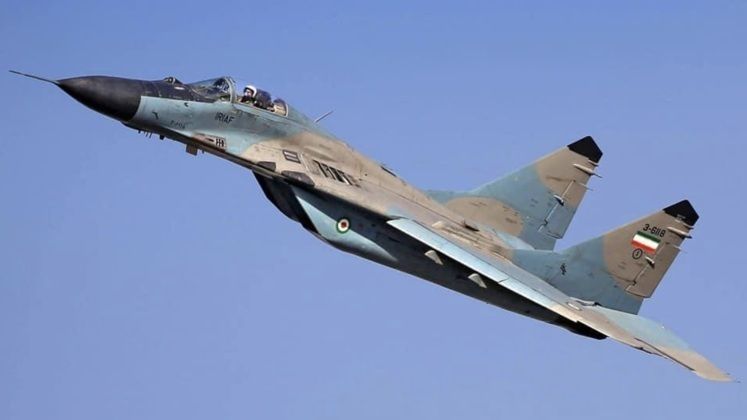
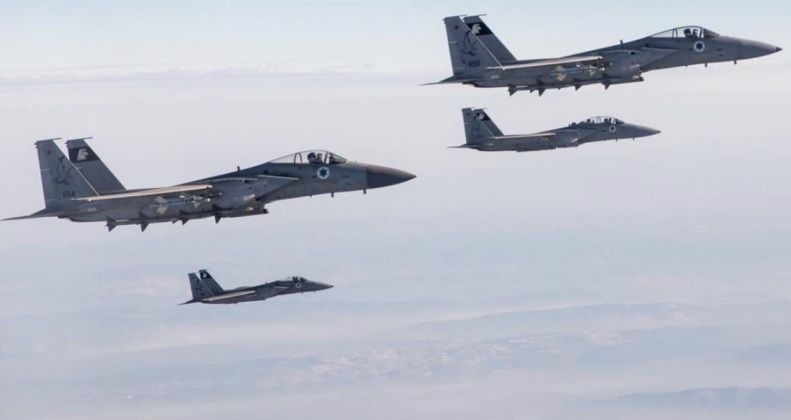
Iran first ordered MiG-29A fighters and MiG-29UB trainers from the Soviet Union in 1989, providing the country with its first Soviet origin fighter types. These saw their numbers supplemented by additional MiG-29s which were flown to Iranian airfields by Iraqi pilots to escape U.S.-led coalition strikes during the Gulf War in 1991. The fighters have been conservatively modernised domestically, but are considered obsolete for high intensity engagements with modern fighter types. Nevertheless, the Israeli Air Force notably relies on ageing fourth generation fighters to form the large majority of its fleet, many of which are similarly obsolete and some of which are much older than Iran’s MiG-29s. MiG-29s can thus potentially pose a threat to Israeli F-16C/D, F-16I, F-15A/B/C/D, and F-15I fighters, particularly if these aircraft are carrying heavy loads of air-to-ground ordinance.
Iran has made no significant fighter procurements since the disintegration of the Soviet Union, with post-Soviet Russia having consistently been pressured by Israel and Western Bloc states not to supply new fighters. The first fighter deal between the two countries was reported in 2022 to have been signed for the supply of Su-35 fighters, although these have yet to be delivered. Leaked Russian government documents in late 2025 showed that Russia was scheduled to deliver of 48 Su-35 fighters to re-equip the Iranian Air Force, representing half of the Su-35’s entire export profile. With U.S.-led attacks having been launched before the Su-35 could be delivered, the MiG-29 remains Iran’s most capable fighter type.
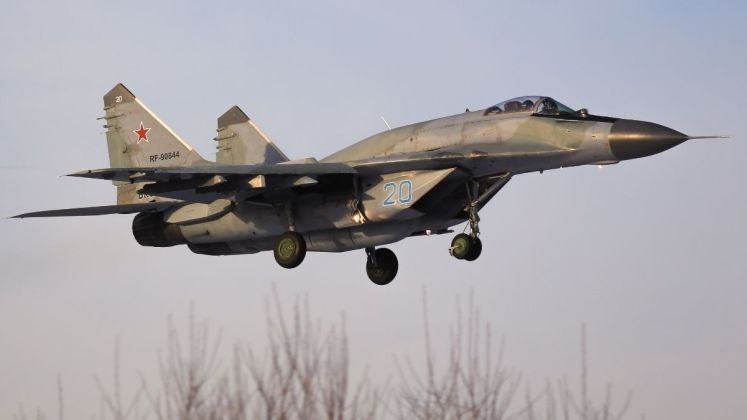
The Iranian Air Force was reported by local media in September to have received new MiG-29 aircraft from Russia, with these reportedly arriving at Shiraz Air Base. The aircraft have far lower procurement and operational costs than the Su-35, which may lead them to be seen as more cost effective. The large numbers of MiG-29s Russia has in reserve, and the lack of requirements for new training for Iranian personnel, could allow them to be delivered much more quickly. If these local media reports were accurate, it remains highly uncertain what quantities of MiG-29s may have been delivered, and whether these were modernised to a ‘4+ generation’ standard with modern phased array radars and new types of missile such as the R-77-1 and R-74, which would provide a tremendously superior combat potential to the Soviet era MiG-29A. Russia has developed a number of ‘4+ generation’ modernisation packages for Soviet era MiG-29 airframes, most notably the MiG-29SMT and MiG-29UPG, which have significant performance advantages over Israeli fighter types other than the F-35.
