
Satellite Footage Shows Surge in U.S. Aerial Tanker Fleet in Qatar as Buildup Against Iran Continues
Military Watch Magazine Editorial Staff
Satellite Footage of KC-135s at Al Udeid (left) and USAF KC-135s Elephant Walk
USAF
Chinese commercial satellite imagery has confirmed a surge in U.S. Air Force deployments of KC-135 aerial refuelling tankers to Al Udeid Air Base in Qatar, with at least 16 of the aircraft seen at runways at the facility. The release of the images closely coincides with the exposure of the exact positions of a U.S. Army MIM-104 Patriot air defence system at the Al Udeid Air Base, and follows the publication of Chinese commercial satellite imagery from the Chinese satellite company MizarVision confirming the deployment of a U.S. Army THAAD anti-missile system at Muwaffaq Salti Air Base in Jordan. Unconfirmed reports have indicated that Chinese satellite intelligence and communications is being provided to significantly strengthen Iran’s ability to withstand a possible U.S.-led assault and launch retaliatory attacks, fuelling speculation that the publication of images on the positions of potential targets may be intended to send a signal that Iran’s targeting intelligence will be significantly greater in a future conflict due to Chinese support.
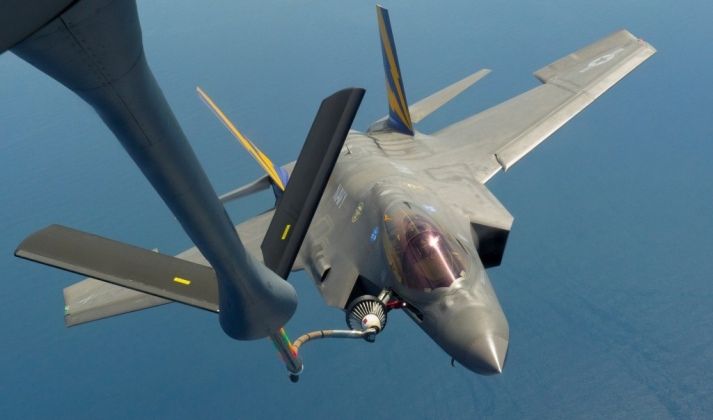
Preceding its previous limited entry into hostilities against Iran on June 23, 2025, the U.S. Air Force made an unprecedented mass deployment of KC-135 and KC-46 tankers across the Atlantic from June 15. Western fighters on average have far shorter ranges than their Chinese or Russian counterparts, which has resulted in a very heavy reliance on aerial refuelling for operations against major state adversaries. The U.S. Air Force operates the world’s largest tanker fleet, which is vital allowing short range fighters such as the F-16 and F-35 to conduct operations in larger theatres such as the Pacific, the Arctic and the Middle East. This is particularly important for stealth fighters such as the F-35 and F-22, which cannot carry external fuel tanks without comprising their reduced radar cross section profiles, with both fighter types having less than hal the range on internal fuel as the Su-35 fighters scheduled to be received by the Iranian Air Force.

The surge in the size of the tanker fleet at Al Udeid Air Base reflects part of a broader redeployment of aerial refuelling assets to Europe and the Middle East, which is itself part of a much larger military buildup being staged against Iran. The overthrow of the Syrian government in December 2024 by Western, Turkish, Qatari and Israeli backed Islamist paramilitary groups was considered key to reshaping the theatre in the Middle East to achieve the long term Western Bloc objective of toppling the Iranian government, which would remove a primary challenge to Western interests in the region. This would also allow Iran to serve as a staging ground for future power projection efforts into Central Asia. The advanced capabilities of the Iranian ballistic missile arsenal, which was partially demonstrated during hostilities in June, are considered a a primary factor deterring a full scale assault. The demonstrated ability of Western and Israeli sponsored paramilitary groups to continue to launch attacks within Iran, however, has continued to be major point of vulnerability.
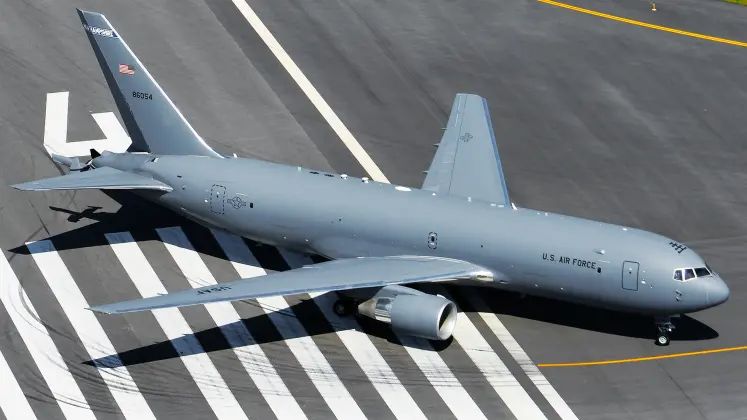
The U.S. Air Force’s reliance on the KC-135 has remained particularly high due to major issues with the new KC-46 tanker program, including a number of persistent high-level technical deficiencies such as the the malfunctioning of its remote vision system and its refuelling boom, and a history of fuel system leaks, which have led the Air Force to suspend procurements in the past. The KC-46’s mission capable rates have also remained outstandingly low.In parallel to the surge in the tanker presence, the U.S. Armed Forces have pre-positioned vast quantities of assets in the Middle East, with Al Udeid Air Base and Muwaffaq Salti Air Base serving as two primary nodes in this buildup. The ability of the Patriot system to provide sufficient protection to Al Udeid Air Base has been brought to serious question, particularly when considering the demonstrated limitations of the system against even limited attacks in the past.
