
Syria Marks Year Since Turkish-Backed Jihadists Took Power: New Terrorist Threat Looms
Military Watch Magazine Editorial Staff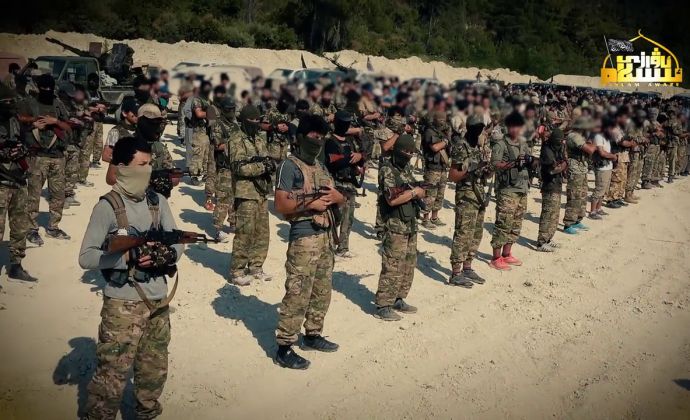
Turkestan Islamic Party Jihadists in Syria
Paramilitary units from multiple Islamist groups held a military parade in the Syrian capital Damascus on December 8, marking a year since their capture of the capital with Turkish, Western and Israeli support after a war effort of close to 14 years. The incident marked a turning point in the balance of power in the Middle East, and has had considerable geopolitical implications both for the region, and more broadly for theatres of geopolitical conflict from Central Asia to North Africa. Although Islamist insurgents fighting against the Syrian state received considerable material, political and at times even manpower support from a wide range of state actors, including multiple NATO members, Israel, and several Arab Gulf states, Turkey as a frontline NATO member played an outsized role in the war effort. This included the provision of intelligence and direct air support, and the interspersing of its special forces within Islamist paramilitary units.

Commenting on the Turkish role in the overthrow of the Syrian state, then U.S. President-Elect Donald Trump observed that Ankara conducted an “unfriendly takeover” of the country, and that control of Syria was something the country had sought to achieve “for thousands of years.” “Those people that went in are controlled by Turkey,” he stated, adding that “that’s okay, that’s another way to fight.” “Turkey’s the one behind it. He’s [President Recep Tayyip Erdogan] a very smart guy, they’ve wanted it for thousands of years, and he got it.” The vast majority of air support for anti-government insurgents was provided by Turkey and Israel, which were able to jointly press Syrian defences between their northern and southern borders.
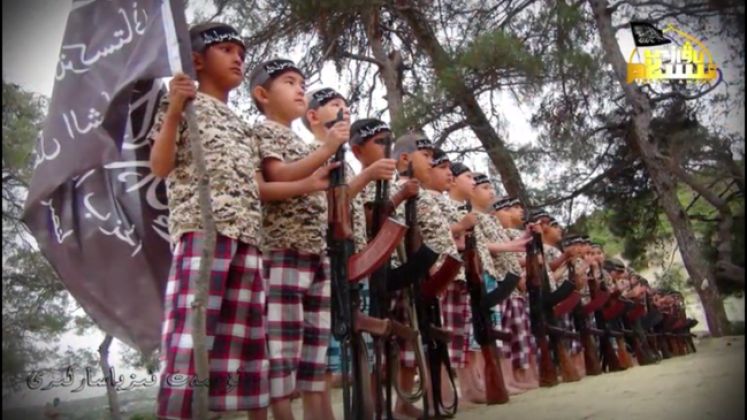
The bulk of the fighting forces which overthrew the Syrian state including the majority of its most capable combat units, are comprised of foreign jihadists, with Turkic jihadists from China’s Xinjiang region, and from Uzbekistan, Kazakhstan and other Central Asian states, having played a particularly prominent role. Central Asian jihadist militants have over more than 15 years been widely recruited and supported by the Turkish state, and were transported from Afghanistan, China and Central Asian states to Syria through Turkey with the support of Turkish intelligence services. The empowerment of these jihadist fighters, which seek to wage war against China and countries across Central Asia to establish a fundamentalist Islamic caliphate, has been viewed as a major threat by states in the region. These personnel have over the past year displayed increasingly advanced military equipment, and made clear their intention to expand their operations into Central Asia and China.
