
U.S. EA-18G Electronic Attack Jets Forward Deployed in Jordan: Can They Tackle Iran’s Revitalised Air Defences?
Military Watch Magazine Editorial Staff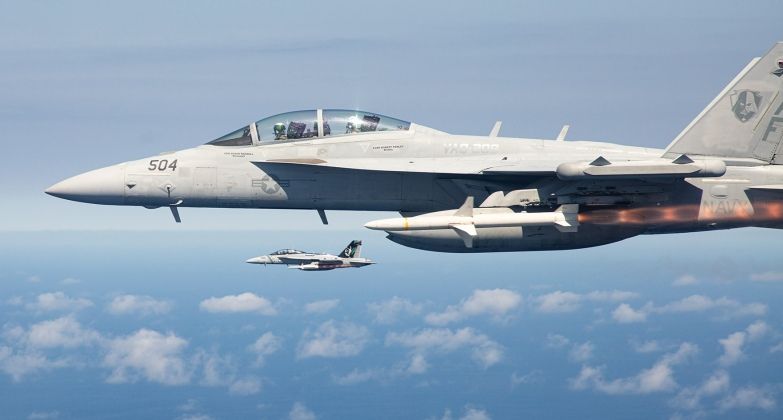
EA-18G Electronic Attack Jets Launch AGM-88 Anti-Radiation Missiles
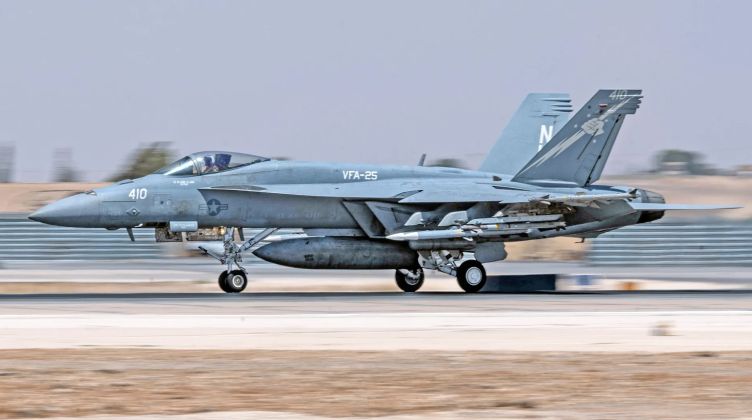
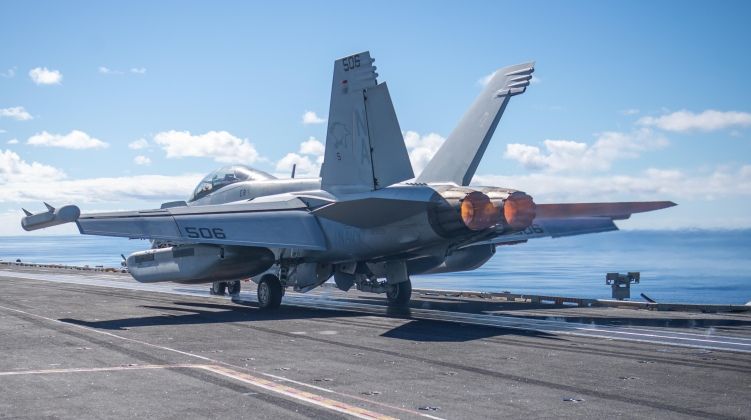
The U.S. Navy has deployed six EA-18G Growler air defence suppression aircraft to Muwaffaq Salti Air Base in Jordan, which has emerged as a leading hub of a major regional military buildup at a time of high tensions between the United States and Iran. The aircraft departed from Naval Air Station Oceana in Virginia with aerial refuelling support, stopping over at Naval Station Rota in Spain, before flying to Jordan. The greater distances of facilities in Jordan from Iran are expected to make them more defensible, in contrast to Al Udeid Air Base in Qatar which was previously the primary hub of U.S. air operations in the region and hosted the U.S. Armed Forces Central Command, or Al Dhafra Air Base in Abu Dhabi which served as a key secondary facility. The EA-18G attack aircraft have joined Air Force F-15E long range strike fighters which arrived at the facility in late January.
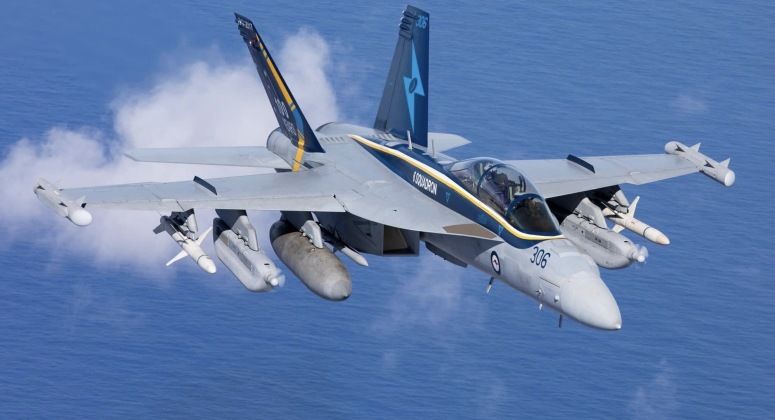
The EA-18G was specifically confirmed to have played a central role in providing U.S. forces with near unrestricted access to airspace over the Venezuelan capital Caracas during attacks on the country in early January, with weeks of preceding operations near Venezuelan territory reportedly key to paving the way to this. These peacetime flights allowed EA-18Gs to gather valuable intelligence using their vast arrays of passive sensors. It remains highly possible that EA-18Gs deployed in Jordan will similarly be deployed to collect electronic intelligence on Iranian air defences, allowing them to be more effectively neutralised in the event of war. These efforts may benefit from access to the vast electronic intelligence which Israeli F-35I units are highly likely to have collected when deployed to provide intelligence support for attacks on Iran in June 2025.
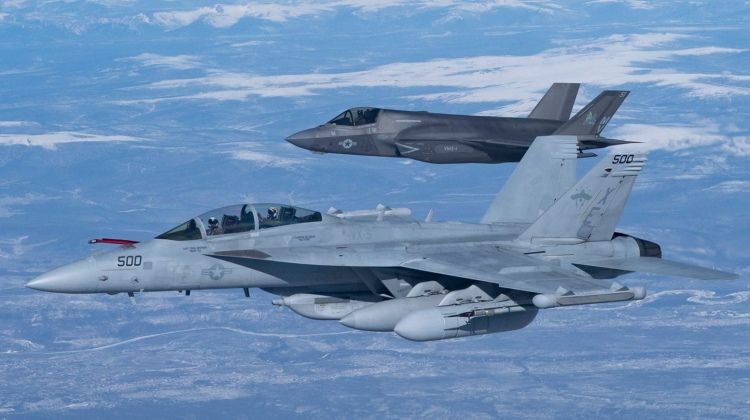
The EA-18G’s sensors and computer systems were designed to allow it to systematically map out radar systems, identifying their strengths, and probing or weaknesses, while also providing intelligence to allow for the development of more effective countermeasures. It is the only aircraft in the Western world considered to have superior capabilities to the F-35 in this regard, with its only foreign analogues being the new Chinese J-15D and J-16D. The aircraft can integrate a wide range of specialist jamming pods as their primary armament, which can provide protection to accompanying aircraft against radars in a broad range of radar frequencies. The aircraft deploy the AGM-88 HARM anti-radiation missile as their primary kinetic armament, which home in on radar emissions to destroy ground-based air defence systems.
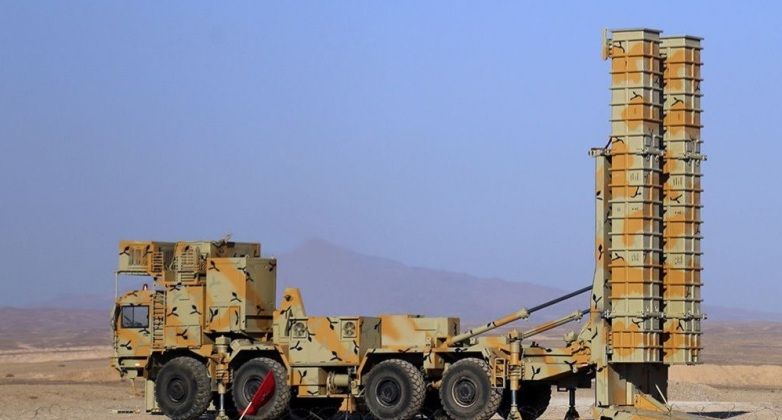
The EA-18G is considered an optimal aircraft for operations against Iran, with Iranian fighter fleet being almost totally obsolete, leaving its significantly more advanced ground-based network comprised of large numbers of surface-to-air missiles as the primary challenge to U.S. dominance of its airspace. Iranian air defence systems have proven capable in the past, most notably in the summer of 2019 when the medium ranged 3rd of Khordad system shot down an American RQ-4 Global Hawk surveillance drone which Tehran claimed had violated its airspace. During U.S. and Israeli attacks on the country in June 2025 the ground-based network was largely disabled by Western-backed paramilitary groups, which used Israeli Spike missiles and other assets to destroy systems on the ground. Israeli officers have reported that as a result, not a single Iranian surface-to-air missile was fired when the country came under attack.
Iran is reported to have significantly strengthened its network and the security around its ground-based systems, with unconfirmed reports indicating that new Chinese systems have been delivered to the country. Facing a potentially far more potent Iranian air defence capability, the presence of EA-18G units is expected to be particularly highly valued by U.S. forces. The U.S. Navy had previously already deployed further EA-18G aircraft as part of the air wing of the supercarrier USS Abraham Lincoln, with the broader naval buildup having also included eight destroyers. As part of the broader military buildup, United States Air Force has deployed at least 42 heavy airlifters to transport supplies into the Middle East during the eight days between January 18 and January 26 alone, with further supply flights having continued to be made.
Alongside Muwaffaq Salti Air Base in Jordan, facilities within operational range of Iran where new equipment has been delivered in recent days have included Al Udeid Air Base in Qatar, Ali Al Salem Air Base in Kuwait, Prince Sultan Air Base in Saudi Arabia, and various facilities in Bahrain. With senior U.S. Navy officials having recently warned that fourth generation fighters’ survivability may be highly limited when operating against Iran, while efforts to bring the fifth generation F-35 up to the required Block 4 standard have continued to be delayed, support from the EA-18G for possible air offensives is expected to be critical. A primary shortcoming of the F-35 for air defence suppression of operations remains its total lack of air-to-ground missiles, including the AGM-88, which will only be integrated when Block 4 upgrades are complete - a date that has now been delayed to the early 2030s. This is thought to have been a primary factor in the centrality of the EA-18G to planning for possible air offensives.
