
U.S. Surges Force Deployments Around Iran: F-15E Long Range Fighters Arrive in the Middle East
Military Watch Magazine Editorial Staff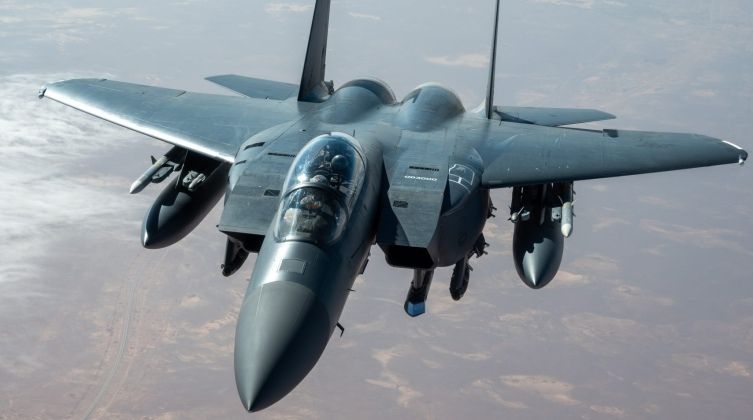
U.S. Air Force F-15E Fighter
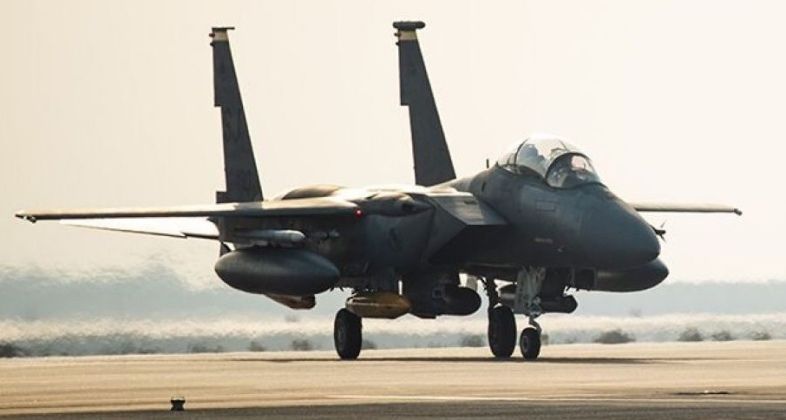
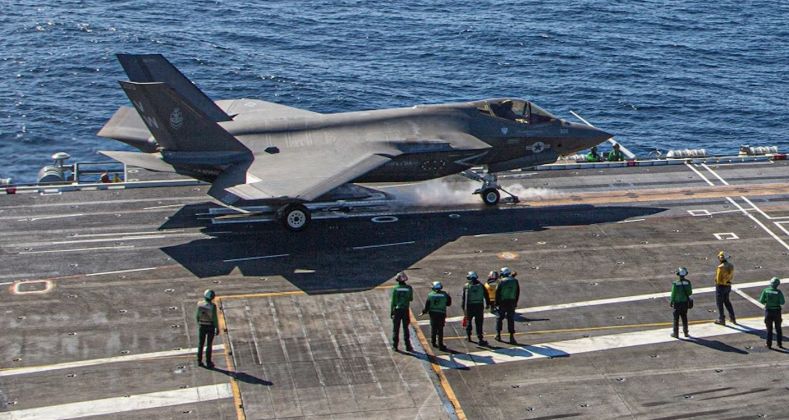
The U.S. Air Force has redeployed a large number of F-15E Strike Eagle fighters supported by KC-135 aerial refuelling tankers from RAF Lakenheath in the United Kingdom, where they are permanently forward deployed, to bases in the Middle East, according to online flight tracking data. This represents part of a broader military buildup that appears to remain underway to target the country. A U.S. Navy carrier strike group led by the Nimitz class nuclear powered supercarrier USS Abraham Lincoln has meanwhile transited the Strait of Malacca, transitioning from the Seventh Fleet’s area of responsibility in the Pacific, to the Fifth Fleet in the Middle East. The carrier has reportedly turned off its transponder and is currently operating in a ‘dark navigation’ mode.
In parallel to its military buildup, U.S. Armed Forces bases in the region considered particularly vulnerable to Iranian attacks have recently seen assets withdrawn. This has included a total withdrawal from Ain Al Assad Air Base, a major facility in Western Iraq, significant personnel withdrawals from Al Udeid Air Base in Qatar, and unconfirmed withdrawals from facilities in Kuwait and Bahrain. Al Udeid Air Base was notably previously targeted during a small scale Iranian ballistic missile attack on June 23, in response to a U.S.-led attack on Iranian nuclear facilities hours prior. Highlighting the vulnerability of American bases, the Pentagon confirmed that an Iranian ballistic missile successfully struck the facility, despite Patriot missile systems being deployed to defend it, Iran giving prior warning of the attack, and Fateh-313 missiles, which are some of the least sophisticated in Iran’s arsenal, being used.
Among the further assets recently deployed to the Middle East by the U.S. Armed Forces are additional air defence systems, including some operationalised at Al Udeid Air Base, as well as M1A2 Abrams main battle tanks and M2 Bradley infantry fighting vehicles, with an increase in flights of C-17 Globemaster III transport aircraft to the region indicating that other yet unknown assets have also been pre-positioned. F-15E fighters have played a leading role in multiple operations to counter Iranian drone and cruise missile strikes on Israel, with their ranges, speeds, weapons payloads, and the power of their radars being unrivalled within the Western world. The aircraft are less specialised in air-to-air combat than the F-15C/D, but are considerably more versatile and considered more than capable of engaging any type of combat aircraft fielded by Iran. Although the Iranian Air Force is scheduled to begin receiving Su-35 air superiority fighters to strengthen its air defences, likely before the end of the year, its currently serving fighter fleet has negligible air-to-air capabilities.
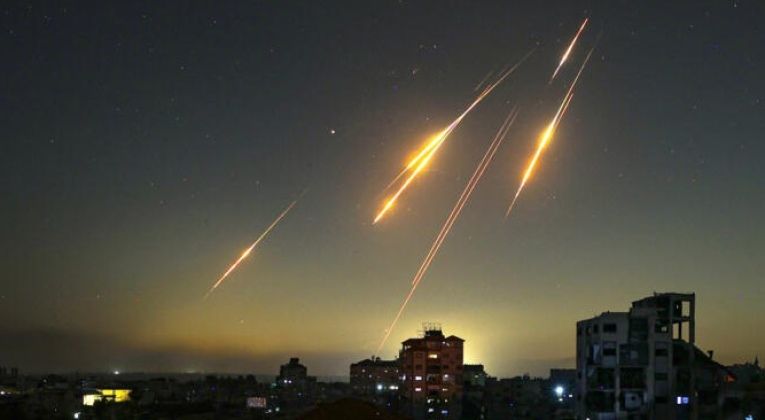
Surging forces in the Middle East has proven to be highly costly for the U.S. Department of War in the past, forcing cuts to other parts of the defence budget, which has raised questions regarding the costs of the latest buildup against Iran. The primary factor deterring the United States, supported by Israel, Turkey, and other Western Bloc states, from further escalating hostilities against Iran, has been the Iranian ballistic missile arsenal built up since the 1980s with considerable North Korean support. The country’s missile strike capabilities are among the most formidable in the world, including multi-warhead missiles and missiles carrying hypersonic glide vehicles, which Iran is one of just one of four countries to field. The damage from limited Iranian retaliatory strikes on Israel in June was unprecedented, with U.S. President Donald Trump observing: “Especially those last couple of days, Israel was hit really hard. Those ballistic missiles, boy they took out a lot of buildings.” It is expected that a larger scale attack would result in significantly higher intensity Iranian retaliation.
