
Chinese Satellites Expose U.S. THAAD Missile Defence Deployment to Protect Force Concentration in Jordan: Can it Block Iranian Strikes?
Military Watch Magazine Editorial Staff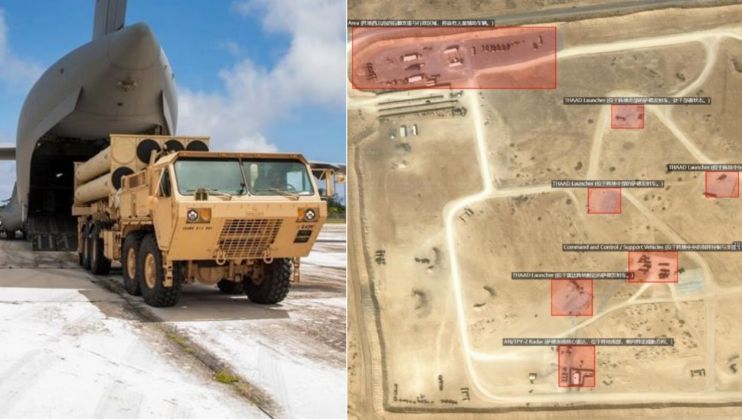
THAAD Missile Launcher Delivery By Air (left) and Deployments in Jordan
Chinese commercial satellite imagery from the MizarVision satellite company has confirmed the deployment of a U.S. Army Terminal High Altitude Area Defense (THAAD) system at Muwaffaq Salti Air Base, which has increasingly emerged as the U.S. Armed Forces’ most prominent forward operating location as they have prepared for a possible resumption of high intensity hostilities with Iran. Commenting on the recent THAAD deployment, a senior Pentagon source observed: “Before any potential action against Iran, we need to bolster our defences.” The publication of the images of the previous unannounced system has closely coincided with the emergence of unconfirmed reports that Chinese warships have been deployed near the Persian Gulf, potentially to provide intelligence on possible attacks to Iran using their sensor arrays.
It remains uncertain whether the Iranian Armed Forces’ own reconnaissance assets had provided an indication of THAAD deployments in Jordan, whether they were informed by China, or whether they discovered the deployment only after commercial satellite images were provided. The possibility has been raised that China has sought to signal to the United States and its strategic partners that it will provide intelligence support for Iranian retaliatory strikes, thus strengthening the country’s deterrence capabilities and potentially helping to deter a U.S.-led attack. Improvements in orbital reconnaissance has made even some of the most sensitive above ground deployments openly visible, although extreme measures, such as the jamming of satellites, have at times been taken, with an example being Israel’s jamming of satellite coverage of its airbases following Iranian missile attacks to prevent battle damage assessments from being carried out.
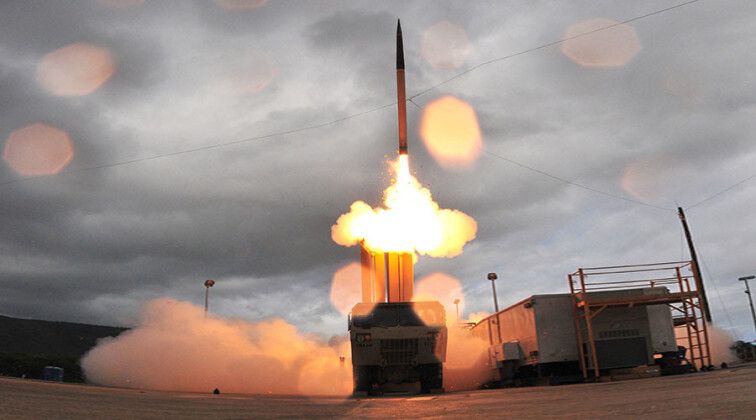
The U.S. Army currently deploys just eight THAAD batteries, and a very limited arsenal of surface-to-air interceptors, which makes the deployment of a battery to Jordan, following a prior deployment of at least one battery to Israel from October 2024, highly significant. The system saw its first high intensity combat test from June 13-25, 2025, when used to blunt Iranian retaliatory strikes on Israel, following Israel’s initiation of a major air assault against Iran in on June 13. The U.S. Army expended over 150 anti-ballistic missile interceptors from the THAAD system to intercept Iranian ballistic missile attacks, representing over 25 percent of the Army’s total arsenal deployed around the world. Each THAAD interceptor launch costs approximately $15.5 million, with the defence of Israeli airspace using these systems for 11 days is conservatively estimated to have cost over $2.35 billion. This is estimated to be just a fraction of the sums spent on missile defence, with Israel utilising its own multi-layered anti-missile network, while U.S. Navy destroyers expended significant quantities of SM-3 and SM-6 anti-ballistic missiles.
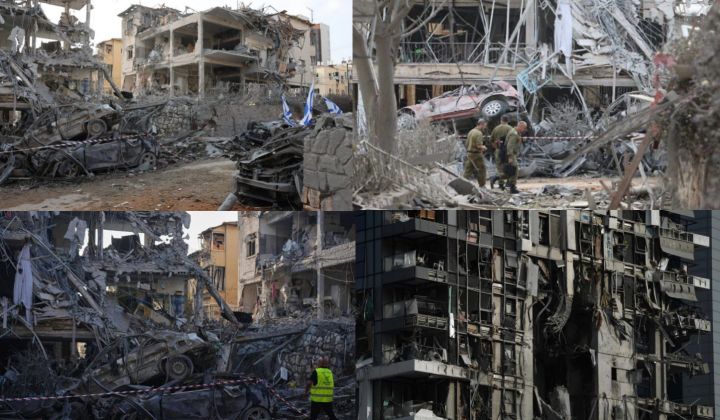
Despite the extreme cost of utilising the system, the effectiveness of THAAD has been brought to serious question, with its ability to protect Israeli territory proving to be limited as Iranian strikes caused extreme damage to military and strategic targets across the country. President Donald Trump observed days after the end of hostilities: “Especially those last couple of days, Israel was hit really hard. Those ballistic missiles, boy they took out a lot of buildings,” with other sources on both sides widely reaching similar conclusions. Iran in June made limited use of its new Fattah ballistic missile, which is its first to integrate a hypersonic glide vehicle, and caused considerable concern among the Israeli military leadership, fuelling calls for a deep revision of Israel’s missile defence plans. THAAD is not expected to be capable of intercepting such attacks, which compounds the issue of the system’s high vulnerability to being overwhelmed. The possibility of the Fattah and other advanced missiles being used to strike THAAD batteries on the ground, and thus destroying a very high value target while serving as a force multiplier for the remainder of the arsenal, remains significant.
