
New U.S. Patriot Air Defence System is Finally Getting the Russian S-300’s Vital ‘Backwards Shot’ Capability
Military Watch Magazine Editorial Staff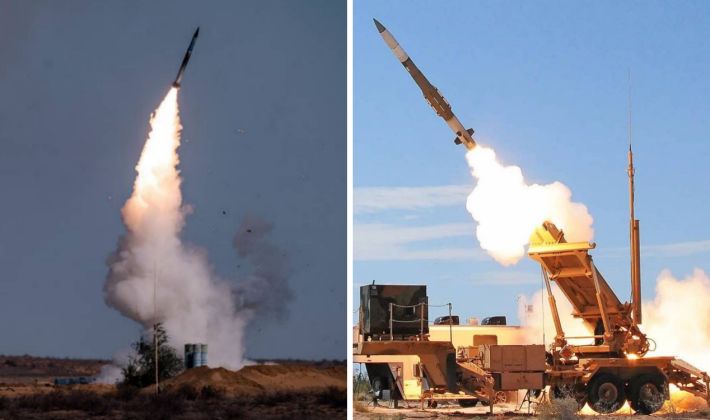
Surface-to-Air Missile Launches From S-400 and Patriot Systems
The U.S. Army has announced that a new variant of the MIM-104 Patriot long range surface-to-air missile system will be able to engage targets that are not directly in front of its launchers, with the lack of such a capability having previously been a leading shortcoming of the system compared to its rivals developed abroad. This capability will be facilitated by the development of both new launchers and new missiles, allowing threats behind a system to be fired on, including ballistic or cruise missiles which have already passed overhead. Launchers currently have to be physically turned to engage targets outside a limited arc in front of them, which creates challenges for a wide range of interception scenarios. The systems currently cover areas of just 120 degrees, compared to 360 degrees for Chinese, Russian and North Korean systems.
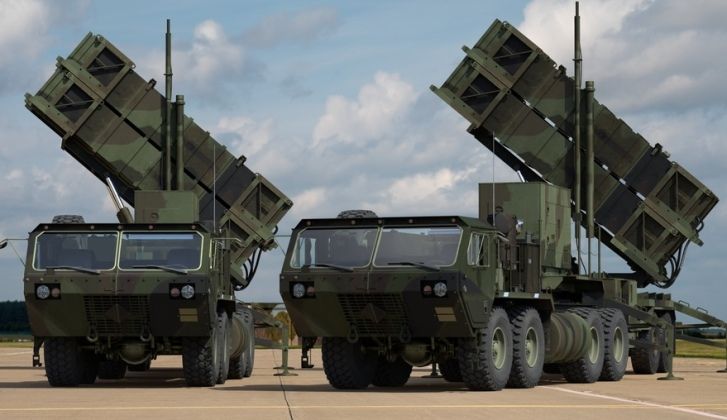
U.S. Army officials discussed current and future planned capabilities for Patriot with Secretary of War Pete Hegseth, during which Product Manager for Lower Tier Interceptors Lieutenant Colonel Steven Moebes announced the development of new generations of launchers and missiles. “So, the current [M903] launcher will slew,” he informed secretary Hegseth, adding: “I will put in a plug that this year we’re starting a new interceptor program that will have longer range [and] higher altitudes.” Elaborating on the ability to engage targets behind the system, Moebes observed: “All of our digital simulations are showing that with that new interceptor, we will have the ability for what we call [an] over-the-shoulder shot. So, it will have the kinematic power to be able to launch and actually engage behind us.”
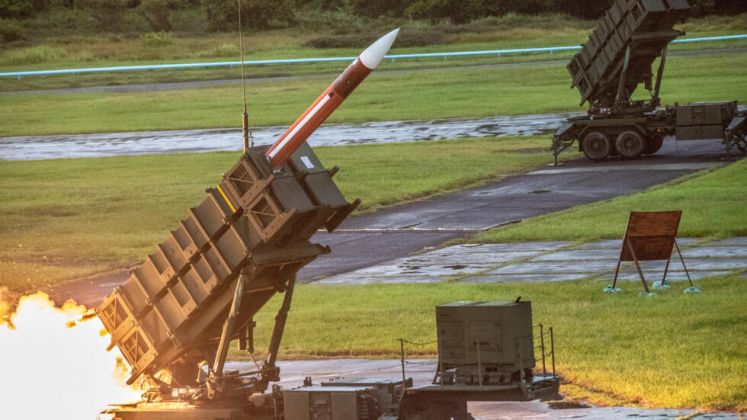
A primary factor thought to have influenced the decision to belatedly address the issues stemming from the Patriot system’s limited arc of fire is the growing capabilities of ballistic and cruise missiles fielded by the United States’ potential adversaries, which can manoeuvre during flight to engage targets from unexpected directions. The Russian Armed Forces are confirmed to have extensively utilised Iskander-M ballistic missile systems with such capabilities to destroy Patriot systems fielded by the Ukrainain Army from early 2024, with an air-launched counterpart to the Iskander-M, the Kinzhal system, also reported to have been utilised for such strikes. Ukrainian and Western sources have widely highlighted the Patriot’s extreme limitations against Russian missile attacks, which has significant implications for the United States and its strategic partners across the world, particularly as China and North Korea both field more advanced tactical missile types than Russia does. This is likely to have been a major factor stimulating the Army to develop a more capable new variant of the system.
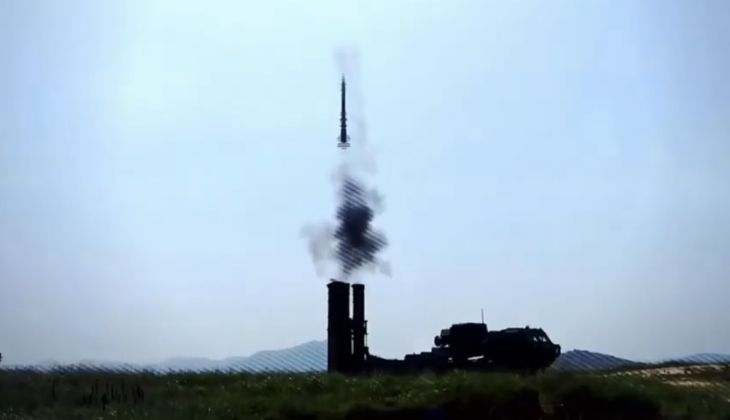
Soviet S-300 systems which entered service from 1978 pioneered the use of cold launch systems to be able to engage targets 360 degrees around the launcher, which was considered among the primary factors giving the system an advantage. Its successor the Russian S-400, the Chinese HQ-9B, and the North Korean Peonage-5 and Pyongae-6 can all similarly carry out “over-the-shoulder shots,” with the new variant of the Patriot system expected to bridge this longstanding performance gap. Where current Patriot launchers fire missiles at an angle, future launchers are expected to launch them coldly and vertically as current Chinese, Russian and North Korean systems do, which will likely result in a visually distinct design from all previous Patriot variants that have entered service since the 1980s.
