
U.S. Army Responds to Patriot Air Defences’ Ukraine War Failures By Developing Heavily Enhanced New Variant
Military Watch Magazine Editorial Staff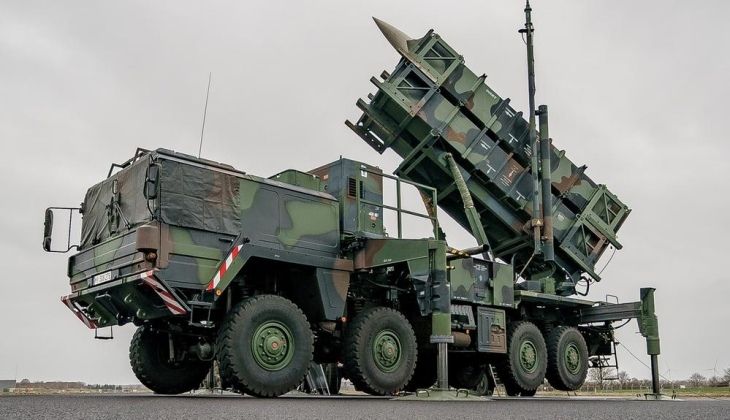
Missile Launcher From Patriot Air Defence System
U.S. Army has confirmed plans to develop a new variant of the MIM-104 Patriot long range surface-to-air missile system, which appears intended to address many of the system’s shortcomings that became clear during its recent deployments by the Ukrainian Army. Details regarding the new variant, which appears poised to be the most revolutionary since the Patriot first entered service in 1981, were provided Product Manager for Lower Tier Interceptors Army Lieutenant Colonel Steven Moebes, who discussed its planned capabilities with Secretary of War Pete Hegseth. According to Hegseth, the Patriot’s modernisation has been a topic of personal interest to President Donald Trump, with the Patriot’s recent operations in the Ukrainain theatre as by far the most costly asset deployed by Ukraine making it among the most high profile American weapons systems today.
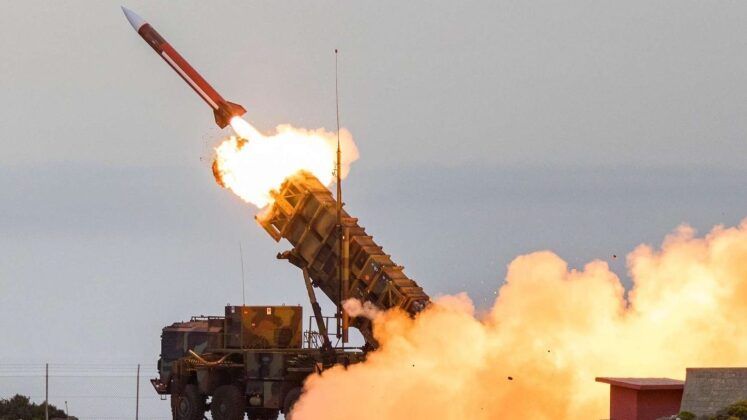
Commenting specifically on plans to increase the Patriot’s arc of fire, which is currently restricted to just 120 degrees in front of the system, Moebes observed: “So, the current [M903] launcher will slew… I will put in a plug that this year we’re starting a new interceptor program that will have longer range [and] higher altitudes.” “All of our digital simulations are showing that with that new interceptor, we will have the ability for what we call [an] over-the-shoulder shot. So, it will have the kinematic power to be able to launch and actually engage behind us,” he elaborated. This would bridge the gap with Chinese, Russian and North Korean systems, which all fire missiles vertically and can engage targets 360 degrees around them.
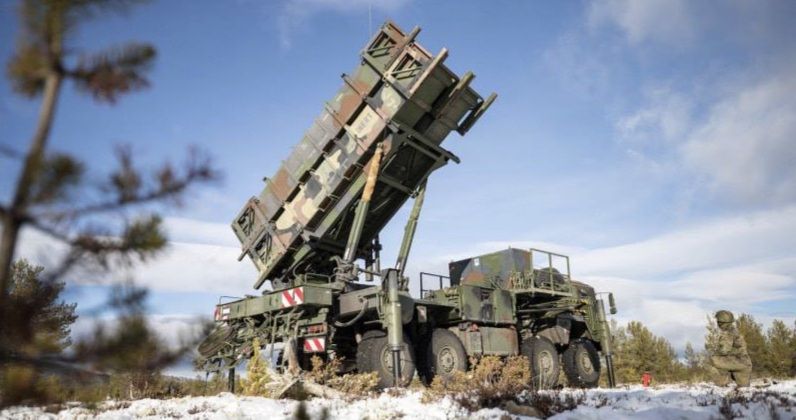
Providing further details, Army Brigadier General Patrick Costello observed: “It’s a software problem. On this system right now, the software does not allow us to fire behind… The Common Autonomous Multi-Domain Launcher [CAML] that we’re developing … is going to be more vertical [in terms of launch profile], too.” Beyond software, he observed regarding limitations of the current inclined launchers compared to the vertical CAML: “Even if we’re doing over-the-shoulder launches, we lose some probability [of kill], we lose some lethality … [when the] missile’s wasting energy going forward and turning around.” These changes are being made in parallel to the development of new surface-to-air interceptors, which are considered to be urgently needed in light of the limitations which current interceptors have demonstrated in the Ukrainian theatre.
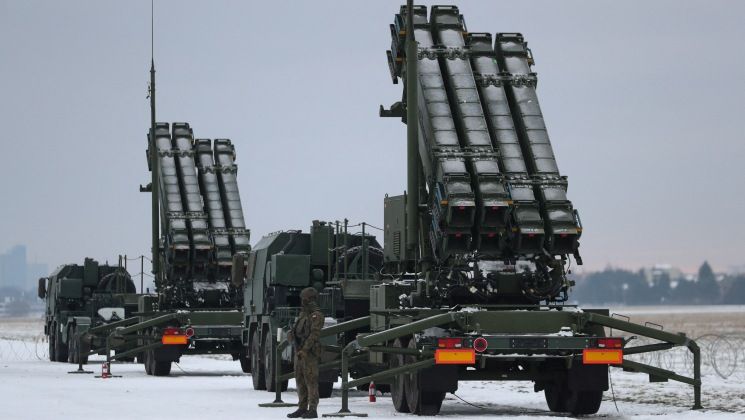
Western and Ukrainian sources have widely commented on the Patriot’s extreme limitations against Russian missile attacks, with the U.S. Armed Forces having confirmed earlier in the year that Russia’s technologies “enable their missiles to change trajectory and perform manoeuvres rather than flying in a traditional ballistic trajectory,” had created real challenges for Patriot systems supplied to Ukraine. This is a prime example of the threat picture the Army is already faced with.” Former Deputy Chief of General Staff of the Ukrainian Armed Forces General Igor Romanenko in October revealed that the effectiveness of the Patriot system had “fallen from 42% to 6%” against Russian missile attacks, after other officials and analysts had widely warned of the same in the preceding months.
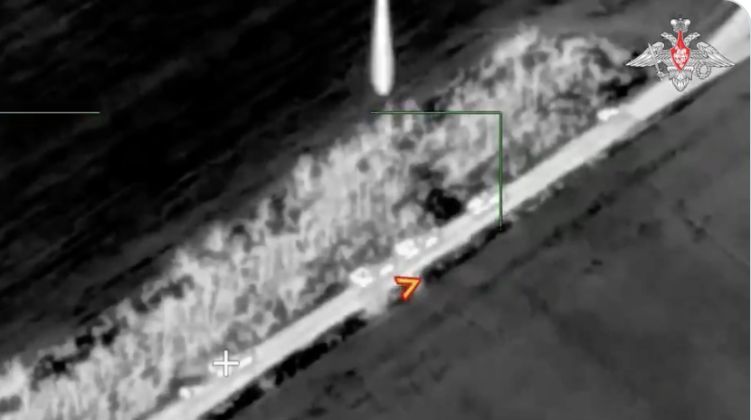
While the depressed quasi-ballistic trajectories of both 9K720 ballistic missiles from the Iskander-M system, and of their air launched counterparts deployed from MiG-31I fighters under the Kinzhal system, have long been expected to pose particular challenges to air defence efforts, this has been proven under combat conditions in Ukraine. Commenting specifically on the additional limitations imposed by the Patriot’s limited arc of fire, chief of communications for Ukrainian Air Force Command Yuri Ignat observed: “If the ballistic missile can approach from different directions, detection by a single system is not possible… It is necessary to have several systems, several radars, which can detect targets and cover the city from different directions.” These limitations have allowed the Russian Armed Forces to use ballistic missile systems like the Iskander-M to destroy Patriot systems in multiple successful strikes, which have seriously exacerbated shortages of the long range air defences across the Western world as stockpiles are depleted to rearm Ukraine.
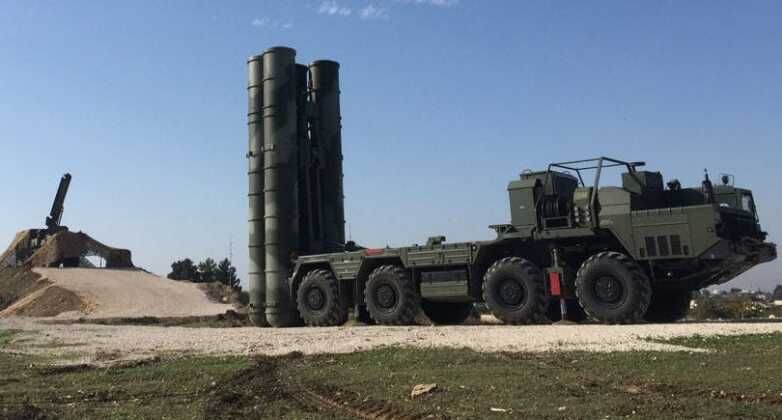
The relatively slow speeds of missiles launched by the Patriot systems, at just Mach 3.5, remains a further major shortcoming of the system, limiting its ability to intercept high speed targets. The Russian S-400 system, by contrast, can launch surface-to-air missiles that travel at over Mach 14, which has allowed S-400s to be used to shoot down missiles launched by Patriot systems. This raises the possibility that the development of new variants of the Patriot will focus on fielding faster missiles to provide a more viable defences against emerging threats. The cost effectiveness of such a system nevertheless remains in question, with even current variants of the Patriot costing several times as much as non-Western rivals such as the S-400 and Chinese HQ-9B. The latest variants of the PAC-3 surface-to-air missile already in production cost over $3 million each, despite its much more limited range than its Russian and Chinese rivals, with a future more capable missile type expected to be considerably more costly still.
