
U.S. Navy Could Have No Cruisers Left by 2030: Pentagon Proposes Retiring 60% of Ticonderoga Class Ships With No Replacement Forthcoming
Military Watch Magazine Editorial Staff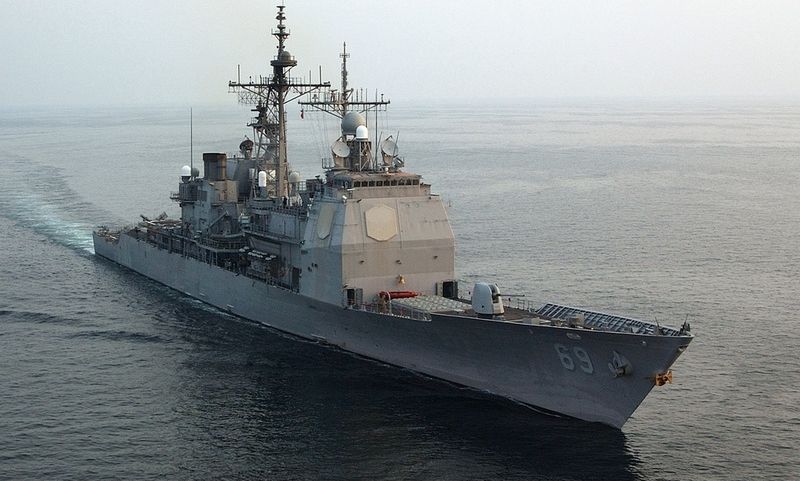
USS Vicksburg Ticonderoga Class Cruiser
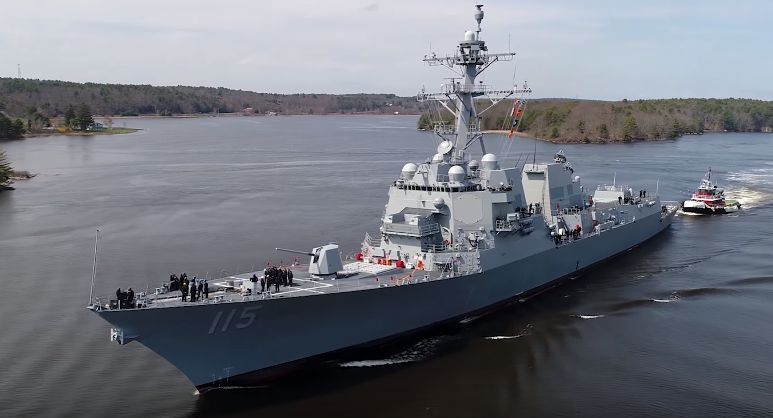
The U.S. Department of Defence has proposed major cuts to the U.S. Navy’s surface fleet to reduce expenditures, which would save over $10 billion dollars for reallocation to other parts of the defence budget. The proposal comes as the country faces an increasingly strained defence budget, exacerbated by the massive operational and acquisition costs of next generation weapons systems such as the F-35A stealth fighter and Zumwalt Class destroyer. Budget cuts will include cancelling over 40% of planned Flight III Arleigh Burke Class destroyers, which were set to be built between 2020 and 2025, and retiring 13 of 22 active Ticonderoga Class heavy cruisers. Dating back to the early 1990s, the Arleigh Burke Class’ ability to go head to head with the latest enemy warships even in enhanced form remains highly questionable, with the Chinese People’s Liberation Army’s Type 052D and Type 055 Class ships and the Russian Navy’s Admiral Gorshkov Class frigates all representing far more modern designs equipped with considerably superior and longer ranged anti ship munitions including hypersonic missiles. The Pentagon’s plan would cut the size of the American fleet from 293 ships to 287 ships by the mid 2020s, in contrast to the Navy’s goal of a 355 ship fleet by 2030.
The Ticonderoga Class cruiser first entered service in 1983, and is today the most heavily armed Western surface combat ship displacing at 9,600 tons and carrying 122 vertical launch cells. The warships are lighter and have far shorter engagement ranges than their closest foreign counterparts the Chinese Type 055 Class, a design which is over 30 years more modern, which combined with the Ticonderoga's greater age has led to calls to retire these Cold War era ships. Plans to replace the warships with a new generation of cruisers developed under the CG (X) program were ended, however, due to severe budget cuts and issues with the parallel Zumwalt Class destroyer program. The Zumwalt program set the Navy back more than $7 billion per ship due to considerable cost overruns, and suffered severe performance shortcomings. Developing a next generation cruiser along similar lines is expected to be considerably more costly still - effectively ruling out such options unless major changes to the efficiency of American shipbuilding can be made. Retiring the bulk of the Ticonderoga Class fleet, however, would seriously undermine the U.S. Navy’s power projection capabilities, and with no replacement forthcoming it would only shift the balance of power at sea further in the favour of America’s rivals.
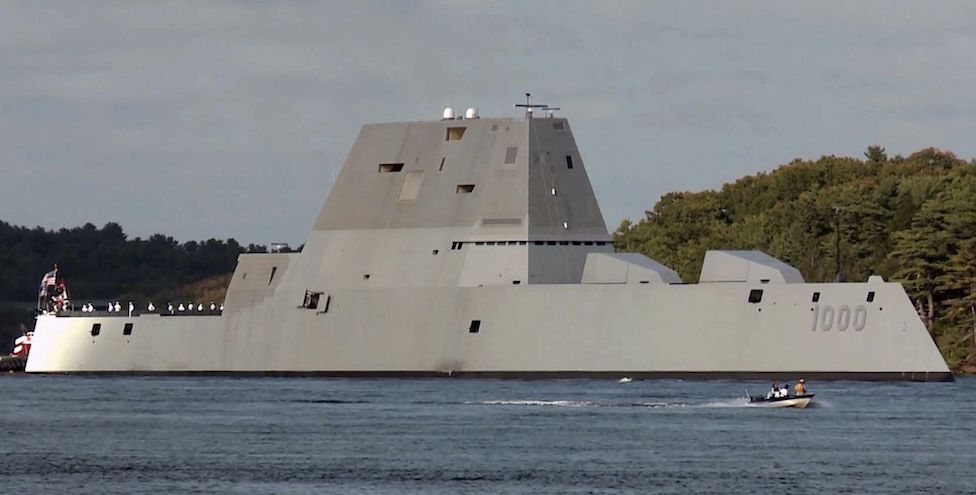
Issues facing the Ticonderoga Class cruisers in service today largely stem from their age, and include cracking hulls, ageing pipes and increasingly unreliable mechanical systems. While initially prized for their air defence capabilities, the Ticonderoga Class' surface to air missiles are not considered capable of intercepting modern anti ship cruise missiles such as the Chinese YJ-18 and Russian Zircon, leaving the warships increasingly obsolete in the face of threats from near peer rivals. The cruisers’ SPY-1 radars have also been particularly difficult to maintain, the oldest having served for around 35 years, although calls for the ships' retirement have drawn fire from the House Armed Services Committee sea power subcommittee among others. The mounting operational costs of the Ticonderoga Class ships however, combined with their waning viability in light of new challenges from rival warship programs, means retirement may be the only viable option. Unless a replacement program is initiated in the near future, the U.S. Navy may be without any cruisers whatsoever by 2030. This combined with the lack of a replacement for the Arleigh Burke Class ships, partly as a result of the failure of the Zumwalt Class destroyer program, will have very serious consequences for the U.S. Navy’s ability to project power overseas.
