
Armed to the Teeth; China Adds Two 7,500 Ton Type 052D Class Destroyers to its Fleet
Military Watch Magazine Editorial Staff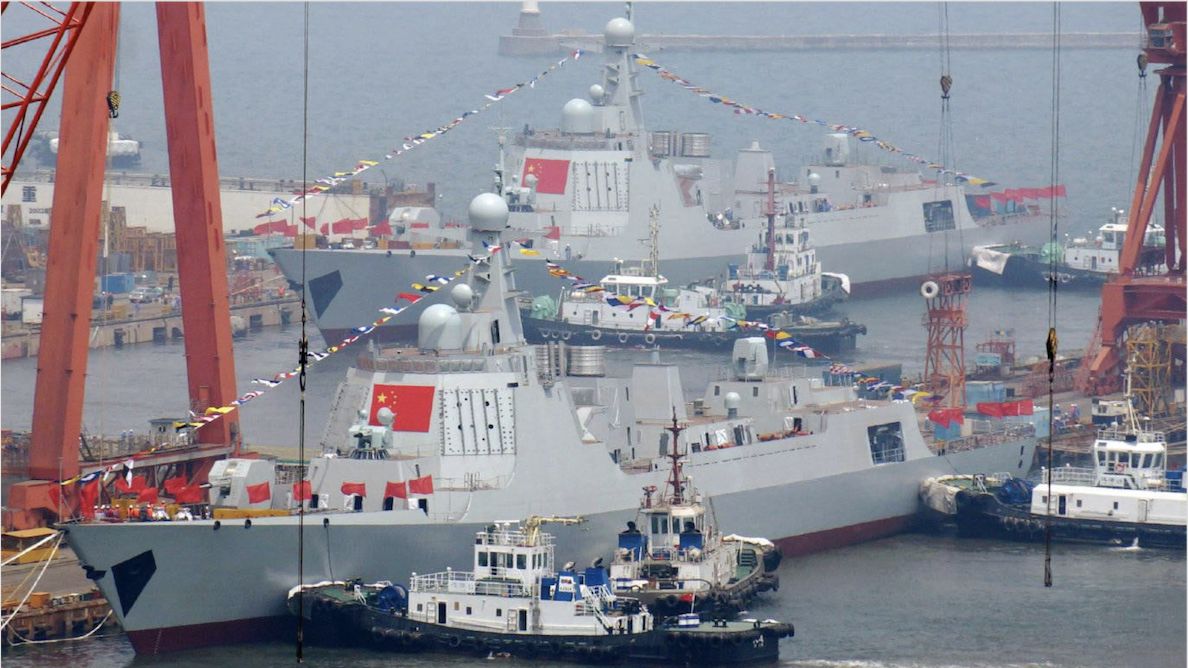
People's Liberation Army Navy Type 052D Class Destroyers
Two Type 052D Class destroyers built for China’s People’s Liberation Army (PLA) Navy were reportedly launched on May 10th at a shipyard in Dalian in the country’s northeast, the latest addition to the service’s fast growing surface fleet. The rate of growth of the PLA Navy’s fleet surpasses that of any navy in history, with the Type 052D representing the third largest vessel type constructed after the 70,000 ton Type 001A Class aircraft carrier and 13,000 ton Type 055 Class destroyer - a heavier counterpart to the 7,500 Type 052D of which three were constructed in 2018. The Type 052D first entered service in March 2014 representing the fourth indigenous destroyer type developed - ten years after the first Type 052 designed known as Type 052B was commissioned in 2004. The new destroyer class pioneered many of the technologies later integrated onto the Type 055, including canister type vertical launch system (VLS) and a flat panelled active electronically scanned array (AESA) radar. The radar system used is known as the H/LJG-346A ‘Dragon Eye,’ and provides a level of situational awareness with few rivals among warships of its size. Propulsion systems also demonstrated advances over previous warship designs, providing the Type 052D with a cruising speed range of 4,500 nautical miles. The destroyer’s VLS was the first in Chinese service to be compatible with anti ship and land attack missiles, making the Type 052D China’s first multirole ship of its kind. The warship was also the first to deploy the YJ-18 and YJ-100 anti ship cruise missiles, which have since been integrated onto the Type 055 Class, making it one of the best suited warships for ship to ship combat in the world.
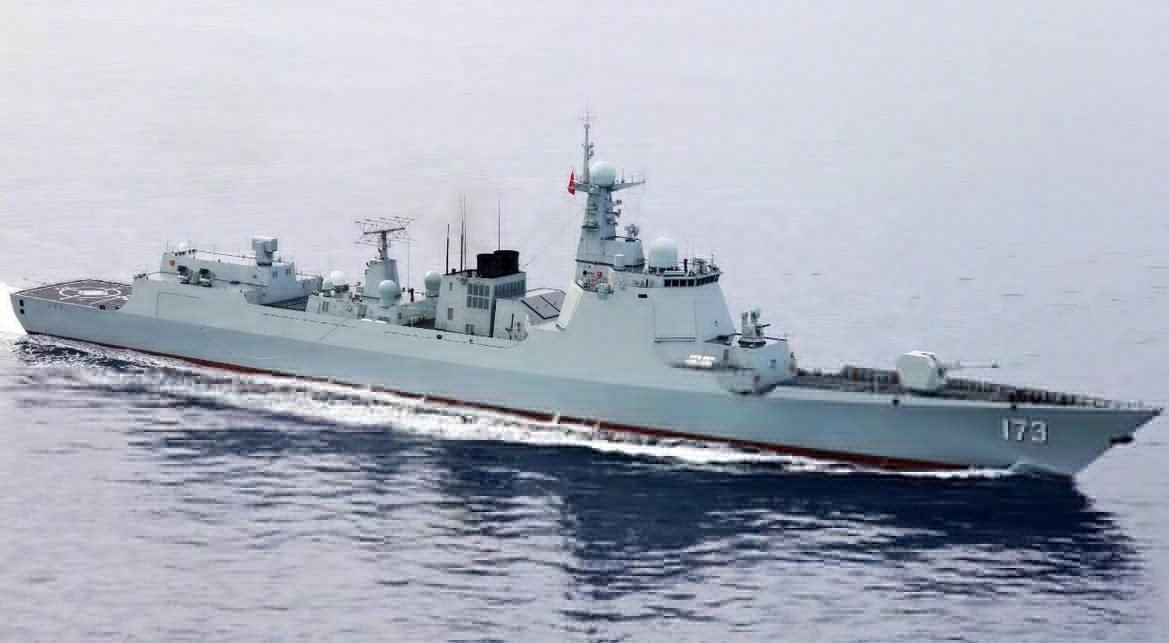
The Type 052D deploys 88 vertical launch cells, 24 of which are reserved exclusively for HHQ-10 surface to air missiles with the remaining 64 capable of deploying a variety of air defence, anti ship and anti submarine munitions. Complementing the capabilities of the HHQ-10, the HHQ-9 are HQ-16 and quad packed DK-10A surface to air missiles can all be deployed from the destroyer’s other cells providing a highly sophisticated multi layered air defence network. This is further supplemented by the H/PJ-12 close in weapons system. Perhaps the Type 052D’s most remarkable feature, however, is its access to highly sophisticated anti ship cruise missiles which allow it to neutralise enemy warships at extreme ranges. The YJ-18 in particular stands out among modern cruise missiles carried by destroyers for its combination of a long range and a high impact speed - with 540km range allowing it to neutralise most hostile destroyer types well beyond retaliation range. The American Arleigh Burke Class, for example, is currently restricted to using Mach 0.7 speed 124km range anti ship Harpoon missiles - with the new Harpoon Block III offered by Boeing but yet to be integrated retaining a 310 km range - 43% lower than that of the YJ-18. The missile is also over four times faster than the Harpoon upon impact, accelerating to Mach 3 in its terminal phase. This speed makes the missile extremely difficult to intercept, and is sufficient to tear most warships in half with a single direct hit. This damage is supplemented by a 300kg warhead. The Type 052D can theoretically carry up to 64 of these missiles, allowing a single destroyer to potentially destroy an entire fleet at standoff range.
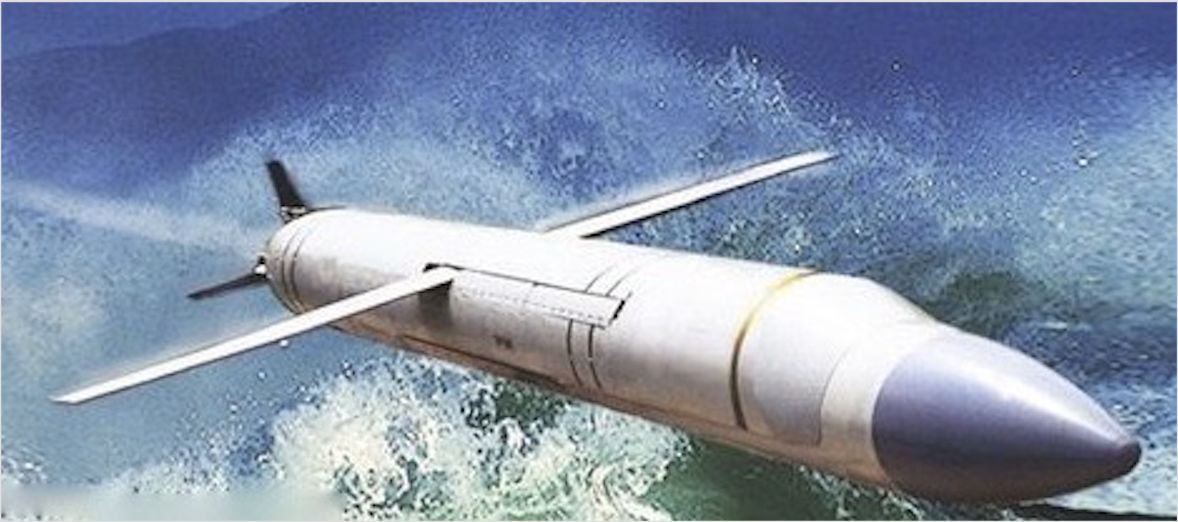
For an even longer range the Type 052D can deploy the YJ-100 anti ship cruise missile, an enhanced navalised variant of the CJ-10 with an estimated engagement range of 1000km. While subsonic, the missile compromises with a trajectory specialised to evade interception and a heavier 500kg warhead. This provides the destroyer with an overwhelming range advantage. The PLA Navy is estimated to be planning to deploy up to 18 of the Type 052D destroyers, with a new elongated variant (161m rather than 157m) reportedly laid down in July 2018. The warships will serve as escorts for the Navy’s carrier strike groups currently forming, and given their high endurance they could potentially be used for power projection operations beyond the Western Pacific. How the deployment of the PLA Navy changes as the fleet grows larger and increasingly gains fully blue water capabilities comparable to the United States remains to be seen.
