
U.S. Issues Harsh Threat to India: Purchase American F-16 Fighters or Face Economic Sanctions
Military Watch Magazine Editorial Staff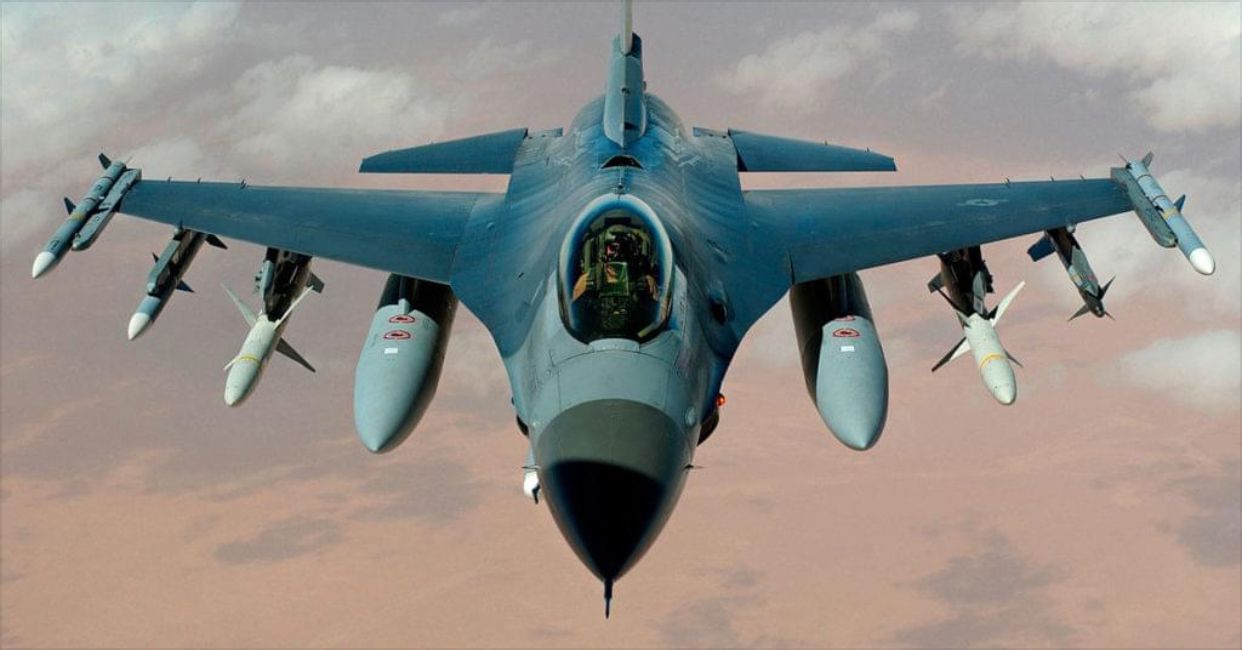
F-16 Fighting Falcon
India’s planned acquisition of the Russian S-400 surface to air missile systems have led to threats from the United States to impose economic sanctions on Delhi, with the U.S. Treasury having notably imposed sanctions on China for similar acquisitions from Russia just days before Delhi and Moscow signed a contract for S-400s. This was widely interpreted as a warning of Washington’s readiness to follow through on its threats, with sanctions imposed under the Countering America’s Adversaries Through Sanctions Act (CAATSA). India’s apparent defiance of American demands has forced Washington to reconsider its policy, balancing its need to punish clients for Russian arms with its unwillingness to alienate India as a key emerging defence partner in Asia. Delhi has as a result reportedly been offered a potential waiver on economic sanctions if it were to give an assurance that it would purchase F-16 Fighting Falcon fighter aircraft from the United States. According to Indian sources, the offer was made following a discussion between Indian Defence Minister Nirmala Sitharaman and her U.S. counterpart James Mattis in Singapore on October 19th. The United States has long been keen to market the F-16 to the Indian Air Force to gain access to the country’s sizeable defence market, although India’s response to these offers has been far from enthusiastic.
With the Indian Air Force already suffering considerable difficulties maintaining its fleet due to the extreme diversity of fighter models, including French Rafale and Mirage 2000 jets, Russian MiG-29 and Su-30 twin engine fighters, ageing British Jaguar attack jets and Soviet MiG-21 and MiG-27 fighters, the introduction of a new fighter class would put considerable further strain on the country’s ability to maintain and operate its fleet. This is compounded by the fact that the Indian Air Force plans to field another class of single engine fourth-generation fighter with a similar role to the F-16, namely the indigenously developed Tejas fighter. Other than the two Soviet fighter classes and the Jaguar, the F-16 remains considerably older than all the other fighter jets India operates and has been in service for 40 years as of 2018. The Fighting Falcon is today widely marketed to American third world defence clients such as Bahrain, Iraq and the Philippines, although it appears poorly suited to meeting India’s defence needs particularly considering the lack of experience and infrastructure for operating American combat aircraft.
The Indian Air Force remains one of the most capable in the world today, with its Su-30K and Su-30MKI heavyweight air superiority fighters having frequently one overwhelming victories against elite U.S. Air Force units during exercises, including not only those operating F-16s but also the much more capable F-15. These are supported by highly capable lighter jets such as the MiG-29 and upcoming Rafale, with even its ageing MiG-21 fighters in Indian service have been extensively upgraded with Israeli assistance, and retain several high end capabilities which a standard F-16 lacks. Whether India will be willing to more seriously consider acquisition of the F-16 due to political pressure from Washington remains to be seen, but adding another entirely new fighter class with little interoperability with existing platforms may well prove highly disruptive for the country’s overall ability to wage war in the air. The F-16's usefulness remains limited against either of tis two major military rivals, China and Pakistan, the former which relies on far more capable jets such as the J-10C and J-11B while the latter itself relies on the F-16 and similarly capable JF-17, which an Indian Falcon fleet would be far from ideal to counter in the air. Ultimately India remains unlikely to acquire the F-16, a fighter the United States and its higher tier allies are themselves beginning to phase out of frontline service, despite considerable American pressure. Whether the U.S. will offer other weapons systems as means to avoid sanctions, or whether India will leverage its strategic importance to Washington to avoid this altogether, remains to be seen
