
No Su-35 or S-400 for China? Why America is Sanctioning Beijing Over Acquisition of Russian Arms
Military Watch Magazine Editorial Staff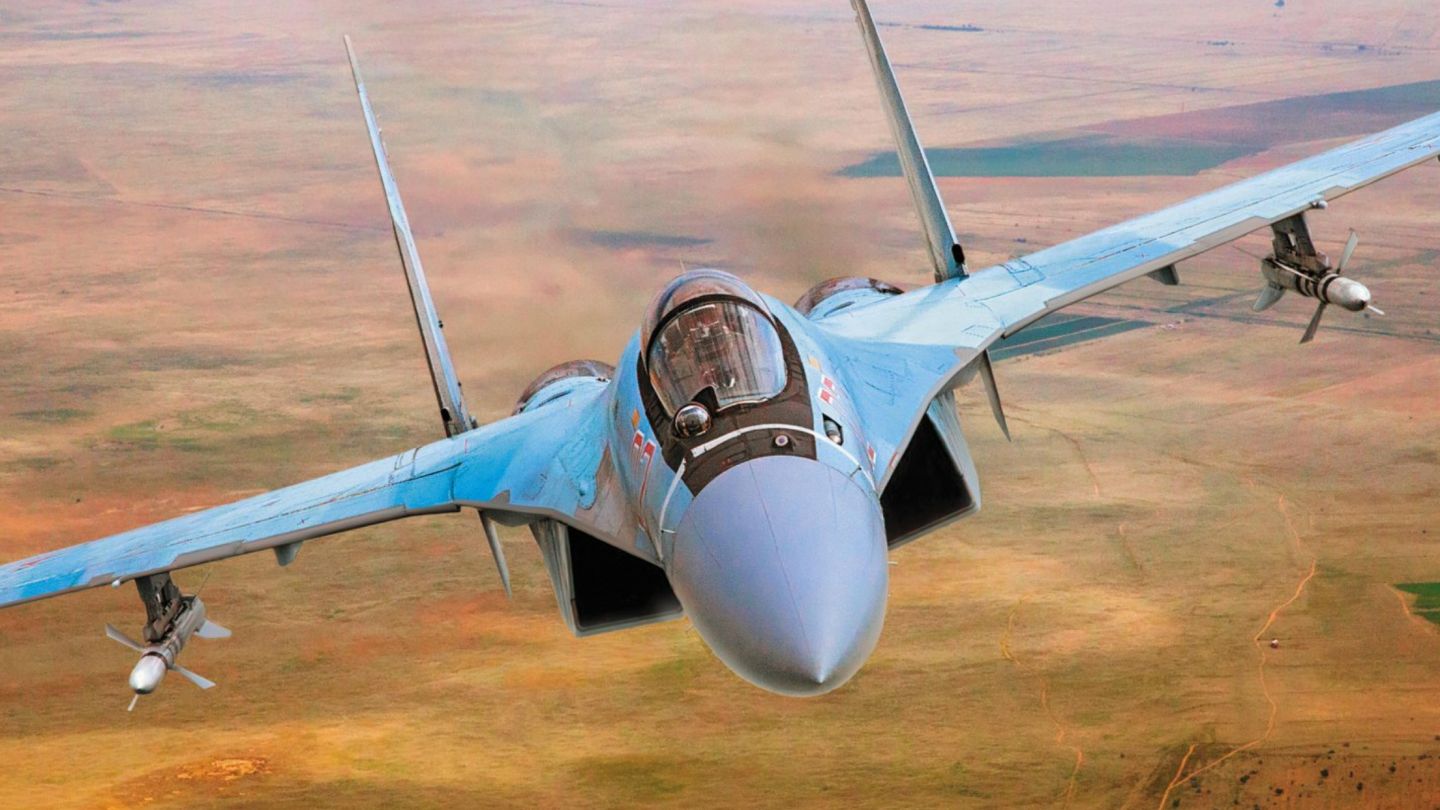
Su-35 Air Superiority Fighter
The United States Treasury has placed economic sanctions on the Chinese Military Commission's Equipment Development Department and the department’s head Li Shangfu in response to the Chinese People’s Liberation Army’s acquisition of high end Russian weapons systems. The sanctions were imposed under the Countering America's Adversaries Through Sanctions Act (CAATSA), signed into law by President Donald Trump in August 2017 under which clients for Russian, North Korean and Iranian arms can be targeted by the U.S. Treasury for economic punishment. While the United States has already drafted a ban on North Korean arms sales through the United Nations, its inability to do for Russia or Iran has lead Washington to adopt more unilateral measures to undermine the defence industries of these adversaries.
Under CAATSA Russia’s export of the S-400 surface to air missile system has been singled out for economic sanctions, with the proliferation of this system posing a particular threat to U.S. interests by both providing further funds to Russian defence manufacturer Almaz Antey to further develop air defence technologies, as well as allowing several countries to effectively seal off their airspace to Western powers which undermine American and allied power projection capabilities. China’s People’s Liberation Army has acquired both the S-400 missile system and the Su-35 air superiority fighter, to update its capabilities after acquisitions of their predecessors, the S-300 and Su-30, in the late 1990s. While Russia is the largest source of foreign arms for China’s armed forces, these two prominent weapons systems have been particularly singled out due to their advanced performances and in particular their anti aircraft capabilities.
The Su-35 and S-400 are both highly capable assets for strengthening a country’s anti access area denial (A2AD) capabilities in the air, with Western military planners repeatedly warning about the potential dangers both these systems pose to the Western Bloc’s freedom to project power globally. Other potential clients for these weapons systems including India, Iraq, Turkey, Vietnam and Indonesia have all come under considerable pressure to abandon plans to acquire these weapons platforms - with the first three being directly threatened with economic sanctions under CAATSA. The Su-35 is currently very possibly the most capable air superiority fighter in the world available for export, and at a const of approximately $60 million per fighter it is considerably more cost effective than a number of Western rival platforms such as the F-15E and Eurofighter Typhoon. The Su-35 carries more air to air munitions than any other fighter in the world, up to fourteen, and is supermanoeuvrable due to its advanced three dimensional thrust vectoring systems. With a number of longstanding Western defence clients showing interest in acquiring the system, imposing penalties for clients remains an effective means of deterring further purchases.
