
Turkey Unveils The New T-60TM Battle Tank: A New Take on a 60 Year Old Design
Military Watch Magazine Editorial Staff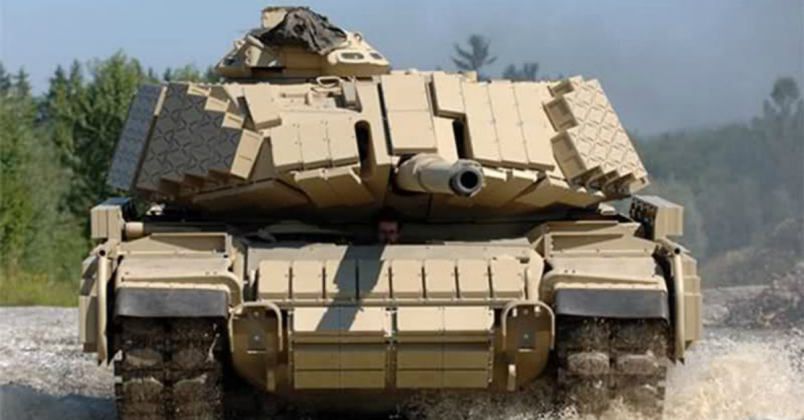
M60 Battle Tank with Explosive Reactive Armour
A number of Turkish media outlets ave reported that the country’s armed forces have inducted the new M60TM battle tank into frontline service, citing a statement by President of the Turkish Defense Association (SSB). The tank is thought to have entered service in the first week of July, and represents an extensive modernisation of the American M60 Patton tank - a platform designed in 1957 which has been in service in the U.S. Army since 1959. The new variant boasts a range of advanced features including an independent thermal viewer for the tank commander, more advanced warning systems, an ATS-70 Electro-Optic Sensor System, an active protection system, a new 1,000 hp German RENK MTU 881 diesel engine, and improved modular armour. Turkish sources have placed particular emphasis on the tank’s PULAT Active Protection System, developed and designed by the local company Aselsan, which is reported to have been extensively tested against rocket propelled grenades - a weapon widely deployed by YPG and Islamic State forces faced by Turkish armour. The system reportedly provides 360 degrees full protection, and can detect the anti-tank missiles approaching using the M60’s radar system and disable them using a Hard Kill method.
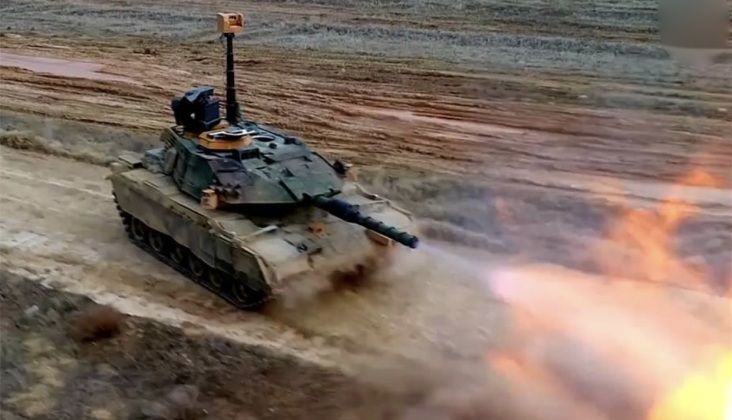
Turkey’s new tank may well prove capable against lightly armed insurgents, although its firepower in particular is sorely lacking to engage even the older classes of frontline armour deployed by neighbouring countries. The M60 has long since been retired by the U.S. Military, and its combat record against other tanks is notably far from outstanding. The tank saw extensive action in both the Yom Kippur War in the Israeli Army and in the Iran-Iran War with the Iranian Army, and in both cases was soundly outmatched by Soviet T-62 tanks. The latter conflict also saw the tanks go up against early export variants of the Soviet T-72, with the M60 and supporting British Chieftain tanks consistently suffering overwhelming defeats and hundreds of losses forcing the Iranian Army to go to great lengths to avoid clashes with Soviet supplied Iraqi armour. Both Israel and Iran notably began to look to alternatives to the M60 after witnessing its performance relative to Soviet armour, with Israel initiating the Merkava tank program in 1973 and Iran acquiring large numbers of North Korean Chonma Ho tanks - an enhanced T-62 derivative - before acquiring a licence for T-72 manufacture the following decade.
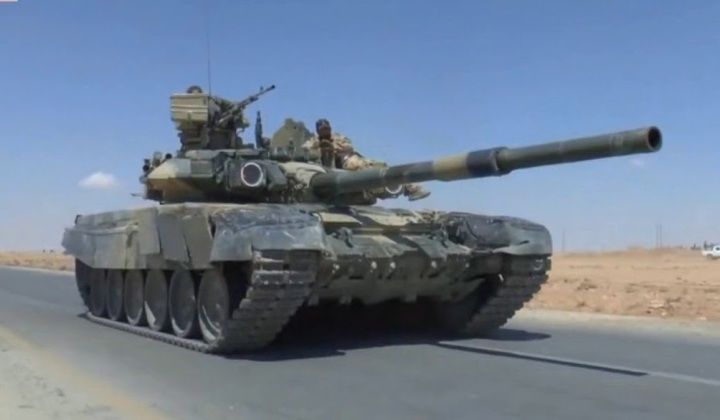
While Turkey’s M60TM may be sufficient to counter threats from insurgent groups in northern Syria - and could be more survivable than its German supplied Leopard II tanks which have suffered heavy losses in the theatre - they are unlikely to fare well against Syria’s more capable Russian supplied tanks such as the T-73B3 and T-90. The Turkish Army is notably planning to phase both its American and its German supplied tanks out of service over the coming decade and into the 2030s as begins to licence produce South Korean K2 Black Panther fourth generation tanks. The K2 is considered by many analysts to be the most capable tank in the world today, and will provide Turkey with the mosts capable armour among NATO member states and in the Middle Eastern region.
