
Ten of Russia’s Newest Fighters Operating Over Central Europe Destroy Multiple Targets in Live Fire Drills
Military Watch Magazine Editorial Staff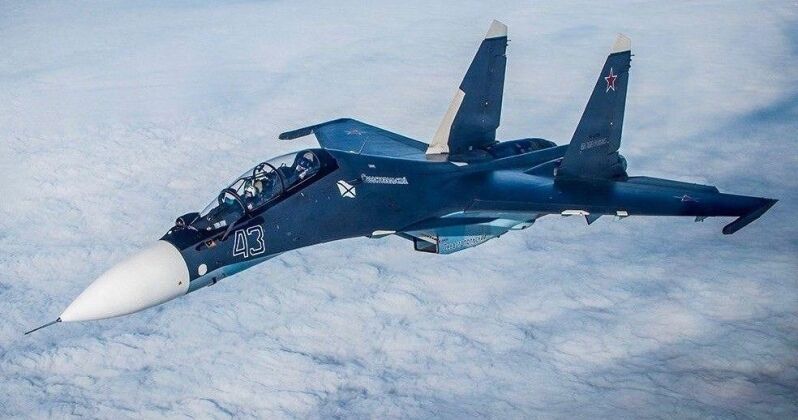
Russian Navy Su-30SM2 Fighter
The Russian Navy’s Baltic Fleet has deployed Su-30SM2 long range fighters to conduct a series of live-fire strike missions near the Kaliningrad exclave, practising precision attacks against simulated enemy targets by day and night. Ten fighter crews participated in the drills, which focused on improving strike capabilities against fortified ground positions while operating in a contested air defence environment. According to the Baltic Fleet press service, the pilots “flew in a designated area, analysed the ground situation, and also carried out precision bombing and missile launches at full-size targets simulating command posts, engineering fortifications, and enemy personnel and equipment using aerial bombs and unguided missiles.”
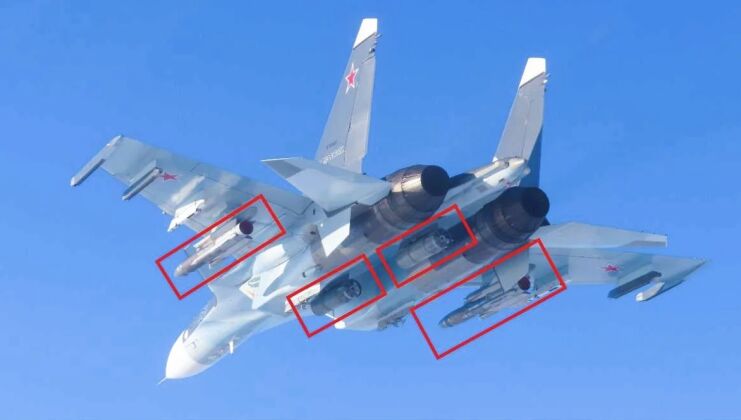
Kaliningrad occupies a strategically significant position on the Baltic Sea between Poland and Lithuania, making the enclave one of Russia’s most heavily militarised regions. The Baltic Fleet regularly conducts aviation exercises there to maintain readiness and to integrate air assets with the region’s layered air defence and coastal missile networks. Su-30SM2 fighters based there have been among the most intensely operated in Russian service. Ten of the aircraft were deployed in late July to conduct precision strike exercises in Kaliningrad, rehearsing attacks against simulated enemy command posts, fortified positions and concentrations of armoured vehicles.
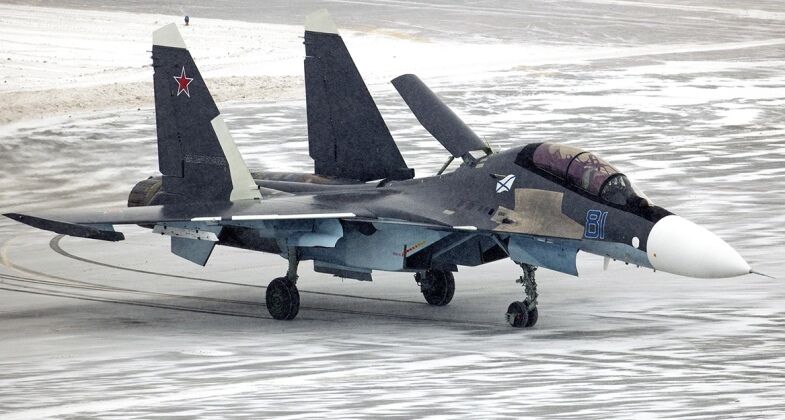
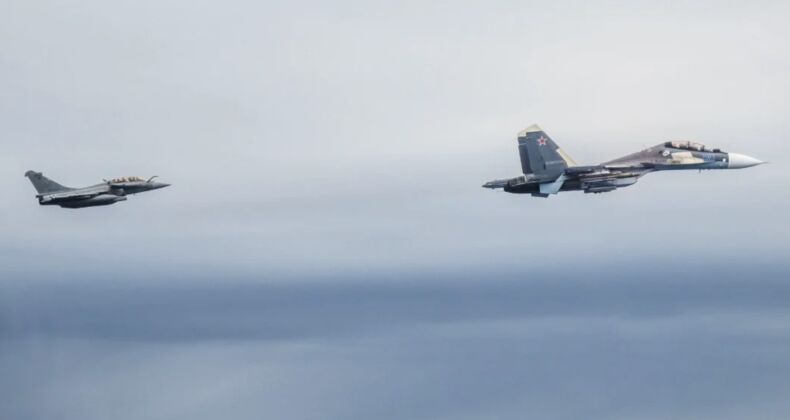
Su-30SM2 fighters are operated by the 4th Guards Naval Attack Aviation Regiment based at Chernyakhovsk Air Base in Kaliningrad, which in early 2022 became the first regiment to transition to the new fighter type. The Su-30SM2 has remained the newest fighter type to join the Russian fleet. In early February 2025 the aircraft were involved in an engagement with Spanish Air Force F-18 fighters operating from Siauliai Air Base in Lithuania. In the first week of April French Air Force Rafale fighters assumed a new rotation for Baltic Air Policing, arriving at Siauliai Air Base in Lithuania to replace the Spanish F-18s. Rafales engaged Russian Su-30SM2 fighters. Although less advanced than the newest F-35 fifth generation fighters proliferating across NATO, the Su-30SM2 maintains significant advantages over most other fighter types, including integrating much more powerful sensors and longe ranged weaponry than the Rafale or F-18.
The Su-30SM2 is the most advanced evolution of Russia’s twin-seat Su-30 fighter design, and was developed as part of a broader push to standardise systems across Russia’s fighter fleet, while also reducing maintenance costs. Its primary improvement is the integration of the AL-41F-1S engine, the same powerplant used by the Su-35 air superiority fighter, which is the most powerful ever integrated onto a fourth generation fighter type. In early June the Baltic Fleet deployed Su-30SM2s to lead exercises simulating strikes on NATO targets. “Overall, over 10 aircraft and about 100 flight and ground personnel from a composite air regiment of the Fleet’s large naval aviation formation are involved in accomplishing missions,” the Fleet’s press office stated.
