
Russia Deploys Ten Su-30SM2 Long Range Fighters for Simulated Bombing in Central Europe
Military Watch Magazine Editorial Staff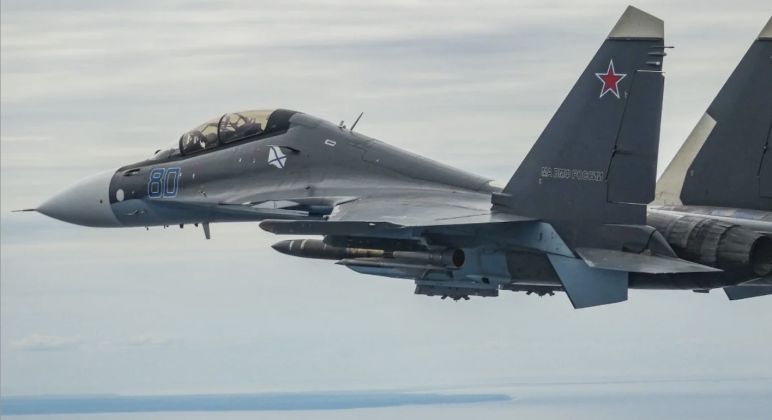
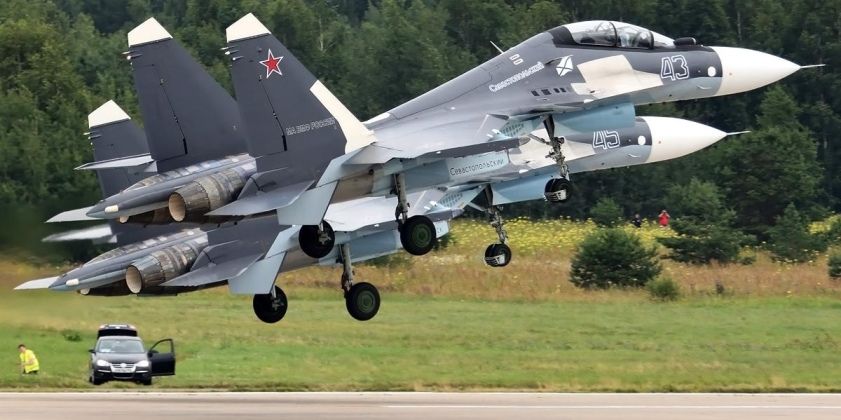
Russian Navy Su-30SM2 Fighter with Kh-31 Missile During Engagement with French Rafales Over the Baltic Sea
The Russian Navy has deployed ten Su-30SM2 long range fighters from the Baltic Fleet’s Naval Aviation to conduct precision strike exercises in the Kaliningrad Region, rehearsing attacks against simulated enemy command posts, fortified positions and concentrations of armoured vehicles. The exercise underscores the growing emphasis placed on the Su-30SM2’s strike capabilities, at a time when the heavily militarised Kaliningrad exclave faces an intense NATO military buildup across all its borders. Kaliningrad occupies a unique strategic position between Poland and Lithuania, allowing Russian combat aircraft stationed there to rapidly reach much of Central and Northern Europe while simultaneously supporting naval operations in the Baltic Sea.
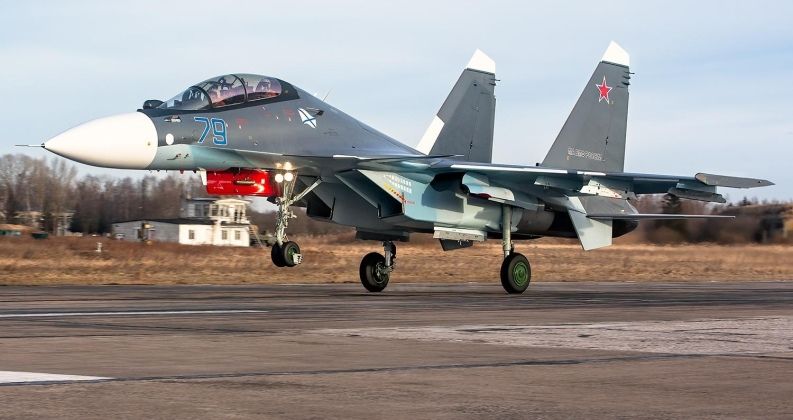
According to the Baltic Fleet’s press service, the fighter crews carried out a series of training flights focused on providing close air support and conducting precision attacks against ground targets. “During the training flights, the crews practiced their mission tasks, such as providing fire support to units, destroying command posts, fortifications, and concentrations of armoured vehicles and personnel of a simulated enemy,” the statement said. The exercise began with aerial reconnaissance of the target area before pilots conducted bombing runs against full-scale training targets using P-50T practice bombs, which replicate the handling characteristics of operational ordnance while carrying reduced explosive charges suitable for training.
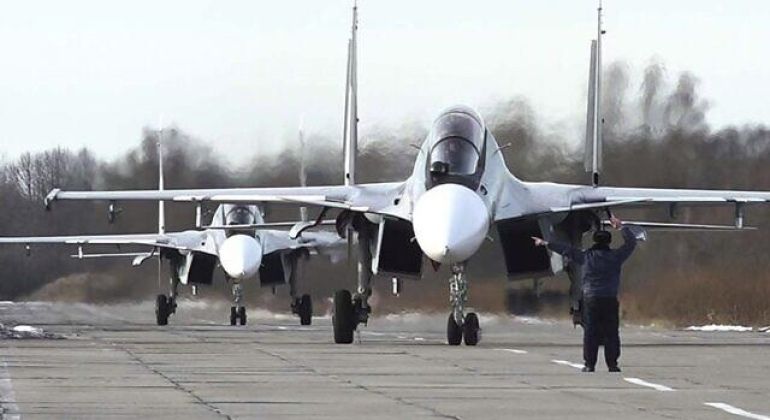
The Su-30SM2 is the longest ranged fighter type in Europe outside mainland Russia, and began deliveries to the Russian Armed Forces in early 2022. The aircraft are also fielded by the Belarusian Air Force. Developed as a comprehensive modernisation of the Su-30SM, the aircraft incorporates many technologies originally developed for the Su-35, significantly improving both its combat effectiveness and maintainability. The enhancement the Su-30 design much closer in capability to the newer Su-35 air superiority fighter, while preserving the advantages of a twin-seat configuration. Following the bombing phase, the fighters attacked simulated armoured columns using S-8 unguided rockets and their internally mounted 30 mm GSh-30-1 automatic cannon, rehearsing the full range of air-to-ground missions expected during high-intensity combat.
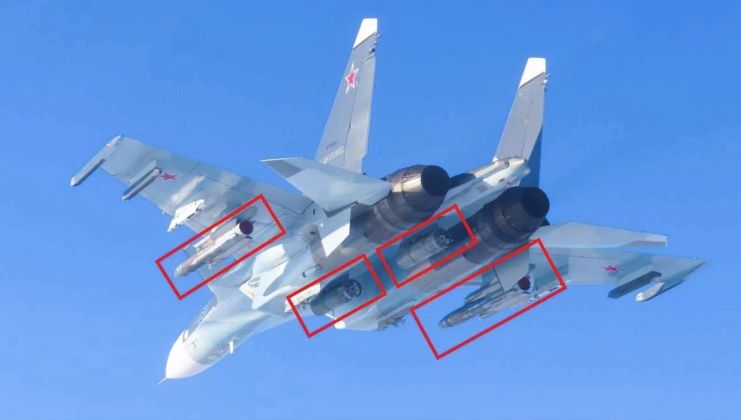
One of the most significant improvements is the adoption of the AL-41F-1S turbofan engines, replacing the older AL-31FP powerplants used on the original Su-30SM. These engines provide substantially greater thrust, improved fuel efficiency and enhanced reliability while sharing commonality with the Su-35 fleet, reducing logistical burdens across the Russian Aerospace Forces and Naval Aviation. The engines have comparable thrust levels and thrust to weight ratios to early fifth generation engines such as the F119 powering the F-22 fighter. Although the recent exercise employed unguided weapons, the Su-30SM2 is capable of carrying an extensive range of precision-guided bombs and missiles, including stand-off cruise missiles and anti-ship weapons. Its large payload capacity, long combat radius and two-crew cockpit make it particularly well suited for complex strike operations requiring extensive target acquisition and mission management.
Aircraft operating from Kaliningrad benefit from dense integrated air defence coverage while remaining within relatively short flying distances of potential operational areas across the Baltic region. The emphasis on destroying command posts, fortifications and armoured formations during the exercise reflects the kinds of missions Russian tactical aviation would likely perform during a large-scale conventional conflict in Europe. Close air support, battlefield interdiction and suppression of enemy command infrastructure remain central elements of Russian doctrine, with multirole fighters expected to conduct repeated sorties in support of advancing ground formations. Although the Su-30SM2 is in many respects the most capable fourth generation fighter type in Europe, it is increasingly outmatched by the F-35 fifth generation fighter which is rapidly proliferating across the continent. Russia’s own fifth generation fighter program has faced significant delays, although a third regiment of Su-57 fighters is expected to be fully equipped within the next 12 months.
