
Footage Shows Russia’s First Ever Oreshnik Hypersonic Missile Strike on Ukraine’s Capital
Military Watch Magazine Editorial Staff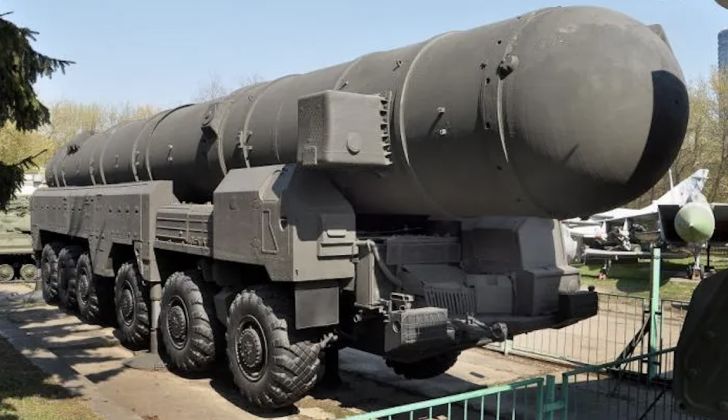
Soviet RSD-10 Intermediate Range Ballistic Missile
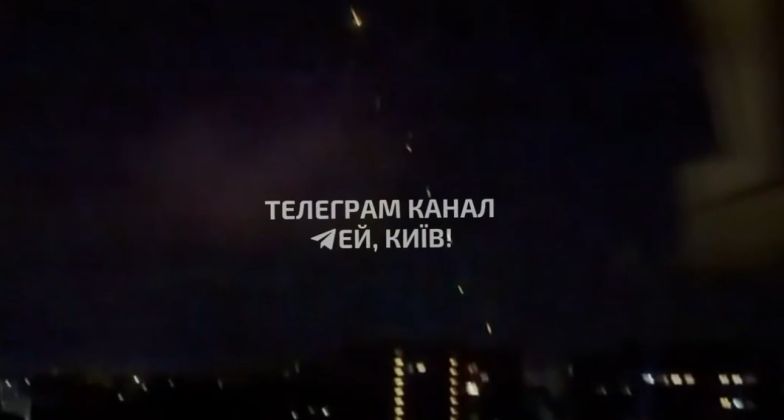
The Russian Armed Forces have conducted the third ever combat launch of the Oreshnik intermediate range hypersonic ballistic missile, with footage appearing to show the impact of multiple re-targetable warheads in the capital Kiev. This follows a prior strike on January 8 against a target in Ukraine’s Lviv region, near its NATO borders, and the first ever combat use of the missile in November 2024. The latest strike was launched simultaneously with multiple attacks using Iskander-M ballistic missile systems, with footage from the capital showing multiple large resulting explosions. Russia has provided early notifications to both the United States and China regarding the planned firing window and the approximate impact area of the Oreshnik, as is standard for launches of strategic level nuclear-capable assets by all three countries.
The Oreshnik was confirmed to have entered service in December 2025, although it remains uncertain whether the missile used in the latest strike was a prototype, potentially testing an upgrade package, or whether it was a serial production variant. The testing of the missile has frequently been interpreted as a show of force aimed at Ukraine’s supporters in the Western world, as Russia deploys a wide range of less costly shorter ranged missiles which are capable of striking targets on Ukrainian soil equally effectively. Multiple Russian government sources have from April issued explicit warnings regarding European production and supplies of unmanned attack aircraft to Ukraine, in several cases indicating that the facilities involved could become targets.
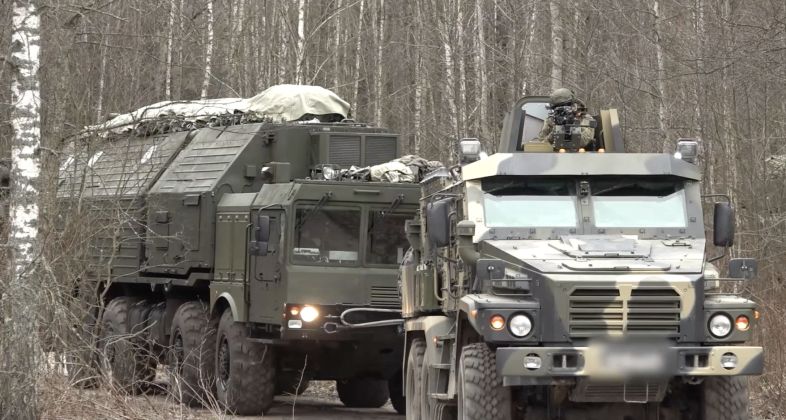
Multiple Russian sources have reported that the intensified bombardment of the Ukrainian capital was launched in retaliation for Ukrainian attacks on key Russian energy infrastructure, in operations that have been heavily facilitated by Western support. Calls in Europe to escalate such attacks have been widespread, with German Army Major General Christian Freuding, for one, having advocated for further Ukrainian attacks targeting Russian airfields and defence related production facilities. “Use long-range air warfare assets to strike aircraft and airfields before they are used. Also, target weapons production facilities,” he stated at the time. Former Russian President Dmitry Medvedev in April stated that facilities linked to drone production could be viewed as “potential targets” for the Russian Armed Forces, while the Defence Ministry has published a list of firms and facilities across Europe involved in drone manufacturing or components, and warned that drone supplies to Ukraine were “dragging Europe deeper into the war.”

The Oreshnik’s capabilities have caused considerable concern in Europe, with the head of Russia’s Foreign Intelligence Service Sergey Naryshkin having reported that its demonstrated capabilities had a “staggering” effect on defence planners in the Western world. The West perceived the January launch was interpreted in the West “as a warning against their military’s direct involvement… in the hostilities,” elaborating that Western political leaders were taken aback by the development. “Both [their] experts and military specialists admitted they had no technical or military technical means to block these systems,” he stated. Russian Ambassador to the United Kingdom Andrey Kelin previously similarly claimed in late 2024 that the first use of the Oreshnik had a significant impact on British policy toward Moscow, and had forced London to take a more cautious approach towards supporting the escalation of Ukrainian deep strikes against Russian targets.
