
Russia Launches 24 Iskander Missiles at Key Ukrainian Targets: Local Defences Increasingly Ineffective
Military Watch Magazine Editorial Staff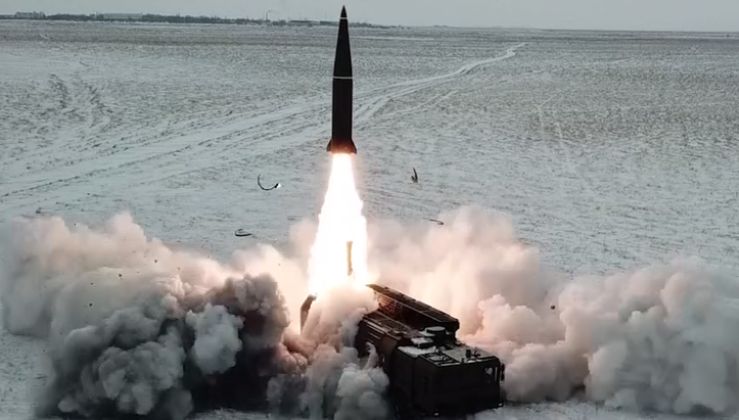
Launcher From Iskander-M System
The Russian Armed Forces on April 15-16 launched at least 24 missiles from Iskander systems at targets across Ukraine, as part of a larger barrage that also included missiles from other systems, as well as multiple types of attack drones. The Ukrainian Air Force reported that Russian forces launched two waves of combined aerial attacks, marking the third consecutive day of major bombardment, as Ukraine’s air defences have been increasingly severely depleted. Electronic warfare units are reported to have tracked and monitored 703 aerial targets during the 2 4hour period, including 19 ballistic missiles from the Iskander-M system and five cruise missiles from the Iskander-K system. 20 Kh-101 cruise missiles, and 659 drones of various types, were also launched, stretching Ukrainian air defences across the full breadth of the country simultaneously.
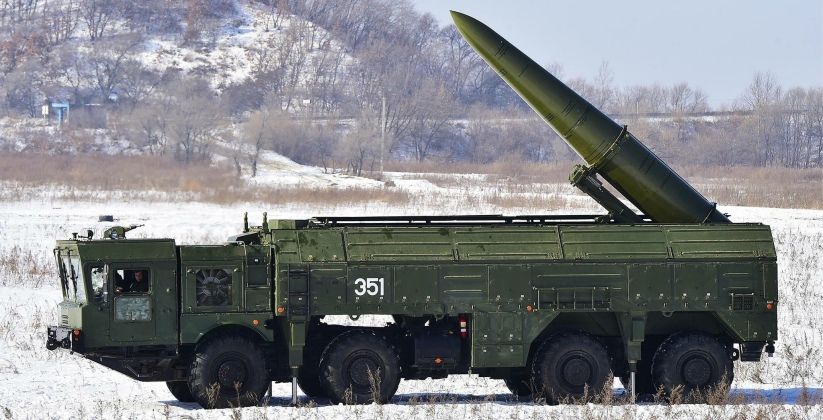
The Iskander-K is a cruise missile system that entered service in the mid-2010s, around a decade behind the Iskander-M ballistic missile system, and was designed to provide a complementary low-altitude, precision deep-strike capability. It uses the same mobile launcher as the Iskander-M, which can carry two ready-to-fire missiles, providing enhanced flexibility and survivability through mobility and rapid redeployment. The 9M728 and 9M729 are its primary missiles, with the latter estimated to have a 1,500 kilometre range. The missiles fly at low altitude using terrain contour matching and satellite guidance, allowing them to evade radar detection and approach targets from complex trajectories. With an estimated circular error probable of 5–10 meters, the system is capable of highly accurate strikes against fixed high-value targets
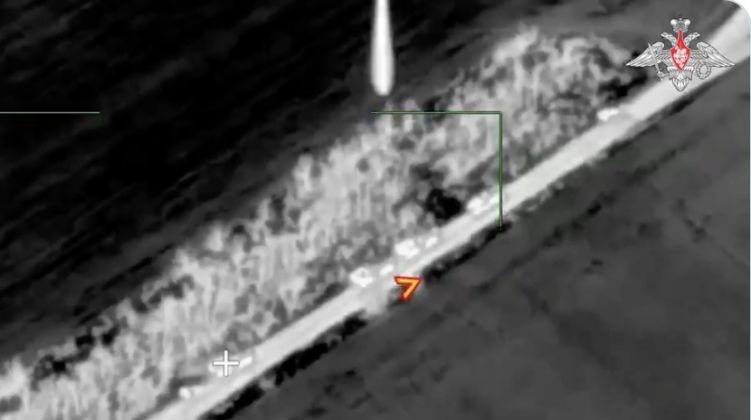
Each Iskander-M brigade is comprised of 51 vehicles, including 12 transporter erector launchers and 12 reload vehicles which between them can deploy 48 missiles simultaneously. The Russian defence sector has succeeded in maintaining production of missiles for the system at a much increased wartime rate, with deliveries in 2023 reported to have been made at several times the rates seen in all preceding years. The systems had reportedly by mid-2023 seen output quintuple. In October 2025 an assessment made at Ukraine’s Kyiv Scientific Research Institute of Forensic Expertise (KNDISE) has highlighted a significant surge in production of enhanced ballistic missile types for the Iskander-M to fulfil new Defence Ministry orders, with at least seven variants the missile featuring different warheads, including high-explosive fragmentation, cluster, and special types, assessed to be in production.
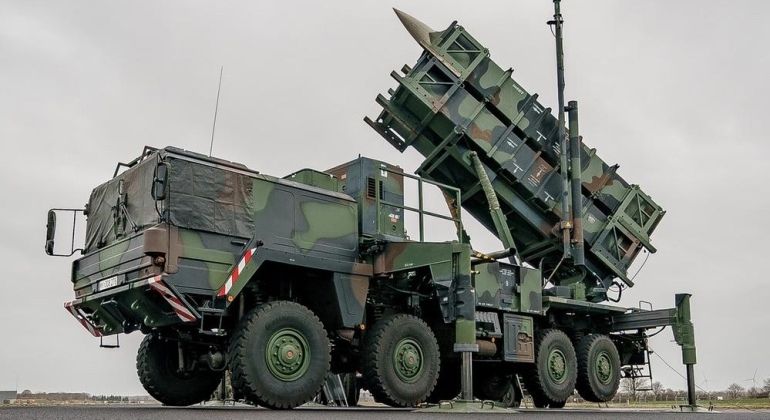
Although analysts in the Western world were initially optimistic that U.S.-build MIM-104 Patriot long range air defence systems supplied to Ukraine could help blunt the effects of Iskander strikes, Ukrainian officials have widely highlighted that the systems cannot provide an effective defence. Ukrainian and Western officials in October warned that the effectiveness of the Patriot against missile attacks by Iskander-M and Kinzhal systems was just six percent, while the costs of an attempted interception were far greater than the costs of launching a ballistic missile attack. In early October chief of communications for Ukrainian Air Force Command Yuri Ignat highlighted the ability of ballistic missiles from the Iskander system to follow new flight patterns and more complex trajectories to evade targeting. “This complicates the work of Patriot, because the system operates in automatic mode when intercepting ballistic missiles. It becomes harder to calculate the point where the interceptor missile will collide with or detonate near the enemy missile,” he stated.
