
Russia’s Defence Sector Outpacing All Competition Despite Spending Cuts - Putin
Military Watch Magazine Editorial Staff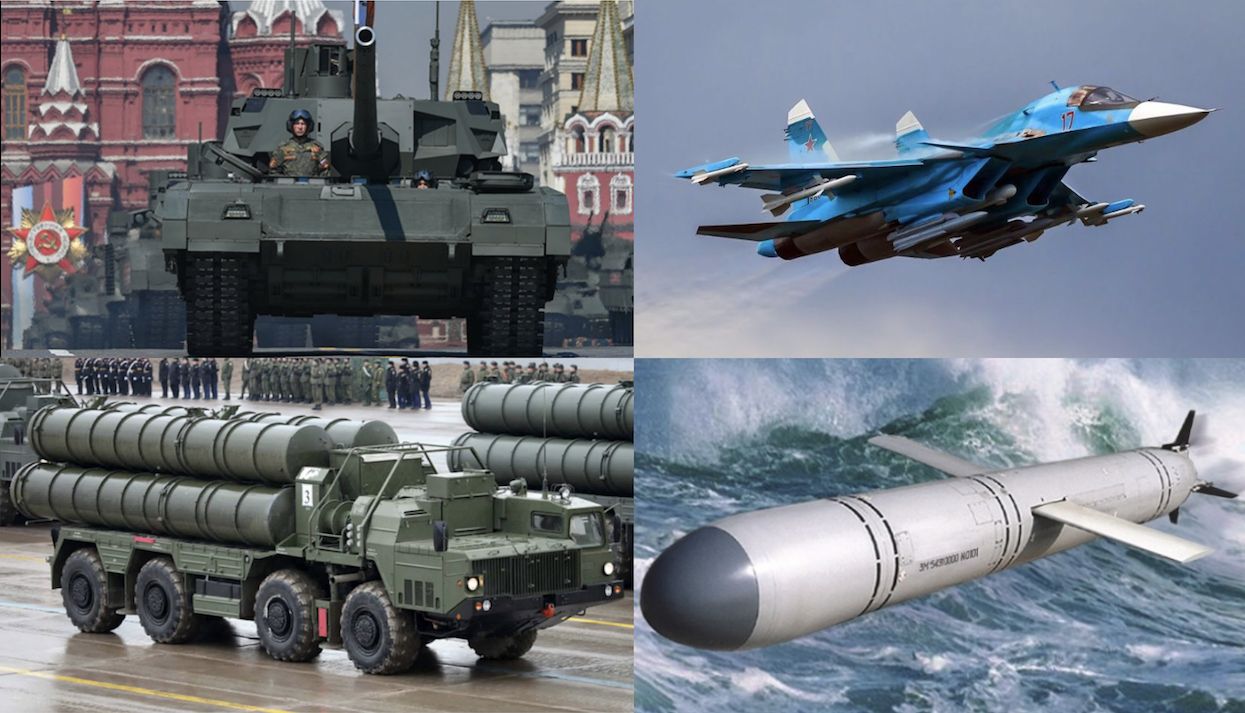
New Russian Weapons Systems: T-14 Tank, Su-34 Strike Fighter, S-400 Missile Batteries, Kalbr Cruise Missile
Russian President Vladimir Putin has expressed considerable satisfaction with the performance of the country’s defence sector, stating on June 20th that the it was outpacing other major military powers in weapons development despite a contracting defence budget. The President stated to the effect on June 20th: "We must be proud of the fact that in spite of modest military spending we guarantee not only military and nuclear parity, but we find ourselves two or three steps ahead of our competitors… Not a single country of the world has such technologically modern weapons like ours. I mean for example hypersonic missile systems.” Russia’s dominance in a number of key technologies has remained despite considerable access to a fraction of the defence budget of rivals in both the United States and Europe - a testament to its far greater efficiency. In stark contrast to Russia's contracting budget, the U.S. and European powers have continued to increase their own defence expenditures - largely under the pretext of countering the Russian military. President Putin further stated that Russia aimed to cut its military expenditure to 2.8 percent of gross domestic product by the year 2021 - from a level of 3.4 percent in 2017 - a decline of almost 20%. He cited the country’s defence budget as the seventh largest in the world - down considerably from its previous position in third place behind China and the United States in the mid 2010s. Remarking on the progress he concluded: "This is what we should be proud of in our country. And we must respect people working in the sphere of defence science and defence production and to people who organise the development of the military capability.”
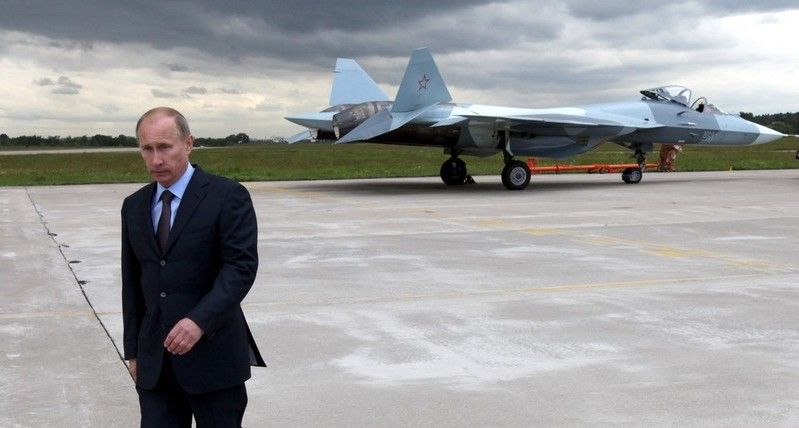
Russia’s armed forces initiated a 10 year modernisation program in 2008 which concluded in 2018 - under which all branches of Russia’s armed forces saw their assets comprehensively improved. This program required higher levels of defence expenditure, and was considered vital given both the military’s perceived underperformance in the war with Georgia that year and the deteriorating relations with the Western Bloc. Among the most prolific developments under the program have been the induction of new missile platforms for both strategic deterrence, tactical strikes and air defence. Some of the most notable are the hypersonic Avanagard and Sarmat strategic systems, the tactical Kh-47M2 Kinzhal ballistic and Kalibr and Kh-101 cruise missiles, and the S-400 and S-300V4 long range air defences platforms. While the S-400 was in service since mid-2007, its has since entered service in large numbers and has come to form the mainstay of the country’s defence network. The platform has been significant enhanced with new electronic warfare systems and more capable hypersonic munitions such as the 40N6E. The Russian Air Force has also seen marked improvements in its combat capabilities, with deficiencies in beyond visual range air to air capabilities overcome with induction of new missiles such as the R-27ER, R-77 and R-37 and new aircraft such as the MiG-31BSM, Su-27SM3 and Su-35 capable of deploying them. Russian President Putin has shown considerable faith in the country’s latest fighter aircraft, the Su-57, which is currently the least costly and arguably the most cost effective platform of its generation ever developed. The fighter is set to be fielded in considerable numbers by 2025 despite cuts to defence expenditure.
