
President Putin Praises Su-57 as World’s Best Military Aircraft; What Makes Russia’s Next Generation Fighter Unique?
Military Watch Magazine Editorial Staff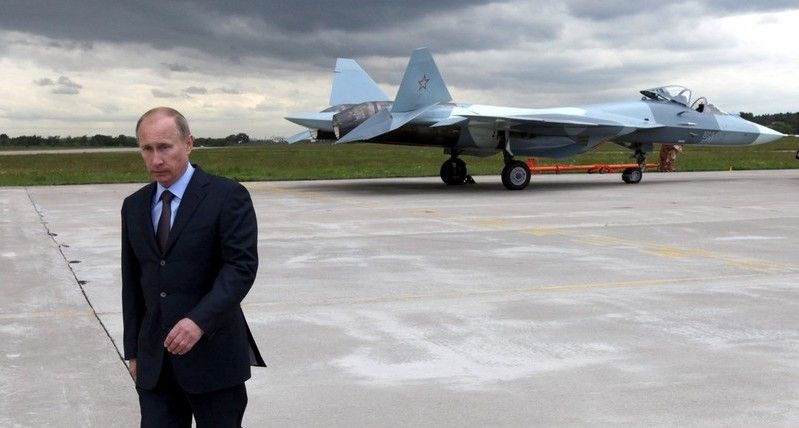
Russian President Putin Inspects Su-57 Prototype
Russian President Vladimir Putin stated on March 19th that he considered the country’s next generation fighter jet the Su-57, which entered operational service in 2019, as the world’s best military plane. “This is the best plane today, the world’s best aircraft. By all its operational characteristics and by its armament. No other aircraft can fly as well as our plane,” he said. President Putin has reportedly taken a personal interest in the development of a next generation fighter aircraft since the mid 2000s - a successor to the Su-27 which entered service in 1985 and has since been extensively modernised to form the mainstay of the Russian fleet. The Su-57 saw its first combat test in the Syrian theatre in February 2018, when it was deployed to carry out airstrikes against Islamist insurgent targets. As of yet, only a dozen of the aircraft have been ordered, though larger orders are expected to be placed from the mid 2020s.
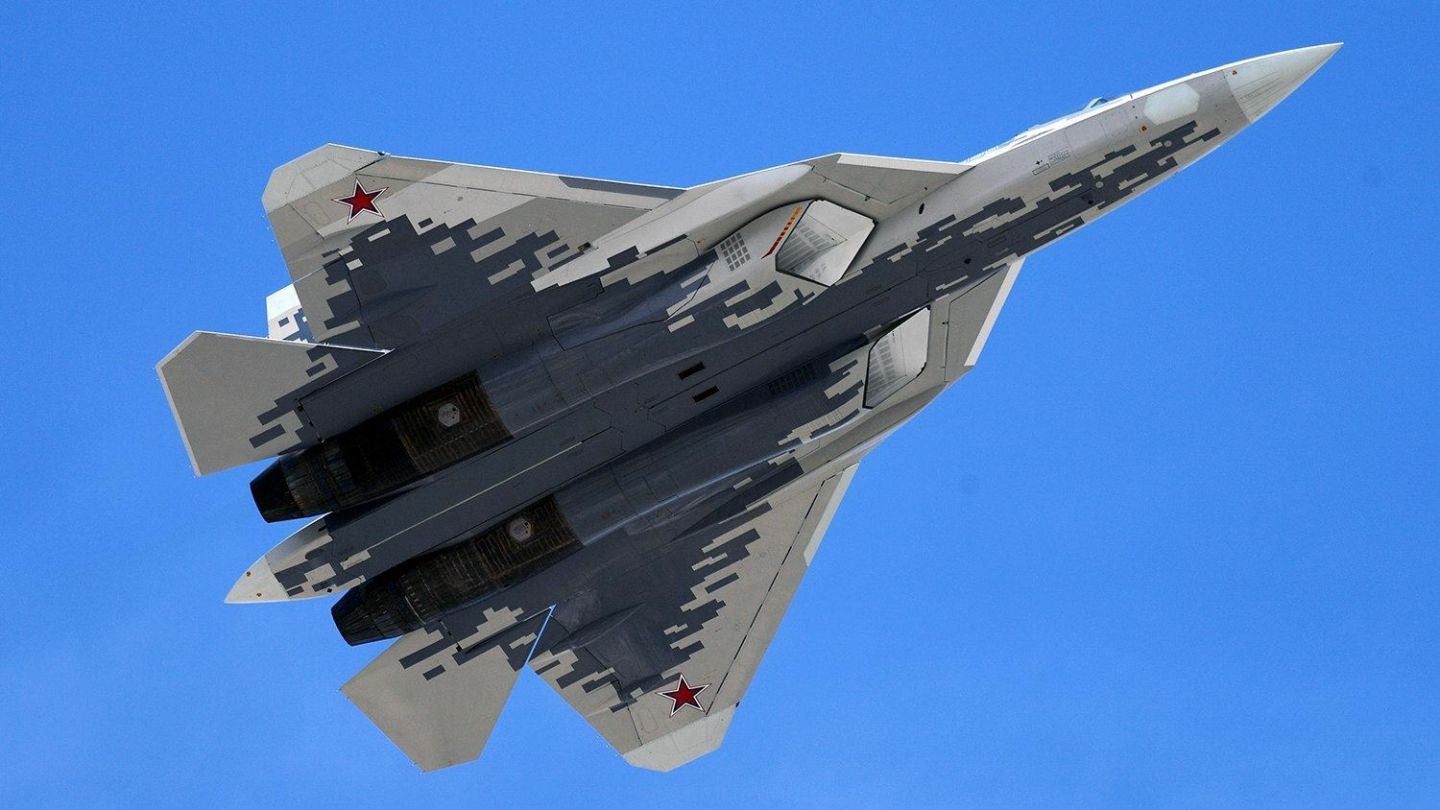
The Su-57 was reportedly developed in response to the United States Air Force’s induction of the F-22 Raptor fifth generation air superiority fighter into service in December 2005 and development of a more capable sixth generation air superiority platform. The Russian jet deploys a number of capabilities which were initially intended for the Raptor but later abandoned due to cost and development difficulties. These include cheek mounted side looking radars, an infra red search and track system (IRST) and a rear looking sensor - valuable next generation assets many of which are unique to the Su-57. The fighter is particularly prized for its extreme manoeuvrability, facilitated by three dimensional thrust vectoring engines and a specialised airframe which make it even more manoeuvrable than the Su-35 - a thrust vectoring capable enhanced derivative of the Su-27 which previously held the world record by a considerable margin.
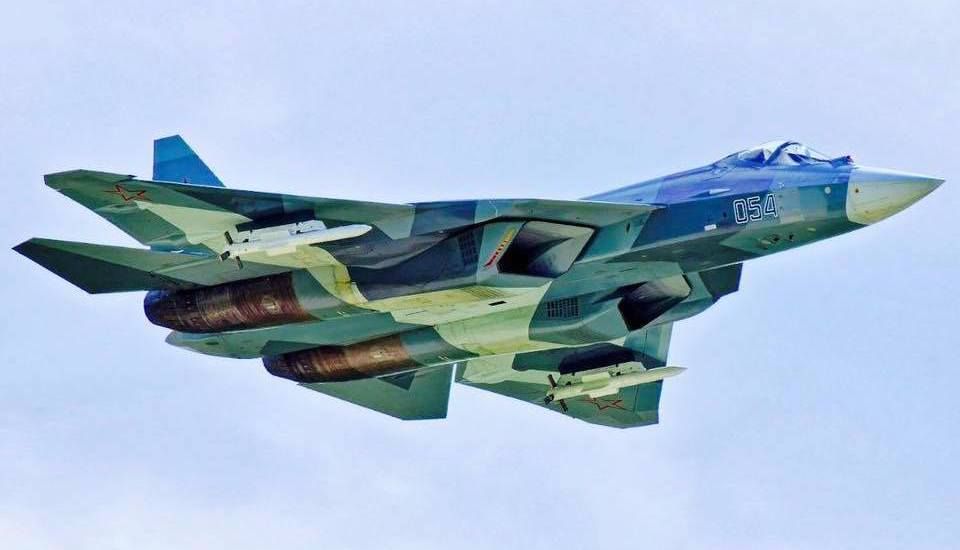
The Russian military has indicated on a number of occasions that it intends to develop the Su-57 into a sixth generation fighter, and that its capabilities are intended to considerably surpass those of the fifth generation including the American F-22 and Chinese J-20. While it has been announced that a number of new technologies and weapons systems are being developed for the fighter, President Putin’s statement which stressed the importance of the aircraft’s weaponry indicates that some of these systems may well already be operational. These include the K-77 air to air missile - which is reportedly far more difficult to evade than any preceding platform due to advanced sensors on the missile itself, laser systems designed to blind incoming missiles, 400km range R-37 ‘AWACS hunting’ air to air missiles designed to neutralise enemy support aircraft, and even hypersonic standoff munitions such as the Kh-47M2 Kinzhal which can be used for nuclear delivery, ground attack and ship hunting at extreme ranges. These capabilities make the Su-57 extremely lethal - though when the Russian President claimed that the Su-57 was the most capable military aircraft he may have been referring to fighters alone, as the Russian bomber the Tu-160M2 is also considered very possibly the world’s most lethal combat jet with capabilities unrivalled the world over. Whether the President’s statement signals a shift towards greater investment in the program - possibly in research and development to further enhance capabilities in preparation for later mass production - remains to be seen, but it is a considerable possibility.
