
Russia to Purchase 76 Next Generation Su-57 Fighters in Coming Seven Years - President Putin
Military Watch Magazine Editorial Staff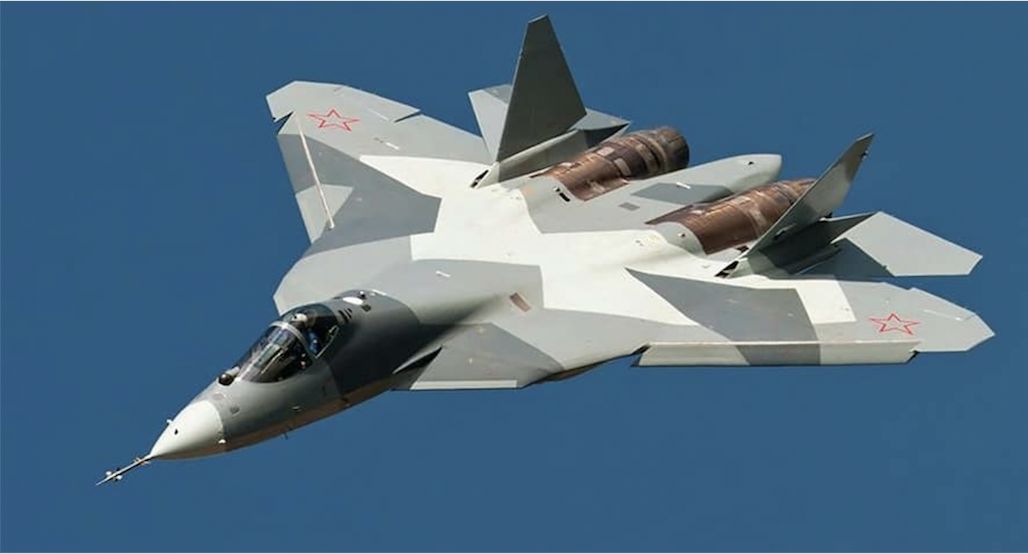
Russian Su-57 Next Generation Fighter
Russia’s armed forces reportedly intend to acquire 76 Su-57 next generation twin engine air superiority fighters before the year 2028 - according to a recent statement by President Vladimir Putin. While mass production of the Su-57 has has currently been postponed, with aircraft being manufactured at an extreme low rate of little over one per year, a significant expansion of manufacturing will need to take place to meet growing orders. It is unclear how many Su-57 fighters the Russian Air Force intends to have in service by the late 2020s, or at what stage of production the 76 fighters will be at and how many will be in service by 2028. The fighter is slated to replace many of the Su-27 Flankers and their derivatives such as the Su-30 in service in the Russian Air Force - and possibly in naval aviation. The first Su-27 fighters entered service in the Soviet Air Force in 1985, and while much of the fleet has been upgraded or more recently manufactured to a ‘4+ generation’ standard as the Su-27SM2 and Su-27SM3, older variants are likely to begin being phased out of service for replacement by the next generation Su-57 by the late 2020s.
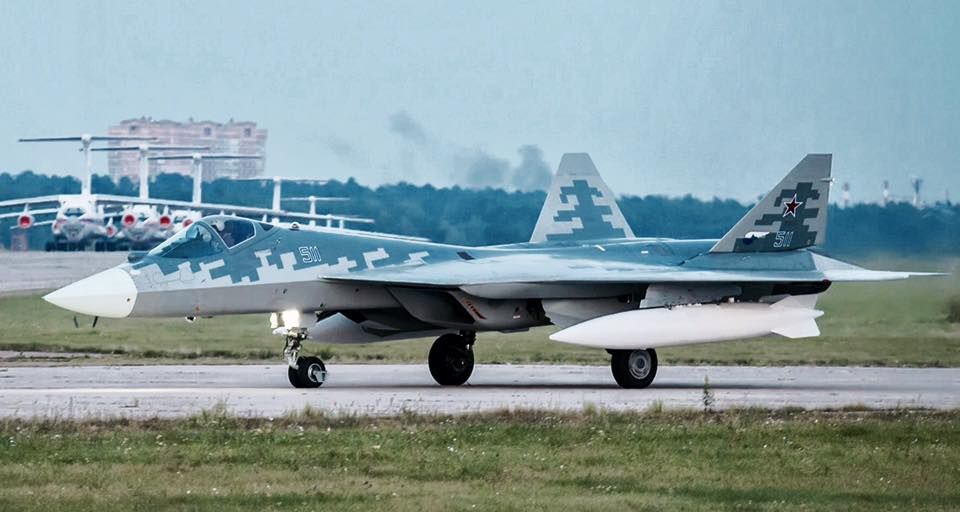
Perhaps the most critical question regarding the acquisition is what stage of development the fighters will have reached by the late 2020s, and whether Russia will be able to declare enhanced variants ’sixth generation’ fighters based on the new technologies integrated. While existing Su-57 prototypes already integrate a number of advanced technologies not seen on other fifth generation fighters such as the America F-22 and Chinese J-20, including the most advanced thrust vectoring system ever designed and missile blinding laser defence systems, new technologies being developed for the aircraft are intended to bring its capabilities to a sixth generation. While Russia is currently confident in the capabilities of its enhanced fourth generation platforms such as the MiG-31BSM, MiG-35 and Su-35 to engage the Western Bloc’s fifth generation aircraft, an enhanced Su-57 derivative with next generation capabilities is viewed as critical to countering upcoming sixth generation American fighters slated to enter service in the 2020s. Technologies set to be integrated to enhance the Su-57 include laser weapons systems, hypersonic ballistic missiles, hypersonic air to air missiles, greater use of artificial intelligence and special g force cancelling suits for pilots allowing the Su-57 to manoeuvre beyond the limits of conventional fighters.
