
What Use Can the Russian Air Force Make of a Dozen Su-57 Fighters? The Role of Initial Production Variants of the New Air Superiority Platform
Military Watch Magazine Editorial Staff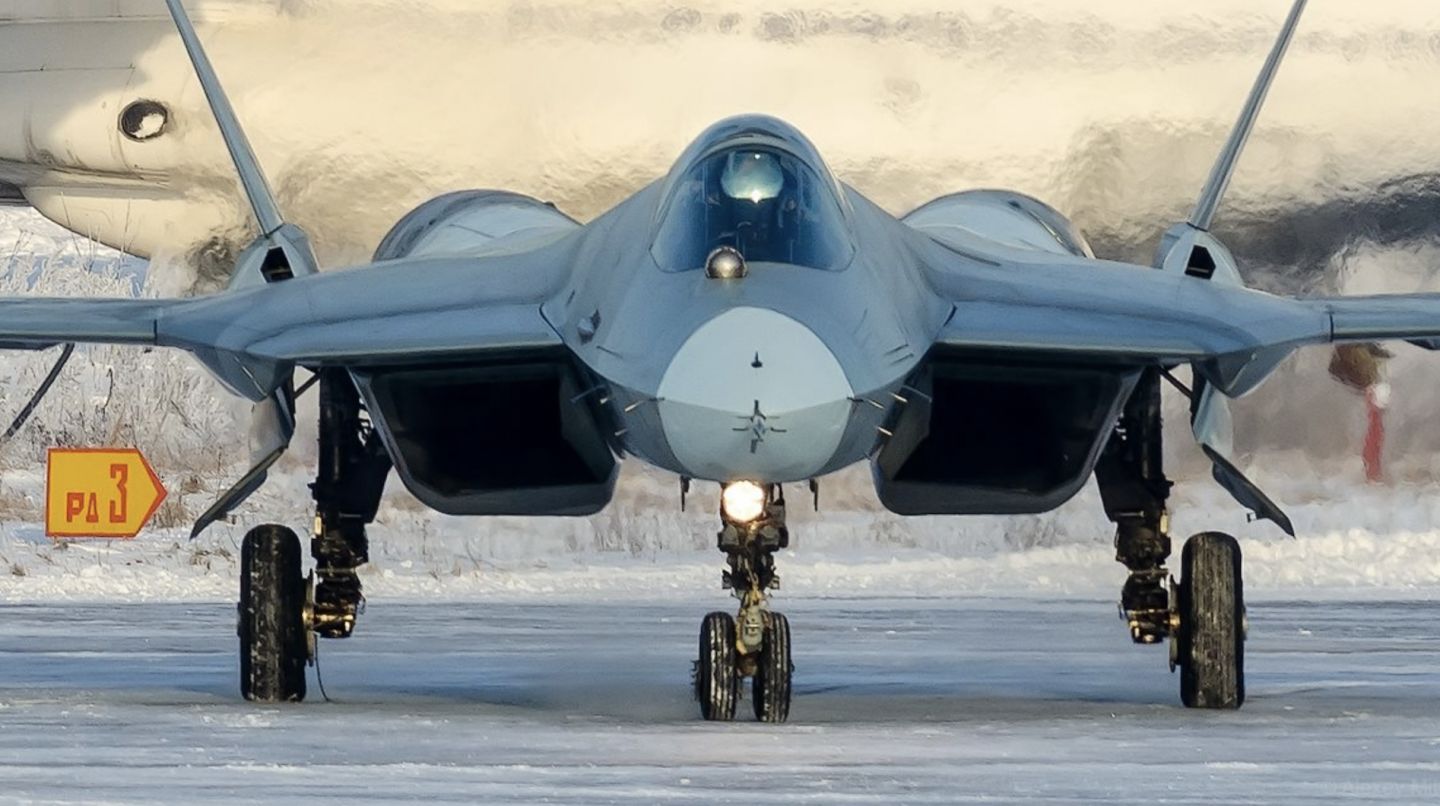
Russian Su-57 Next Generation Fighter
With mass production of the Su-57 next generation air superiority platform postponed, Russia’s Air Force is set to place an order for just a dozen initial production variants of the fighters which will be delivered over several years - possibly followed by further orders of similar sizes in the early 2020s in the interim until full production begins. The Su-57 airframe will continue to be modernised in the interim, with new sixth generation technologies continuing to be tested, and the jet will reportedly be put into mass production as a sixth generation fighter with these technologies already integrated once their development is complete. With initial production variants fielding only fifth generation technologies, which Russia’s armed forces claim are sufficient to match those of the American F-22 Raptor - but insufficient to match the upcoming America's sixth generation Air Dominance Fighter currently under development - the role of these less advanced Su-57 variants has been put to serious question.
While for a smaller country a dozen elite next generation fighters can be a game changer, Indonesia’s induction of eleven Su-35 jets being a prime example, for the Russian Air Force - fielding the second largest air superiority fleet in the world only to China - the significance of twelve new fifth generation fighters for the service's combat capabilities - even those as formidable as the Su-57 - will remain small. The true value of the fighters however, other than the prestige they will provide the Russian military as the third in the world to have developed and deployed a fifth generation aircraft, is the experience of operating next generation technologies. Flying, maintaining and servicing next generation jets will provide valuable knowhow to Russian pilots and crews, which upon the entry of a sixth generation variant of the Su-57 into mass production will allow it to seamlessly be inducted into a service already familiar with its operation.
Much as operating the Su-35 over Syria has provided the Russian military with invaluable experience, and led the Air Force to order modifications to the jets to refine their capabilities on this basis, so too will operating the Su-57 for over a decade before mass production begins likely contribute a great deal to the refinement of the design. With weaponised prototypes having already been deployed to Syria in early 2018, where lessons learned were reportedly valued highly by the aircraft’s developers, so too could early production variants prove invaluable in war games and in limited deployments to combat theatres - not for the contribution they would make to the Russian fleet’s capabilities as such, but rather for the lessons the Air Force can learn and use to refine the platform’s design. As a result, upon the initiation of mass production, the fighters will already be highly optimised for combat operations and their integration into service will be far less troublesome that it would be if the Air Force lacked this experience operating early production airframes. The induction of the Su-57 into active service as a fifth generation fighter, even in small numbers, could also potentially lead to foreign orders for the aircraft - which currently represents the only fifth generation air superiority fighter available for export anywhere in the world.
