
Hypersonic Air Defence; Chinese PLA Prepares for Induction of Second S-400 Missile Regiment Armed with 400km Range 40N6E Missiles
Military Watch Magazine Editorial Staff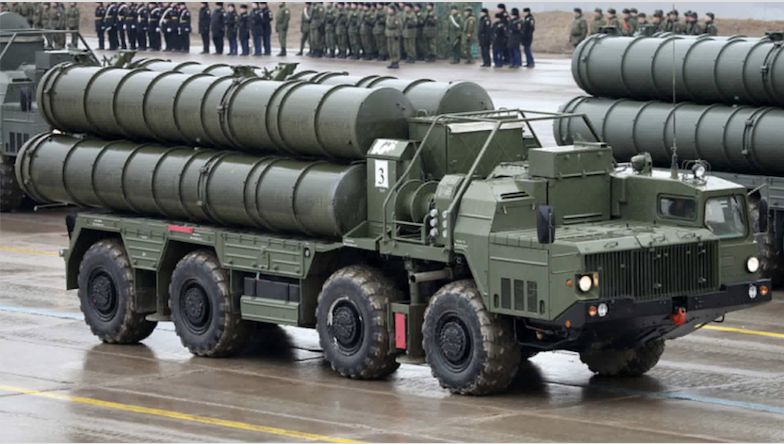
S-400 Surface to Air Missile Batteries
Following the activation of its first S-400 surface to air missile regiment in 2018, China’s People’s Liberation Army (PLA) is reportedly preparing itself for the induction of a second regiment of the state of the art Russian surface to air missile platforms. Servicemen from the People’s Liberation Army Rocket Force (PLARF) have reportedly been dispatched to inspect the second regiment at a military base in southern Russia, with these assets set to be delivered to China by the end of July according to Russian media reports. “At the Kapustin Yar practice range, the Chinese military specialists started a technical inspection of the second S-400 regiment set that will be dispatched to China in late July. Test firing from S-400 system is not envisaged at the practice range,” a Russian defence industry source reportedly informed the news agency TASS. The PLA has a long history of operating state of the art Russian long range air defence systems, with its only major high altitude air defence capability until the early 1990s provided by Soviet S-75 platforms and their indigenous derivatives. The PLA placed orders for the S-300PMU1 and S-300PMU-2 in the 1990s, and though it later developed advanced systems with similar long ranged capabilities such as the HQ-9B it proceeded to arrange for the transfer of the S-400 in the mid 2010s. China became the first foreign operator of the S-400 after it was first inducted into Russian service in 2007, though some reports indicate Algeria may have acquired the system at an earlier date.
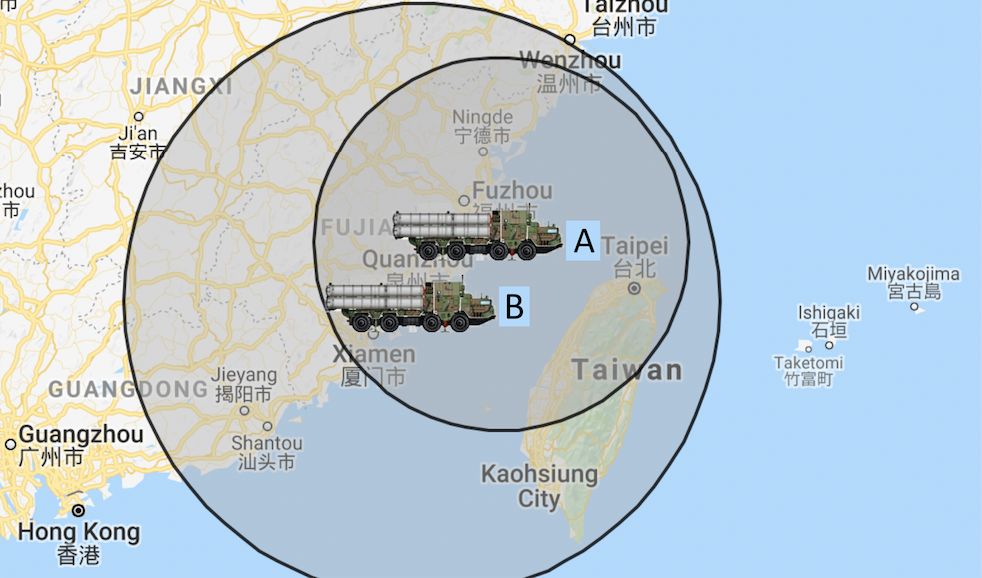
The S-400 system is currently considered the most capable system of its kind in the world, and is capable of engaging up to 80 targets simultaneous including ballistic missiles, cruise missiles and aircraft with up to 160 interceptor missiles. This decreases its vulnerability to being overwhelmed by enemy missile attacks, with the preceding S-300PMU-2 capable of engaging just 32 targets and similar Western, North Korean and Chinese systems reportedly restricted to numbers well under 30. The S-400 also benefits from powerful sensors which are reportedly able to detect non-stealthy combat aircraft at ranges of up to 600km and to both detect and lock onto stealth fighters at ranges of over 100km - possibly much more. The Russian platform retains access to over half a dozen missile types for increased versatility, including the hypersonic 48N6DM/48N6E3 with a 250km range and the 48N6E2 with a 200km range. The platform’s most distinguished munition, however, remains the 40N6E which retains a 400km engagement range and is capable of speeds of around Mach 14. The missile’s unique trajectory, ascending to extreme near space altitudes before descending towards its target, provide it with unparalleled over the horizon strike capabilities and allow it to neutralise targets near the limits of its range as low as 5 meters off the ground. This allows the S-400 to target low attitude aircraft at long distances in a way no other air defence system can due to the limitations of the Earth’s curvature on conventional surface to air munitions. China received its first confirmed deliveries of the 40N6E in April 2019, and the missiles provide a potential game changer in theatres from the Taiwan Strait to the East China Sea. Given the contraction of the Russian defence budget, the considerable cost of these hypersonic missiles and their high value to the PLA, it is likely that China will deploy them in comparable if not greater numbers to its neighbour. The possibility of integration of the 40N6E or a close derivative onto future PLA Navy warship such as the new Type 055 Class destroyer has also been raised in the past.
