
Republic of China Army Units Use U.S. Javelin and TOW Missiles to Repel Simulated Mainland Coastal Assault
Military Watch Magazine Editorial Staff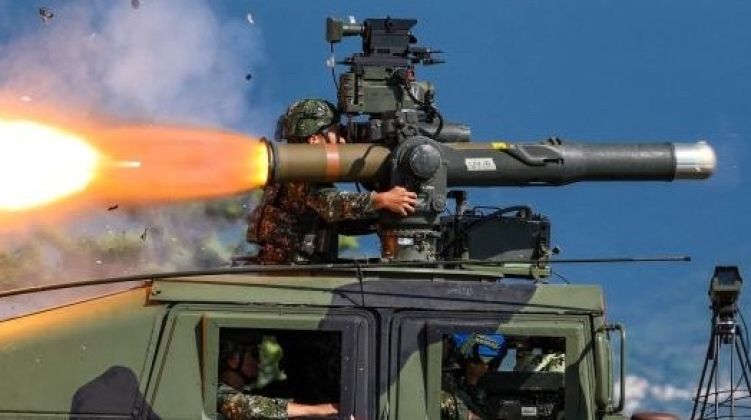
Republic of China Army TOW Missile Launch During Live Fire Exercises
The Republic of China Army has tested its coastal defence capabilities in a major live fire exercise, which was centred on the use of U.S.-supplied BGM-71 TOW and FGM-148 Javelin anti-tank missile systems against maritime targets. Drills were conducted in the Fourth Combat Zone, and integrated precision-guided missiles, artillery, and mortars into a unified anti-landing defence framework. Training focused on targeting hostile forces during the critical sea-to-shore transition phase. Exercises brought together the 137th Infantry Brigade, the 333rd Combined Arms Brigade, the 43rd Artillery Command, the Infantry Training Command, the Artillery Training Command, and the 99th Marine Brigade, and were held across Xishu Beach in Tainan, Fangshan in Pingtung, and Fenggang North Training Ground in Pingtung, making them one of the largest coastal defence exercises seen anywhere in the world.
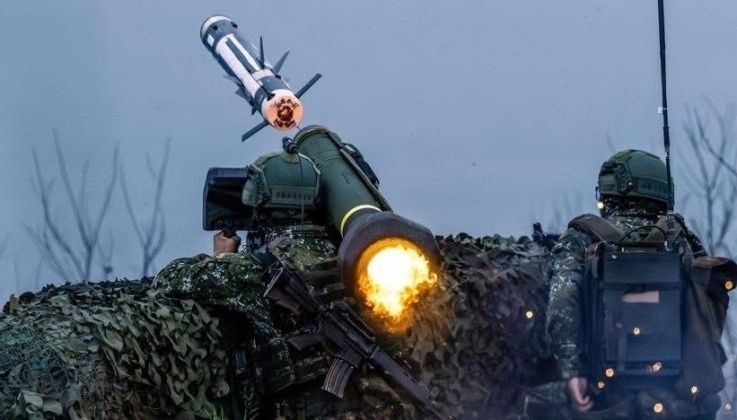
The use of TOW and Javelin systems against maritime targets highlights one of multiple incidents of these types of missile systems being used against new types of targets. The Israeli counterpart to the Javelin, the Spike system, was used extensively by insurgents in Iran in June 2025 for assassinations and strikes on local air defence systems, while a system with similar capabilities, possibly the Iranian Almas, has been extensively used by the Lebanese paramilitary group Hezbollah to strike Israeli infantry and components of its air defence systems. By far the greatest use of modern non-line of sight anti-tank missile systems has occurred in the Ukrainian theatre, with the Javelin having played a particularly central role in inflicting heavy losses on Russian forces in early 2022 as part of an asymmetric defence strategy. Russian forces subsequently procured a system with similar capabilities, the North Korean Bulase-4, some time in 2024, and have used them to destroy Ukrainian howitzers among other targets.
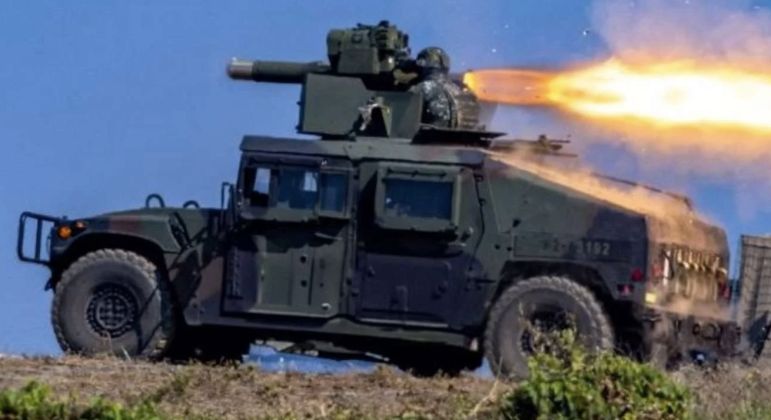
In February the Republic of China Ministry of National Defence confirmed that the U.S. government had provided draft Letters of Offer and Acceptance for sales of additional TOW and Javelin anti-tank missiles. The first order for Javelin missiles to equip the Republic of China Army was placed in 2002, while the service has fielded the older TOW missiles since the mid-1970s. The TOW relies a direct line of fire from the launcher to the tank, and uses wire guidance, while the Javelin uses an electro optical infra-red sensor to provide a ‘fire and forget’ capability, and was designed to strike targets beyond line of sight on their top armour. As the Army’s own armoured warfare capabilities have fallen several decades behind the cutting edge, with its tank fleet by some measures being the most antiquated in the world, procurement of man-portable anti-tank missiles provides a means to asymmetrically counter the Chinese People’s Liberation Army (PLA) - with which the Republic of China Armed Forces remain in a state of civil war.
