
Republic of China Army Relying on Korean War Era M41 Tanks For Key Live Fire Coastal Defence Drills
Military Watch Magazine Editorial Staff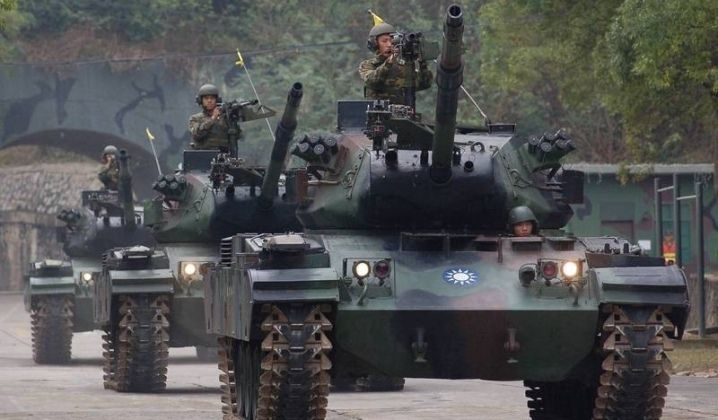
Republic of China Army M41D Tanks
The Republic of China Army has deployed M41D tanks under the Kinmen Defence Command as part of live-fire exercises simulating “near-shore defence beach engagements,” which are intended to prepare forces for a defence against a landing by the Chinese mainland’s People’s Liberation Army. The exercises reportedly saw the tanks and supporting armoured vehicles and artillery repel landing forces and demonstrating a robust combat capability to counter multiple threats on Kinmen. The M41 is one of the oldest and least capable types of tanks in service anywhere in the world, with the type having begun production less than half way through the Korean Wa in 1951, before production concluded in 1954.
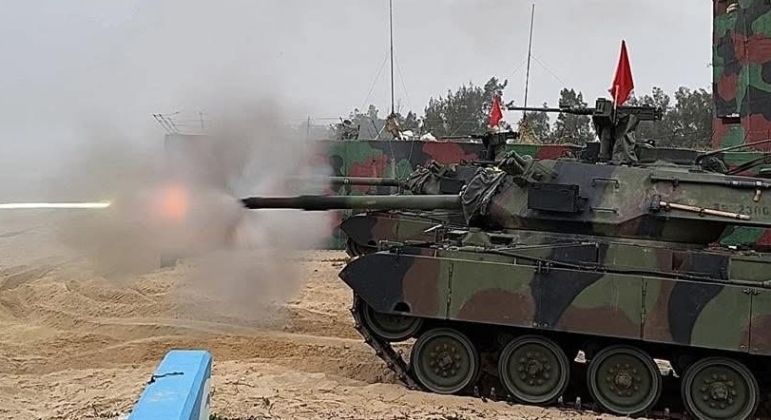
The M41 is by far the worst armoured tank type fielded by the armed forces of an economically developed state, with its steel armour being easily penetrated by autocannons and Vietnam War era anti-tank guided missiles, while and even heavy machine guns can pose serious threats. The vehicle is considered effectively unarmored, with even Chinese People’s Liberation Army Type 59 tanks, the oldest type in service, having overwhelming advantages. The age of the M41’s fire controls and its very limited firepower are further factors seriously limiting its combat potential, which has raised questions regarding why the Republic of China Army has continued to operate them. Their low fuel efficiency and inability to effectively engage targets under nighttime conditions are further major drawbacks.
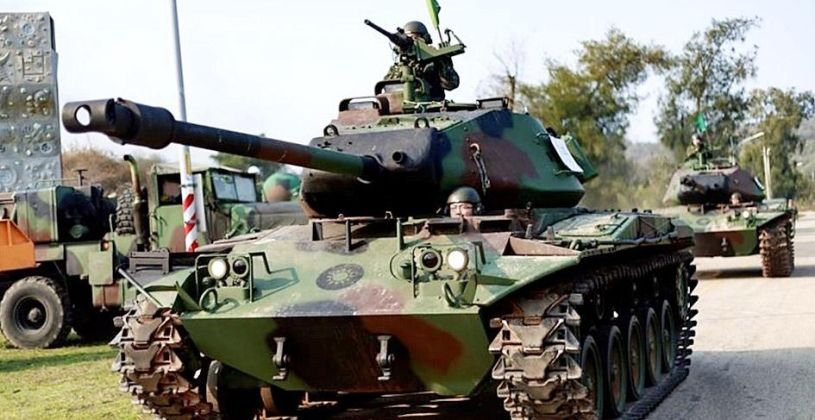
Commenting on the latest exercises, the Kinmen Defence Command revealed that various types of artillery were used, including 60mm, 81mm, and 120mm mortars, 105mm howitzers, 50mm machine guns, 40mm grenade launchers, and 66mm rocket launchers. Alongside M41 tanks, locally produced CM21 armoured vehicles and CM23 mortars were also deployed. The command pointed out that exercises adhered to the core principle of "combat-oriented training," employing a "real-person, real-equipment, real-time, real-location, real-situation, and real-operation" approach. It highlighted that it continuously adapted forces to new scenarios, responded to grey zone threats, simulated enemy amphibious landing operations, and and conducted exercises at frontline strongholds and positions in the Donggang sea area. This has included including "drone response," "distancing and firing," "near-shore defence beach combat," and "last-ditch defence firing."
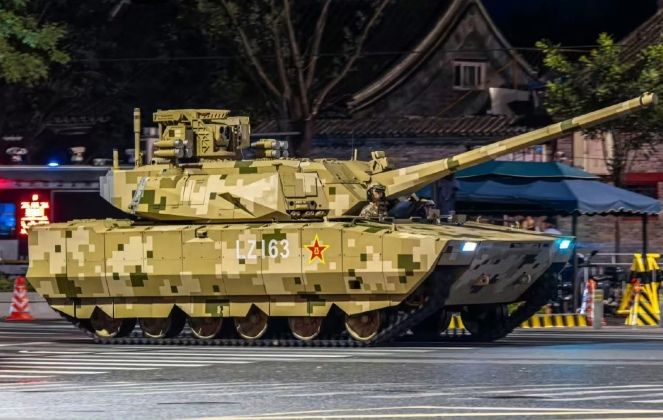
M41 tanks have crews of four personnel, compared to just two for the Chinese People’s Liberation Army’s own new lightweight main battle tank, and three for other PLA tank types. The M41 and the most capable PLA tank, the Type 100, sits at opposite ends of the spectrum of tank types in service in the world, with the Type 100 widely considered the most advanced in the world and the first of its generation, placing it over 70 years ahead of the M41. The M41 itself was far from cutting edge and very much constrained in its capabilities even in the 1950s, particularly when compared to tanks such as the T-54/55 and IS-3 which had far higher combat potentials. The fact that the M41 is still relied on in high priority locations such as Kinmen highlights the major issues that the Republic of China Army has had in procuring modern tanks, contrasting to the People’s Liberation Army deployed across the Taiwan Strait which has increasingly led the world in tank development.
