
Republic of China Army Avoids Upgrading U.S.-Supplied M60 Tanks Despite Worsening Obsolescence
Military Watch Magazine Editorial Staff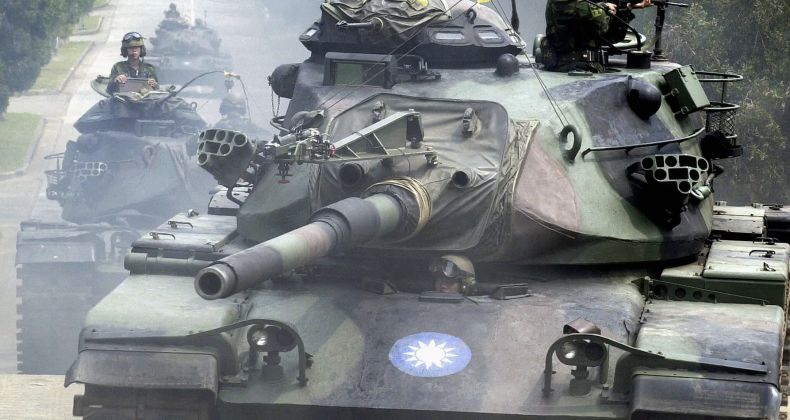
Republic of China Army M60A3 Tank
The National Chung-Shan Institute of Science and Technology based in Taoyuan has developed a “digital fire control, all-electric fire control, and high-resolution observation and aiming” system for the U.S.-supplied M60A3 main battle tank, which currently forms the backbone of the Republic of China Army’s tank fleet. The Institute is confirmed to be collaborating with foreign firms to market this new fire control system abroad, due to the Republic of China Defence Ministry having neglected to finance it for the domestic M60 fleet under its current spending plan. The decision not to upgrade the tanks was taken after a comprehensive evaluation of current force restructuring goals, primarily due to the extreme costs, and the fact that even if enhanced, the tanks would still be considered obsolete.
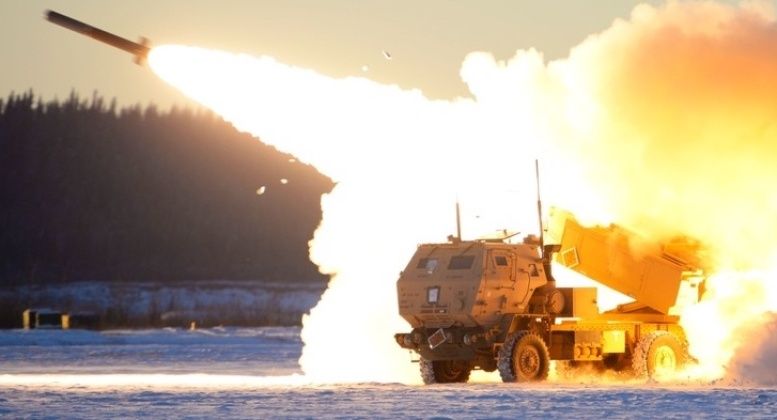
The National Chung-Shan Institute of Science and Technology’s preliminary estimate for the new fire control system and other items indicated a price of close to 100 million new Taiwan dollars ($3.2 million), which was comparable to the price of procuring new main battle tanks with far superior combat capabilities. Other than a replacement of the tanks’ engines, plans to upgrade the vehicle were thus not financed under the Army’s new force restructuring program. The restructuring program has strongly focused on training and logistics maintenance of the 108 new M1A2 Abrams tanks that recently completed deliveries. The current main focus for ground combat power is the mass production of 178 Cheetah wheeled tanks with rapid deployment capabilities, which will be initiated in 2027. The procurement of HIMARS rocket artillery and M109A7 self-propelled howitzers are among the Army’s other priorities, as are the implementation of comprehensive enhancements to training all units in the operation of various types of drones for battlefield use.
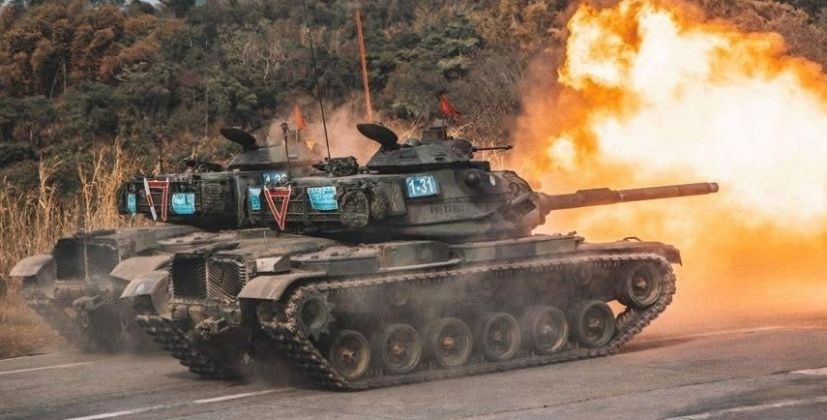
The Republic of China Army has increasingly struggled to operate its M60A3 main battle tanks, with multiple local sources reporting that the vehicles’ power systems have ben particularly problematic due to the rapid ageing of their parts and components. This has resulted in a significant increase in maintenance requirements, while significantly reducing availability rates. The tanks were acquired from 1998, with 480 surplus U.S. Army M60A3s transferred for approximately $1 million per vehicle. Not only were the tanks already considered obsolete by the end of the Cold War, with issues of wholly in adequate armour protection having worsened significantly since them, but the sustaining of the vehicles has also presented growing challenges. There has been considerable speculation that the Army will consider retiring the tanks from service without one-for-one replacements, as their ability to meaningfully contribute to a war effort in the Taiwan Strait remains highly limited. Their early retirement would mark a major turning point for the Army, which has operated a large fleet of main battle tanks for well over half a century.
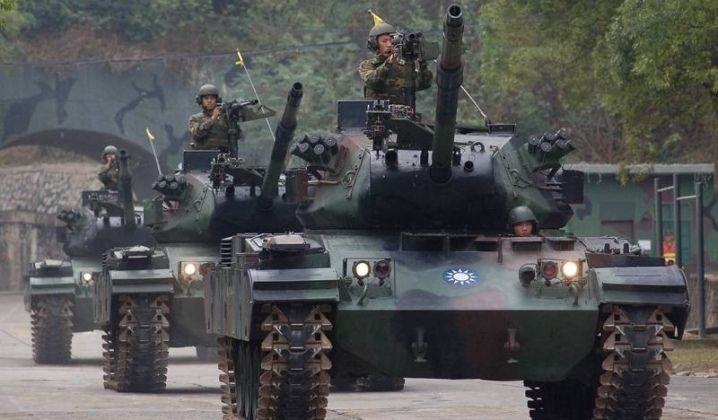
A significant number of obsolete tanks remain operational in the Republic of China Army, including Korean War era M41D tanks which are among the least capable in the world, as well as CM-11 Brave Tiger tanks which use the turret from the Korean War era M48 and the chassis of the M60. The Defence Ministry has faced considerable criticism for investing in assets that are considered to have little impact in a potential Taiwan Strait conflict, with calls growing to invest more heavily in asymmetric assets such as HIMARS and mobile ballistic and cruise missile launchers. Continued reliance on the M60 and older tanks is the result of multiple factors including an inability to procure non-U.S. tanks for political reasons, as well as a prioritisation of funding for the Air Force and Navy. With the United States pledging to significantly bolster the Defence Ministry’s budget with billions of dollars in annual aid beginning in 2027, however, the procurement of more M1A2 Abrams tanks and other ground warfare equipment remains possible.
