
Last U.S. M1A2 Abrams Tanks Delivered to Reequip the Republic of China Army
Military Watch Magazine Editorial Staff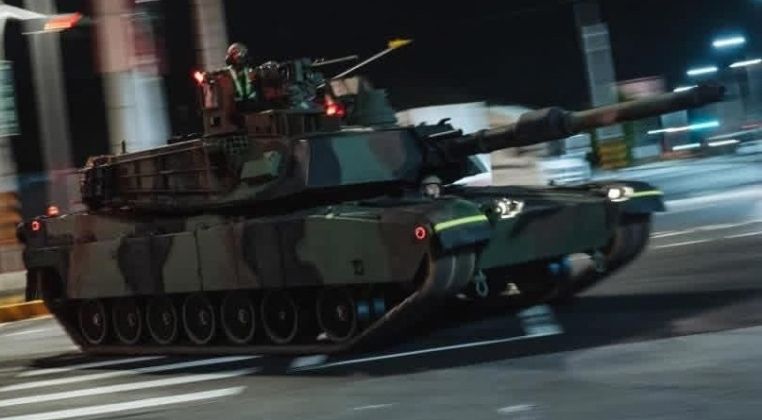
Republic of China Army M1A2 Abrams Tank
The Republic of China Army has taken delivery of its final batch of M1A2T Abrams main battle tanks from the United States, with the vehicles delivered to the service’s Army Armor Training Command at Hsinchu, in the northwestern region of Taiwan Island. The tanks will be deployed with the 6th Army Corps, based in near the capital Taipei in the city of Taoyuan, which is responsible for operations in the island’s northern regions. “[The new tanks] are expected to undergo testing, including readiness training and evaluation, before the army puts them into full operational service,” local media reported. Teh delivery completes an order for 108 M1A2 tanks which was placed in 2019, under a $2.22 billion contract that also included 250 Block I-92F Stinger missiles, M88A2 armoured recovery vehicles, and Oshkosh M1070A1 heavy equipment transporters.
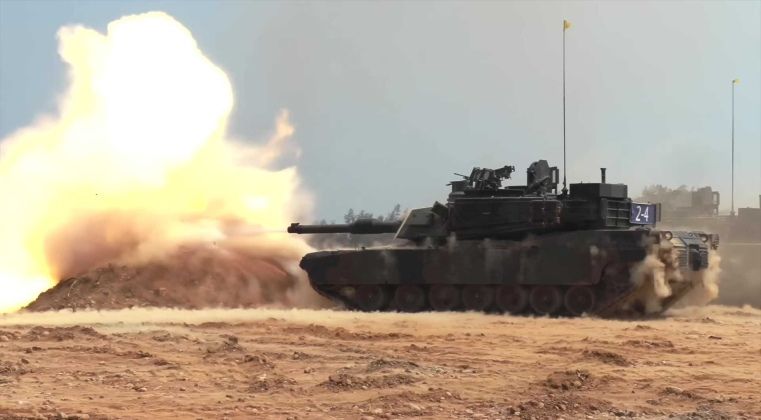
The final batch of Abrams tanks built for the Republic of China Army consisted of 28 vehicles, and was reported on February 2 to have completed production, with deliveries expected in March. Local sources subsequently reported expected delivery delays. Abrams tanks began deliveries to the Republic of China Army in December 2024, with 38 arriving in a first batch which was assigned to the 3rd Combined Arms Battalion of the 584th Armoured Brigade. Training for crews at the Hukou Armor Training Command began in early 2025, while a second batch of 42 tanks arrived in July that year. The vehicles entered frontline service on October 31. The Abrams is the first new type of main battle tank introduced into service since the early 1990s, when M60 tanks were procured from U.S. Army surpluses. They are the first newly built tanks from U.S. production lines to be procured since the M48, a Korean War era vehicle.
Local officers have widely commented on the Abrams’ significantly superior performance to the Army’s pre-Vietnam War era M60 tanks, with Army Captain Cheng Yu-chun having observed that it provided “a major leap forward in firepower, mobility and protection.” Commander of the 584th Armoured Brigade Major General Chou Kuang-i singled out the capabilities of the Abrams’ “hunter-killer,” which “allows the gunner to engage a target while the commander uses an independent thermal sight to locate the next one.” “This greatly increases engagement efficiency and situational awareness compared to older-generation tanks,” he added. The tanks have taken part in multiple exercises, including exercises testing the targeting capabilities of the new tanks in January 2026, and battalion-level urban operational readiness and infrastructure protection exercises the previous month.
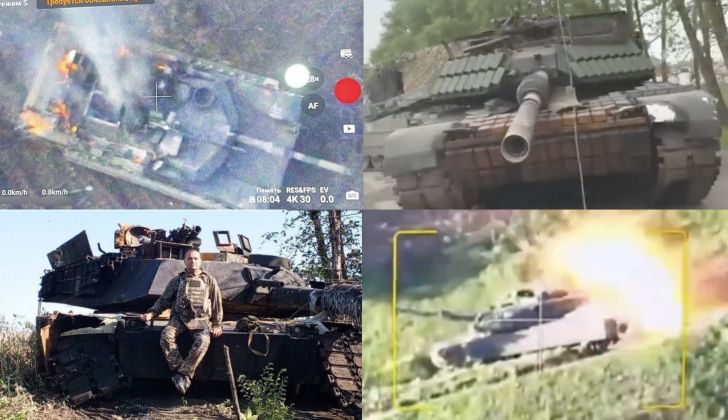
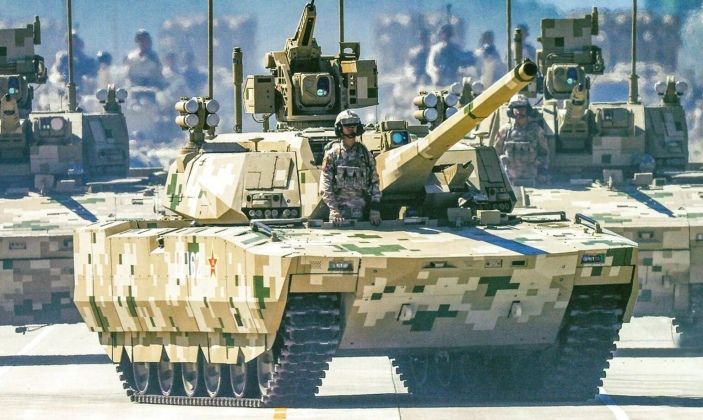
The viability of the Abrams tank for high intensity modern engagements has increasingly been called to question, particularly after the vehicles rapidly took heavily losses when deployed by the Ukrainian Army, and saw Ukrainian personnel widely complain about their performances. After observing the tank’ extreme vulnerability in the Ukrainian theatre, the U.S. Army ceased to invest in further incremental modernisation of the M1A2 design, and instead pursued a radical new tank program to develop the deeply redesigned M1E3. The M1E3 appears to have many of the same design priorities with the mainland Chinese Type 100, including unprecedented weight reductions and greater reliance on active protection systems rather than traditional thick armour. Assessments of the performance of the Abrams and other tanks in the Ukrainian theatre has cemented a consensus among analysts in the Western world and in East Asia that existing U.S. and European tank designs are built around a design philosophy that is now obsolete.
