
Republic of China Army Activates First U.S.-Supplied Abrams Tank Battalion: Are They Already Obsolete?
Military Watch Magazine Editorial Staff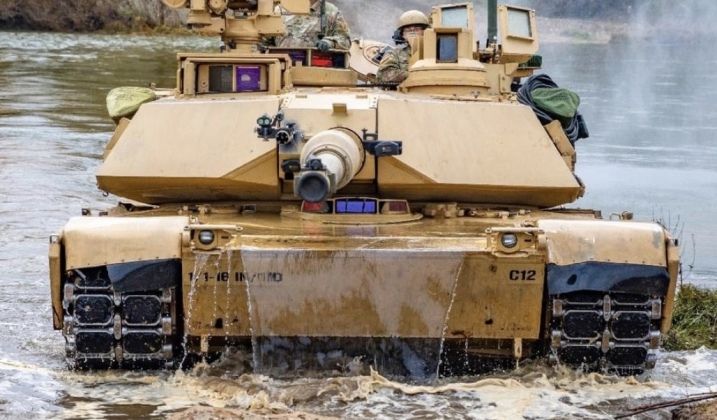
M1A2 Abrams Tank
The Republic of China Army on October 31 operationalised its first battalion of M1A2T Abrams main battle tanks, with the new unit based at Hukou base in Hsinchu County at a ceremony attended by senior political and defence officials. The 3rd Combined Arms Battalion of the 584th Armoured Brigade has transitioned to the tank from the CM-11 Brave Tiger, variant of the M48 tank which dates back to the 1950s. Abrams tanks were first delivered in December 2024, and subsequently underwent ten months of integration and training. A second batch delivered in July 2025 brought the fleet size to 42 vehicles. The Abrams is the first post-ColdWar type of new battle tank the Army has been able to bring into service, largely as a result of the Republic of China’s lack of international recognition and its current state of civil war with the People’s Republic of China government based on the Chinese mainland, which has resulted in serious difficulties gaining permission to procure military equipment.
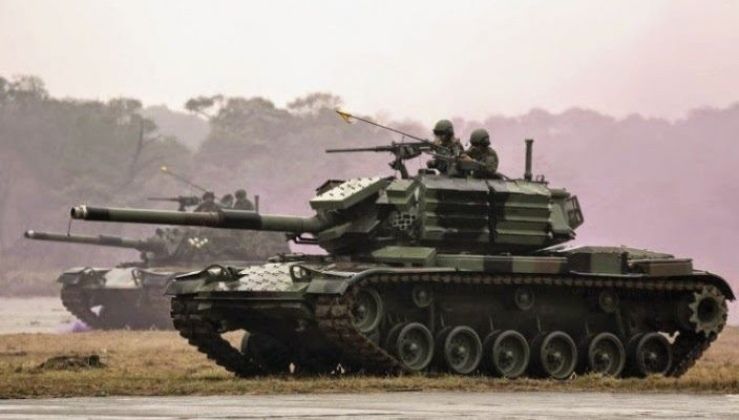
Training for M1A2T crews at the Hukou Armor Training Command began in early 2025, while in July four of the tanks participated in a live-fire exercise at the newly constructed Kengzikou Range as part of the Han Kuang 41 military drills. Commenting on the performance of the new tanks, Captain Cheng Yu-chun observed at the time that their procurement was a “major leap forward in firepower, mobility and protection” compared to the ageing M60A3 tank previously relied on to equip elite units. Commander of the 584th Armoured Brigade Major General Chou Kuang-i observed the tank’s advanced “hunter-killer” system, observing: “It allows the gunner to engage a target while the commander uses an independent thermal sight to locate the next one.” “This greatly increases engagement efficiency and situational awareness compared to older-generation tanks.”
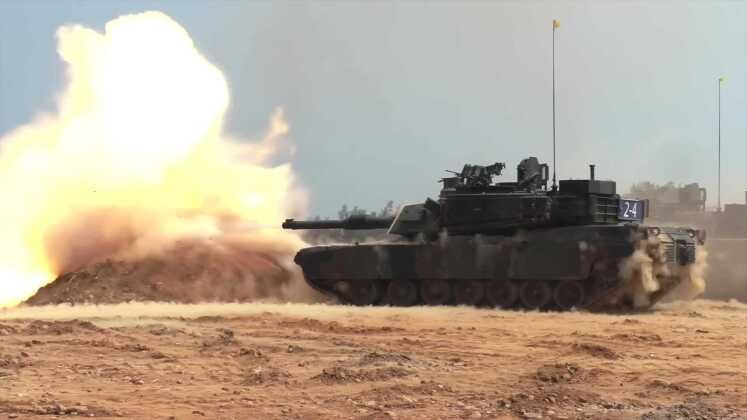
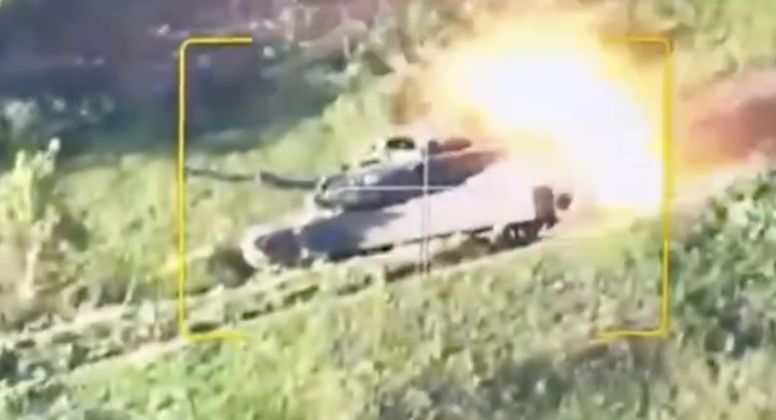
Although representing a major leap forward in capabilities, the M1A2 Abrams’ suitability for conditions on Taiwan Island where the Republic of China’s ground forces are based have repeatedly been brought to question, as has its viability at a time when the requirements for main battle tanks have changed rapidly due to technological advances. The Abrams has proven highly vulnerable to attacks using even relatively basic anti-tank weapons when deployed by the Iraqi Army and the Ukrainian Army. By early June 2025 the Ukrainian Army was assessed to have lost 87 percent of the American sourced vehicles, with 27 of the 31 Abrams tanks destroyed or captured, despite prior Western expectations that the vehicles could represent a game changer in the theatre. As part of a much smaller tank fleet facing mainland China’s much larger array of more advanced anti-tank assets, the M1A2T fleet is expected to face much higher attrition rates if used in combat.
Assessments of the performance of the Abrams and other Western tank types in the Ukrainain theatre has cemented a consensus among analysts that existing U.S. and European tank designs, which are by far the heaviest in the world, are built around a design philosophy that is now obsolete. As observed in early October by former British Army officer and prominent defence commentator Lieutenant Colonel Stuart Crawford, the “current generation of Western main battle tanks, Leopard 2, M1A2 Abrams, and now CR3, are increasingly seen as too large, heavy, costly, and vulnerable to justify further development along traditional lines.” “The traditional three-crew turret layout is outdated when autoloaders and remote turrets are widely available,” Crawford observed at the time, with the new much lighter configuration pioneered by mainland China’s Type 100 main battle tank expected to be emulated across much of the world to built tanks well suited to the era of drone warfare and loitering munitions.
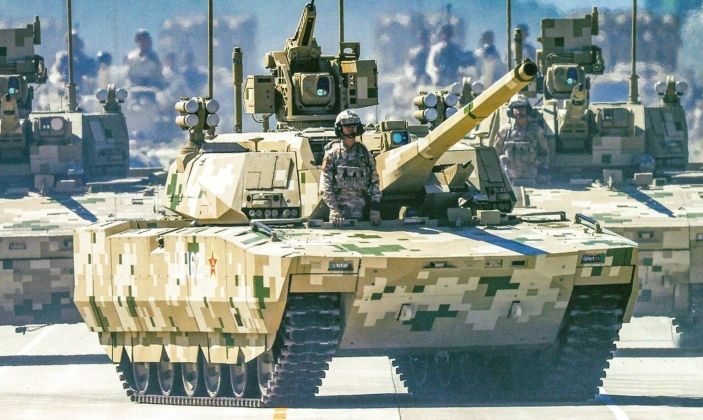
With the Abrams tanks having been ordered before the outbreak of war in Ukraine shifted the consensus on their performance, while Taipei has faced considerable U.S. pressure to sustain defence orders, it remains uncertain how the Army will respond to growing questions regarding the vehicles’ obsolescence. The U.S. Army has itself responded to new developments by scrapping plans to incrementally modernise the Abrams, and instead prioritising the funding of a radical redesign under the M1E3 program. The new variant will see the tank’s crew cut to three, an autoloader installed, and crew protection increased, while weight is reduced by approximately 25 percent, narrowing the gap with the latest mainland Chinese advances. The possibility remains significant that the M1E3 will be marketed to the Republic of China Armed Forces in future.
